Category: Local Manufacturing & Industry

Follow Africa’s growing indigenous drone industry — local manufacturers, defence-tech startups and “made in Africa” unmanned systems production.

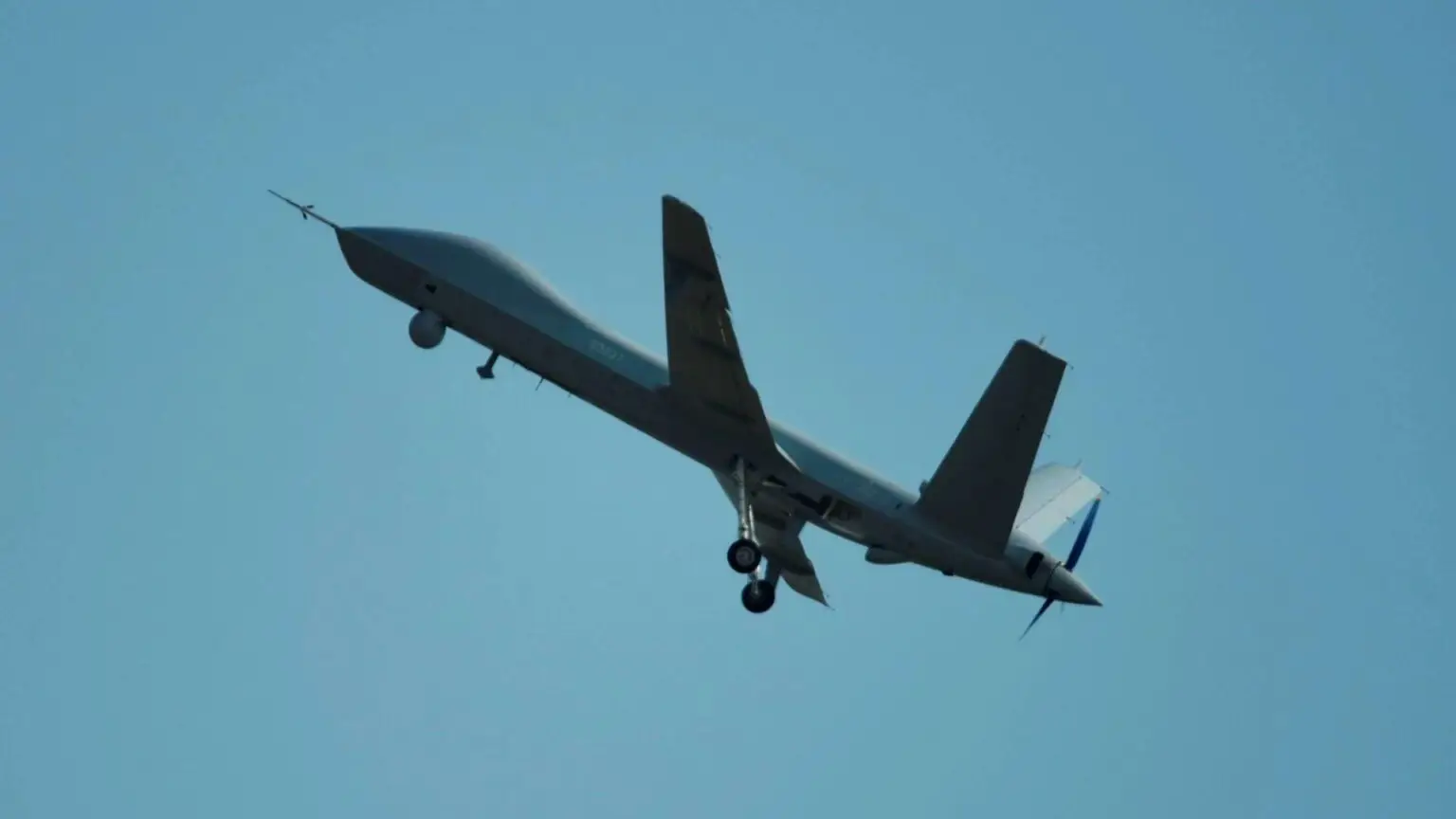
  • ASELFLIR-500 Turret Gives Mwari a Sharper Eye on Drone Threats

    ASELFLIR-500 Turret Gives Mwari a Sharper Eye on Drone Threats

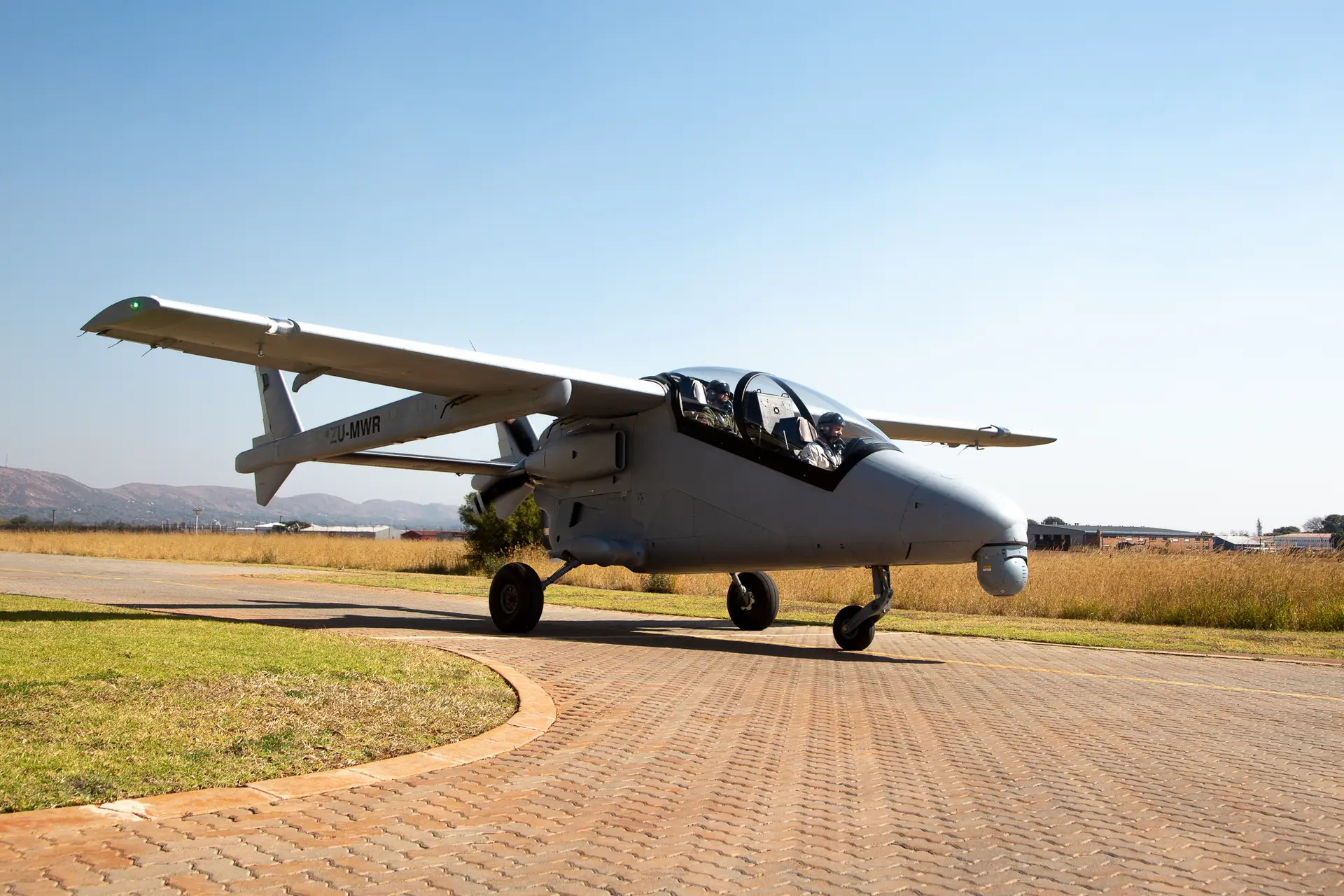
    Paramount Aerospace Industries has integrated ASELSAN’s ASELFLIR-500 electro-optical targeting turret onto its Mwari aircraft, adding a purpose-built sensor to the counter-unmanned aerial systems (counter-UAS) configuration the South African manufacturer announced earlier this year. Paramount confirmed the integration on 27 July 2026, with ASELSAN corroborating the partnership a day later. It is worth noting up front that neither company has said the Mwari has actually flown with the turret installed, so what is confirmed right now is an integration, not yet a flight-proven capability.

    For readers tracking the airborne counter-drone space specifically, the ASELFLIR-500 is a familiar name. It is a 15-inch electro-optical reconnaissance and targeting turret built around a single 220mm common aperture, packing a high-definition mid-wave infrared camera, an 8-megapixel day television sensor and a high-definition short-wave infrared (SWIR) channel into one gimbal, stabilised across four axes mechanically and two axes optically. That stabilisation matters more here than on a typical intelligence, surveillance and reconnaissance (ISR) mission profile: tracking a small, fast, erratically moving drone against ground clutter is a materially harder sensor-fusion problem than holding steady on a fixed position, and it is precisely the kind of target set that has driven demand for dedicated counter-UAS optics over the past three years. The turret also carries a laser range finder and designator rated out to 35 kilometres, STANAG 3733-coded for compatibility with NATO-standard laser-guided munitions, giving the Mwari precision-engagement reach that pairs naturally with the effector options already built into its counter-UAS configuration.

    The integration was mechanically straightforward for one specific reason: the Mwari was never designed around a fixed sensor suite. Its Interchangeable Mission Systems Bay, a reconfigurable payload compartment built into the aircraft from the outset, lets operators swap sensors, weapons and mission equipment in under two hours without redesigning the airframe. Paramount has used that same open-architecture approach before, most notably in a 2022 agreement with S-Plane to integrate an optionally piloted conversion kit, and the ASELFLIR-500 slots into the same modular logic rather than requiring a new aircraft variant.

    Paramount’s Chief Executive Officer, Lee Connolly, tied the addition to a distinction that increasingly defines the counter-UAS conversation across Africa: detection is often the harder half of the problem, not engagement. “For many nations, the detection problem can be just as challenging as the defeat problem,” he said, framing Mwari’s role as an adaptable host platform rather than a fixed, one-size-fits-all interceptor. He also pointed to the pace of change in unmanned systems as the reason the aircraft was built to evolve rather than to ship as a finished product. “The pace of innovation in unmanned systems is extraordinary,” he said, adding that airborne platforms need to keep pace with that rate of change to stay relevant across a multi-decade service life.

    The partnership is a useful data point for anyone tracking how African airframe manufacturers are approaching the counter-UAS sensor question more broadly. Rather than developing electro-optical and infrared (EO/IR) targeting systems in-house, competing against specialists with decades of dedicated investment, Paramount has chosen to build an open host aircraft and integrate best-of-breed sensors from established suppliers, a strategy that mirrors how many Gulf and Turkish defence manufacturers have approached rapid capability growth over the past decade. Whether that approach outpaces rivals building more vertically integrated systems will likely depend less on any single sensor’s specifications and more on how quickly Paramount can move from a confirmed ground integration to a demonstrated flight capability, and eventually into the hands of African operators actually facing the one-way attack drone threat this configuration was built to counter.

  • Ghana Army Drone Pilots Complete AeriusPro & Ghost OEM Training Programme

    Ghana Army Drone Pilots Complete AeriusPro & Ghost OEM Training Programme

    Newly certified Ghana Armed Forces operators are now qualified to fly the AeriusPro, an indigenously designed VTOL drone that has been doing real operational work over the country’s volatile northern border since January — the latest step in a military-industry training relationship that stretches back nearly a decade.

    A new cohort of Ghana Armed Forces personnel has completed training on the AeriusPro platform, adding to the pool of certified operators available to fly a drone that Ghana now designs, builds and deploys almost entirely on its own terms. The pilots finish the programme at a moment when the aircraft they’ve been trained on is already doing serious work: since January, the Ghana Armed Forces has flown the locally designed and manufactured AeriusPro operationally over Bawku and Binduri, two districts in the country’s Upper East Region, making Ghana one of a still-small group of African states that can design, manufacture, deploy and operationally sustain an indigenous unmanned aerial vehicle.

    A partnership years in the making

    The training is best understood as the continuation of a relationship rather than a one-off event. Accra-based SoKo Aerial Robotics, the company behind the AeriusPro’s design, was first invited into the Ghana Armed Forces in 2018 to train personnel from the Signal Regiment, at the time under the command of an officer who has since risen to major general. In the years since, that training relationship has expanded well beyond a single unit: SoKo puts the number of army and navy personnel it has trained at close to 200, alongside operators from Nigeria’s Defence Space Agency and staff from Ghana’s Forestry and Boundary Commissions. Along the way, the company built some of the Ghana Armed Forces’ earliest indigenous surveillance drones — aircraft named Nkonim, Chichis 1P and Mercury 1/2 — well before the AeriusPro existed as a programme.

    Ghana Army drone pilots on successfully completing the AeriusPro & Ghost OEM Training Programme.
    The Ghanaian Armed Forces have operationally deployed the locally designed and manufactured VTOL AeriusPro drone in the northern regions of Bawku and Binduri.

    That history matters for understanding January’s deployment. Facing entrenched chieftaincy-linked communal tensions in Bawku and Binduri, along with cross-border security threats and illegal mining activity across Ghana’s Upper East Region, commanders needed persistent aerial coverage over terrain that ground patrols struggle to cover safely. The 93 Signal Regiment runs the technical backbone of the operation — the data pipelines and command integration that turn raw drone footage into usable intelligence — working alongside the Army’s Special Brigade and Northern Command. The AeriusPro now flies as part of a mixed fleet that includes the ZMO-120, DeltaQuad Pro and FIXAR 007, but it is the only one of the group designed and built inside Ghana.

    Hybrid design, AI-assisted flight

    The AeriusPro’s core engineering trick is the same hybrid approach used by comparable VTOL platforms elsewhere: four vertical-lift propellers mounted on under-wing pylons get it off the ground without a runway, then a rear-mounted pusher propeller takes over for efficient forward flight once it transitions to fixed-wing mode. That combination suits northern Ghana’s terrain well, letting the aircraft launch from remote, unprepared sites while still covering distance efficiently once airborne. The backpack-portable, V-tailed airframe offers up to three hours of endurance, a 40-kilometre control range and a service ceiling of around 4,000 metres, carries a gimbal-stabilised 4K camera, and is built to the IP43 ingress-protection standard for operation in poor weather. AI-assisted navigation adds obstacle avoidance and automated flight paths on top of manual control, reducing the operator workload during long surveillance legs.

    On its own, though, an aircraft like the AeriusPro is only half the picture. Its operational value depends on Sigtrack, SoKo’s own situational-awareness and data-coordination platform, which pulls live drone video, ground-based reporting and sensor data into a single operating picture that commanders and field teams can view in real time. Sigtrack was built specifically to keep working in the kind of remote, bandwidth-constrained conditions common across northern Ghana — an explicit point of difference from imported command-and-control systems designed around reliable broadband connections — caching data locally and syncing automatically once a connection is restored. That resilience, as much as the airframe itself, is what lets a single AeriusPro sortie feed directly into decisions about where to route a patrol or which mining site to flag for enforcement.

    The company behind the aircraft

    SoKo Aerial Robotics was founded in 2017 by Kofi Owusu-Adusei, a Ghanaian engineer with a telecoms and security background who also directs the Centre for Unmanned Aerial Vehicles Research and Education (CUAVRE), which functions as the company’s in-house research arm. The AeriusPro itself is now built by a related manufacturing partner, Aerius UAS, while SoKo continues to develop the surrounding software and sensor ecosystem, including Sigtrack. Owusu-Adusei has described the company’s edge as coming less from any single piece of hardware than from treating drones as one part of a full operational system — flying the aircraft, but also owning the data processing, analytics and safety layers around it, an approach he argues lets SoKo tailor solutions that larger foreign vendors tend to overlook. “It’s this blend of local relevance and operational rigour that defines our competitive edge,” he has said of the company’s approach. He has credited two Ghana Armed Forces officers in particular with shaping the programme’s direction early on — Major General Matthew Essien, a former commandant of the Ghana Armed Forces Command and Staff College, who Owusu-Adusei says impressed on him early just how much the Signal Corps and the country were counting on the programme succeeding, and Brigadier General Anthony Ntem, credited with backing the programme’s expansion and protecting it as a matter of national interest.

    Part of a much larger build-up

    The AeriusPro programme is a small piece of a considerably larger shift in Ghana’s defence spending. The Ministry of Defence’s budget rose sharply in 2025 and is set to climb again in 2026, to roughly GHS 10.8 billion — an increase government officials have attributed to a deliberate “retooling” of the armed forces, moving spending away from wages and toward capital investment in equipment and infrastructure. Alongside new surveillance and mobility assets and efforts to retool the Air Force, the government has also been funding new forward operating bases, an expansion at the Command and Staff College, and thousands of new housing units intended to improve troop welfare and readiness. Set against that backdrop, a homegrown VTOL drone flying real missions over one of the country’s most sensitive border regions is a small but visible proof point for a much larger argument the Ghanaian government is making: that sustained investment in its own defence-industrial base, rather than continued reliance on imported systems alone, is where the armed forces’ modernisation is ultimately headed.

  • Dominance of China and Turkey in Africa’s military UAV market

    Dominance of China and Turkey in Africa’s military UAV market

    The dominance of China and Turkey in Africa’s military uncrewed aerial vehicle (UAV) market—which, alongside Israel, accounts for over 60% of all recorded drone transfers on the continent—has reshaped regional defense diplomacy and combat doctrine.

    By offering affordable platforms without the strict political conditions typical of Western suppliers, Ankara and Beijing have fundamentally altered the strategic environment across several key dimensions:

    1. Realignment of Security Partnerships and Geopolitics

    For decades, African defense procurement depended heavily on Western nations—most notably France and the United States—or Russia. The rise of Turkish and Chinese drone exports has broken those traditional monopolies.

    • Fading Western Influence: In nations across the Sahel (such as Mali, Niger, and Burkina Faso), military governments have actively reduced or ended defense ties with Western partners. In their place, turnkey drone acquisitions from Ankara and Beijing provide immediate airpower options without requiring lengthy parliamentary debates, export vetting, or human rights agreements.
    • Transactional Diplomacy: Turkey uses drone sales from manufacturers like Baykar as a wedge to expand its diplomatic, commercial, and maritime footprint across East, West, and North Africa. Meanwhile, China leverages hardware transfers—such as Wing Loong and CH-series platforms—to secure bilateral trade access, resource concessions, and long-term infrastructure partnerships under the Belt and Road Initiative.

    2. Low Cost of Entry and Airpower Democratization

    Historically, establishing an air force required hundreds of millions of dollars in crewed jet trainers, supersonic fighters, specialized ground logistics, and years of pilot training.

    • Asymmetric Capability: Class III Medium-Altitude Long-Endurance (MALE) systems like the Bayraktar TB2 or Wing Loong II allow mid-sized and developing African militaries to establish precision air-to-ground strike and continuous Intelligence, Surveillance, and Reconnaissance (ISR) capabilities at a fraction of the cost.
    • Combat Normalization: Armed drones have become standard operational tools rather than luxury assets. Sovereign states can now project airpower deep into remote insurgent-held corridors, shifting the tactical balance in anti-access/area-denial (A2/AD) scenarios and counter-insurgency operations.

    3. Accelerated Conflict Escalation and Civilian Risk

    The influx of low-cost, unconditioned strike airframes directly impacts conflict dynamics across active African combat zones.

    • Reduced Threshold for Escalation: Because uncrewed systems remove physical risk to pilots, political and military leaders face fewer internal disincentives when launching cross-border strikes or offensive operations into contested territories (as seen in the Horn of Africa and the Sahel).
    • Collateral and Humanitarian Impact: Non-Western suppliers rarely attach restrictive operational end-use monitoring to their sales. When inexperienced operators fly strike missions under poor atmospheric conditions (such as Harmattan dust clouds or tropical rain) or execute strikes with limited target verification, the risk of non-combatant casualties rises.

    4. Technical Dependence and Supply Chain Vulnerability

    While buying foreign platforms provides rapid operational capabilities, it introduces critical long-term dependencies:

    • Contractor Reliance: Maintenance routines, specialized avionics servicing, satellite data-link relay access, and specialized munition resupply (such as Turkish Roketsan MAM-L laser-guided bombs) remain controlled by foreign technicians.
    • Geopolitical Leverage: Relying on Beijing or Ankara for hardware components and software updates gives these exporting nations indirect leverage over an African state’s operational flight hours and defense readiness during active diplomatic disputes.

    5. Catalyst for Sovereign Defense Production

    Observing their vulnerability to foreign supply chain shifts, forward-looking African defense planners increasingly view foreign drone dominance as a reason to build local capacity.

    Nations like Nigeria, South Africa, Algeria, and Ethiopia are channeling resources into domestic assembly plants, Research and Development (R&D) centers, and local software integrations to reduce total reliance on external vendors over the next decade.

  • AI-Powered Autonomy for Tactical Drones: What’s Actually Happening in African Militaries

    AI-Powered Autonomy for Tactical Drones: What’s Actually Happening in African Militaries

    Interest in AI-driven drone autonomy is accelerating across Africa’s commercial drone sector. On the military side, the picture is narrower, messier, and considerably more consequential — and worth separating carefully from the sales pitch.

    “Tactical autonomy” has become one of the most overused phrases in defence marketing, and one of the least precisely defined. It gets applied equally to a drone that follows pre-programmed waypoints and avoids obstacles, and to a drone that identifies a target, decides it meets a strike criterion, and engages it without a human confirming that decision in real time. Those are fundamentally different capabilities with fundamentally different consequences, and the distinction matters more in Africa than almost anywhere else, because the continent is simultaneously the site of some of the world’s most-documented recent uses of autonomous and semi-autonomous strike systems, and one of the regions least equipped, legally, institutionally and technically to govern them.

    Automation is not autonomy

    Industry engineers increasingly draw a hard line here. Pre-programmed flight paths, collision avoidance, return-to-home behavior and waypoint coordination, the features most commonly marketed as “AI-powered” are, in the words of one autonomy-systems executive interviewed by Breaking Defense this year, simply “table stakes,” better described as automation than autonomy. True tactical autonomy, on that stricter definition, means a drone carrying real-time artificial intelligence on board that can interpret what its sensors are seeing and respond to a changing battlefield situation without an operator directing every movement, recognizing a target class, adjusting course around a new obstacle or threat, or coordinating with other drones in a swarm, all without a continuous human instruction for each step.

    That distinction is not academic. It is the difference between a surveillance drone flying a pre-set grid over a border post and a loitering munition that hunts, identifies and strikes on its own judgement. Both get called “autonomous” in vendor literature. Only one of them raises the legal and ethical questions that have made autonomous weapons a live subject at the UN.

    What has actually been documented

    Africa already has real, if limited, history with the sharper end of that spectrum. A March 2021 UN Panel of Experts report on Libya found that forces aligned with the internationally recognized government had used Turkish-made STM Kargu-2 loitering munitions against retreating fighters loyal to Khalifa Haftar in 2020, describing the drones as capable of pursuing targets without requiring a continuous data link between operator and munition. UN investigators stopped short of confirming the drones acted fully autonomously in that engagement, and other analysts have argued the Kargu-2 is better classified as a loitering munition than a true autonomous weapon, but the case remains the most-cited instance anywhere in the world of a drone potentially engaging human targets without direct human authorization of the individual strike.

    Sudan’s civil war has since overtaken Libya as the continent’s clearest testing ground. The Armed Conflict Location and Event Data Project has recorded over 1,000 drone strikes in Sudan between April 2023 and early 2026, the large majority flown by the Sudanese Armed Forces using Turkish, Chinese and Iranian-supplied platforms. In September 2024, researchers documented what they described as the war’s first coordinated drone-swarm attack, when a formation of small drones flown as improvised loitering munitions struck Sudanese Armed Forces positions at El Fasher, prompting SAF-aligned units to begin fielding Chinese-made counter-swarm jamming systems in response. Researchers tracking the conflict have separately pointed to strikes such as the December 2024 attack on a hospital in Kalogi, which killed more than 110 people, as evidence of how quickly algorithmically assisted targeting can produce mass-casualty outcomes that oversight mechanisms are not built to keep pace with.

    Nigeria, Kenya and South Africa: three different starting points

    The three countries most often cited as leading Africa’s AI-drone adoption are, on closer inspection, at three quite different stages — and mostly not in the military domain.

    South Africa has gone furthest toward building institutional capacity specifically for military AI. The government has stood up a Defence Artificial Intelligence Research Unit (DAIRU) to pool government, private-sector and military resources for AI-related defence projects, and South African manufacturer Paramount Group has fielded the N-RAVEN, a family of small drones explicitly built around autonomous swarm coordination in units of up to twenty aircraft, marketed around local manufacture and technology transfer to partner militaries rather than sold as a finished import. That model speaks directly to the “no legacy systems to unwind” argument often made for African adoption, since it is designed to be built inside a customer’s own defence-industrial base rather than bolted onto it.

    Nigeria’s military services have each announced intentions to bring AI into their operations, including AI-enabled drones, and Nigeria has begun collaborating with Ethiopia on drone development tied to what is billed as Africa’s largest drone manufacturing facility, near Abuja. But by the assessment of researchers who track the continent’s drone programmes closely, Nigeria has not yet fielded a drone with genuine autonomous targeting or navigation capability; its most advanced systems remain human-piloted or remotely operated platforms, however sophisticated their sensors.

    Kenya is the outlier of the three, and its absence from the tactical conversation is itself informative. Kenya’s most visible drone-AI work is concentrated almost entirely in civilian applications — precision agriculture, infrastructure and pipeline inspection, and disaster and emergency response — the same categories, notably, that tend to get cited whenever someone wants to argue Africa is moving fast on AI-drone adoption in general. That is a genuine and significant trend. It is just not a military one, and conflating the two risks overstating how far tactical autonomy specifically has actually travelled into African armed forces.

    Why the interest is real anyway

    None of this means the underlying appeal is manufactured. African militaries have concrete reasons to want autonomy that reduces reliance on a continuous radio link between pilot and aircraft. Electronic warfare and GPS jamming have become standard features of the conflicts in Sudan and the Sahel, and a growing share of commercially available autonomy software, platforms like Applied Intuition’s recently launched Drone Stack and Tycho.AI’s Voyager system, both aimed squarely at defence integrators, are built specifically around GPS-denied navigation and onboard processing that keeps a drone flying and functioning if its communications link is jammed or cut. For militaries already struggling to counter cheap swarming drones and loitering munitions, as Sudan has demonstrated at scale, autonomy that survives jamming is not a luxury feature; it addresses one of the most immediate operational vulnerabilities in the region’s current conflicts. The same resource-constrained environment that limits legacy infrastructure also removes some of the institutional inertia that slows adoption in better-equipped militaries elsewhere — a genuine, if double-edged, advantage.

    The regional exercise circuit reflects the same pull. At AFRICOM’s African Lion exercise in Morocco this May, participating forces tested autonomous target systems and tactical UAS specifically aimed at compressing targeting and decision-making timelines, alongside partner nations. Even where African militaries are not yet fielding autonomous strike systems of their own, they are increasingly being brought into training environments built around them.

    The governance gap

    The more serious problem is not whether the technology arrives, researchers who study this closely are largely convinced it will, but whether the frameworks meant to govern its use arrive with it. Analysts at the Sudan-focused African Centre for the Constructive Resolution of Disputes (ACCORD) have argued that the African Union’s peace and security architecture, designed well before AI-enabled weapons entered African conflicts, is now straining to keep pace with technology capable of producing casualties faster than existing accountability mechanisms can respond to them. Writing for Africa Defense Forum, one security researcher put the risk starkly: without a clear African voice in the international conversation shaping norms around autonomous weapons, the continent risks becoming “a proving ground and a casualty for others’ technological ambitions” rather than a genuine participant in setting the rules.

    That risk sits uncomfortably alongside the already-documented pattern of civilian harm from existing, far less autonomous drone operations in Nigeria, the Democratic Republic of Congo and Burkina Faso — harm caused by systems that still had a human pulling the trigger. Layering machine-speed targeting decisions on top of an accountability gap that already exists is, by most serious accounts, a matter of when rather than if.

    A more useful question than “how fast”

    The framing that tactical autonomy is now simply table stakes, something every serious operator must adopt or fall behind, gets the urgency roughly right and the specifics roughly wrong. What is accelerating fastest across Nigeria, Kenya and South Africa is commercial and civilian AI-drone use, not tactical military autonomy, and the two should not be read as the same curve. What tactical autonomy Africa has actually seen, in Libya, and now more seriously in Sudan, has arrived through active conflict rather than considered procurement, ahead of any regional framework built to govern it. For African militaries genuinely weighing the technology, the more useful question is not how quickly they can adopt autonomy once it becomes standard, but whether they, and the regional institutions meant to oversee them, will have any real say in how it gets used before that happens.

  • The Growth of African Military Drone Production

    The Growth of African Military Drone Production

    Nine African nations currently invest in domestic Uncrewed Aerial Vehicle (UAV) assembly and manufacturing facilities, accounting for 216 locally produced units out of total continental inventories.

    According to Military Africa’s drone procurement data, this shift represents a deliberate move away from exclusive reliance on foreign suppliers toward sovereign defense industrial capacity. While foreign procurement continues to dominate aggregate numbers, domestic production facilities allow African militaries to tailor equipment to local terrain, lower long-term maintenance costs, and retain technical expertise within national defense sectors. This industrial evolution exhibits a clear contrast between established aerospace manufacturing hubs and emerging regional assembly programs.

    South Africa leads the continent in high-end indigenous aerospace design and manufacturing. Armed with decades of advanced defense research, local firms produce sophisticated Class III Medium-Altitude Long-Endurance (MALE) platforms. The Milkor 380 serves as a primary example of this capability, featuring an 18.6-meter wingspan, a 1,500-kilogram Maximum Takeoff Weight (MTOW), a 220-kilogram payload capacity, and a 30-hour operational endurance. Built using composite resin infusion techniques, the system integrates multi-sensor pods and precision-guided ordnance. Alongside legacy platforms like the Denel Seeker series, South African industry demonstrates that continental firms can design, flight-test, and manufacture long-range systems capable of competing with international vendors.

    In West Africa, Nigeria’s operational landscape presents a dual approach balancing foreign acquisitions with local innovation. The Nigerian Air Force currently operates a complex inventory comprising 34 distinct imported platform types. Managing such a fragmented fleet creates severe supply chain overheads, maintenance backlogs, and reliance on external vendors for replacement parts. To address these vulnerabilities, the Nigerian Air Force Research and Development (R&D) Centre developed indigenous platforms such as the Tsaigumi UAV. With a 95-kilogram MTOW, a 10-hour endurance, and an Electro-Optical/Infrared (EO/IR) sensor suite, the Tsaigumi demonstrates how local assembly provides targeted Intelligence, Surveillance, and Reconnaissance (ISR) capabilities for frontline counter-insurgency operations.

    Despite these technological milestones, local supply chain constraints remain a critical bottleneck across all nine manufacturing nations. Domestic factories construct airframes, ground control stations, and electrical wiring, but key sub-components still originate overseas. Advanced internal combustion engines, specialized micro-electronics, high-definition optical sensors, and satellite navigation receivers depend heavily on foreign imports. Global supply chain disruptions, export licensing delays, and currency fluctuations directly affect local production rates. Building true sovereignty requires African defense sectors to establish localized manufacturing for raw composite materials and key avionics alongside basic airframe assembly.

    The data shows that domestic manufacturing will play a pivotal role in shaping intra-continental defense trade over the next decade. As indigenous systems mature, African defense firms aim to supply neighboring states with field-tested platforms unencumbered by Western or Eastern political conditions. Establishing standardized regulatory frameworks and cross-border supply chains will determine whether these national initiatives transform into a self-sustaining continental defense market or remain limited to low-volume production runs.

  • Mwari fitted with Modular airborne counter-UAS option

    Mwari fitted with Modular airborne counter-UAS option

    Paramount Aerospace Industries has added a dedicated drone-hunting configuration to its South African-built Mwari aircraft, aimed squarely at the low-altitude, one-way attack drones that most ground-based radar networks struggle to catch.

    South African manufacturer Paramount Aerospace Industries has rolled out a new counter-drone configuration for its Mwari light attack and surveillance aircraft, giving African defence forces and infrastructure operators another option against a threat that has outpaced most existing air defence systems: the cheap, slow, low-flying one-way attack drone. The company unveiled the configuration on 16 July 2026 in Pretoria, pitching it as a direct answer to the loitering munitions and modified commercial drones increasingly used against military bases, ports, and energy infrastructure across the continent and beyond.

    Conventional air defence was not really built with this threat in mind. Ground-based radar tends to be tuned to catch fast, higher-flying aircraft and missiles, which makes it poorly suited to something that flies low and slowly with a radar signature not much bigger than a large bird. And even once such a drone is spotted, shooting it down with a surface-to-air missile system designed for faster, higher threats is a losing financial trade — the interceptor often costs many times more than the drone it destroys. Paramount Aerospace Industries CEO Lee Connolly put the imbalance plainly, describing the wave of low-cost attack drones as having created “an acute vulnerability” for militaries and infrastructure operators alike, adding that for many countries, simply detecting the threat can be as hard as defeating it.

    The Mwari Counter-UAS configuration is Paramount’s attempt to close that detection-and-defeat gap with a single airframe. It combines an electro-optical and infrared targeting system with a flexible sensor suite and a choice of weapons, giving a two-person crew the ability to find, identify, and, if authorised, engage a drone without ever taking a human out of the decision loop. One crew member flies the aircraft while the other, working from a dedicated mission station, manages the sensor feed and owns the call on identification and engagement — a human-in-the-loop arrangement that reflects both operational caution and the legal reality that misidentifying a target in this kind of mission carries real consequences.

    The system is built to work two different ways, depending on what infrastructure a customer already has. Where a country already runs a ground-based radar and command-and-control network, the Mwari can plug into it, flying out to intercept targets the network has already flagged and visually confirming the identification before engaging. Where that ground infrastructure doesn’t exist — which describes a great many African militaries, and most operators tasked with protecting a single high-value site such as a port or power plant — the aircraft can instead fly its own barrier patrols, using onboard sensors to search for slow, low-altitude targets ahead of the area it’s defending. In effect, Paramount is offering the aircraft as a stand-in for a sensor network the customer hasn’t built yet, not merely an add-on to one that already exists. Weapons options follow the same logic: gun pods for threats that get in close, guided or precision rocket systems for engagements further out, drawn from an open architecture that lets Paramount integrate effectors from multiple international suppliers rather than locking a customer into one ammunition type.

    What makes all of this possible is designed into the aircraft rather than bolted on for this particular announcement. The Mwari — better known during its long development as the AHRLAC, or Advanced High-Performance Reconnaissance Light Aircraft — was built around a swappable mission bay in its belly, which Paramount calls the Interchangeable Mission Systems Bay. Sensors, weapons, and other mission equipment can reportedly be swapped in under two hours without any permanent change to the airframe, which is largely why the same aircraft has been marketed for ISR, border patrol, light strike, and now counter-drone work without needing a distinct variant for each role. The airframe itself is a distinctive twin-boom, single-engine design — a single Pratt & Whitney PT6A-66B turboprop driving a rear-mounted pusher propeller — with a cruise speed of roughly 500 km/h, a service ceiling above 30,000 feet, and the ability to operate from rough or unprepared airstrips of around 500 metres. It first flew on 26 July 2014, the product of a joint venture between Paramount Group and South African firm Aerosud, and survived a rocky patch in 2019 when a dispute between the two partners put the programme into business rescue before Paramount took full ownership.

    This is not Paramount’s first attempt at drone-hunting with the Mwari, either. Back in 2022, around the time the aircraft reached its first paying customers, the company fitted it with technology aimed at a very different target: Medium Altitude Long Endurance drones such as the Bayraktar TB2 or Wing Loong II, which typically fly at 20,000 to 30,000 feet — an altitude band that otherwise requires expensive ground-based missile systems or a scramble by fighter jets to reach. The 2026 configuration effectively completes that picture, extending the aircraft’s drone-hunting role down to the low, slow end of the threat spectrum that systems built for MALE drones tend to miss entirely.

    Unlike many concept-stage defence announcements, the Mwari has an actual flight record behind it. Mozambique became the launch customer, taking delivery of its first aircraft in December 2022 and flying it on reconnaissance and surveillance missions in Cabo Delgado province, where government forces have spent years fighting an Islamic State-linked insurgency — making it one of a relatively small number of African-designed combat aircraft to log real hours in an active African conflict zone. The Democratic Republic of Congo became the second customer, ordering six aircraft in 2023 and bringing the total sold to nine. Production continues at Paramount’s Wonderboom facility outside Pretoria.

    The timing of the new configuration tracks a broader shift in how drones are being used in African conflicts. Insurgent groups that flew little more than basic surveillance drones a few years ago are increasingly arming cheap commercial quadcopters with improvised explosives and flying them directly at fixed positions. In Nigeria’s northeast, Islamic State West Africa Province has adopted exactly this pattern against military bases along the Lake Chad basin, a shift security analysts say has accelerated sharply over the past year and pushed Nigeria’s military and its regional partners to treat counter-drone capability as an urgent gap rather than a future problem.

    Paramount is not alone in chasing this market. Brazil’s Embraer is pursuing a comparable concept for its A-29 Super Tucano, partnering with US firm Valkyrie Aero to integrate an AI-assisted targeting suite called Gunslinger, with a marketable version expected following further demonstrations later this year — and Embraer has separately forecast Africa as its single largest market for the A-29 over the next two decades. Ground-based systems from established suppliers in Israel and Turkey, among others, remain an option too, though they solve the problem differently and, in much of Africa, require exactly the kind of sensor infrastructure many operators don’t yet have.

    What Paramount is ultimately selling with the Mwari, though, is not really a single new capability — it’s the idea that one airframe can keep absorbing new roles as the threat changes, without a customer needing to buy a new aircraft type each time it does. A country that bought the Mwari for border surveillance can add weapons, reconfigure it for MALE drone intercepts, and now fit it for low-altitude counter-drone work, all on the same production airframe. Whether that pitch converts into new export orders remains to be seen; Paramount has not said which customers it expects to take up the configuration first. But as one-way attack drones become a fixture of conflicts across the continent, it’s a pitch aimed squarely at the capability gap African defence budgets are struggling hardest to close.