
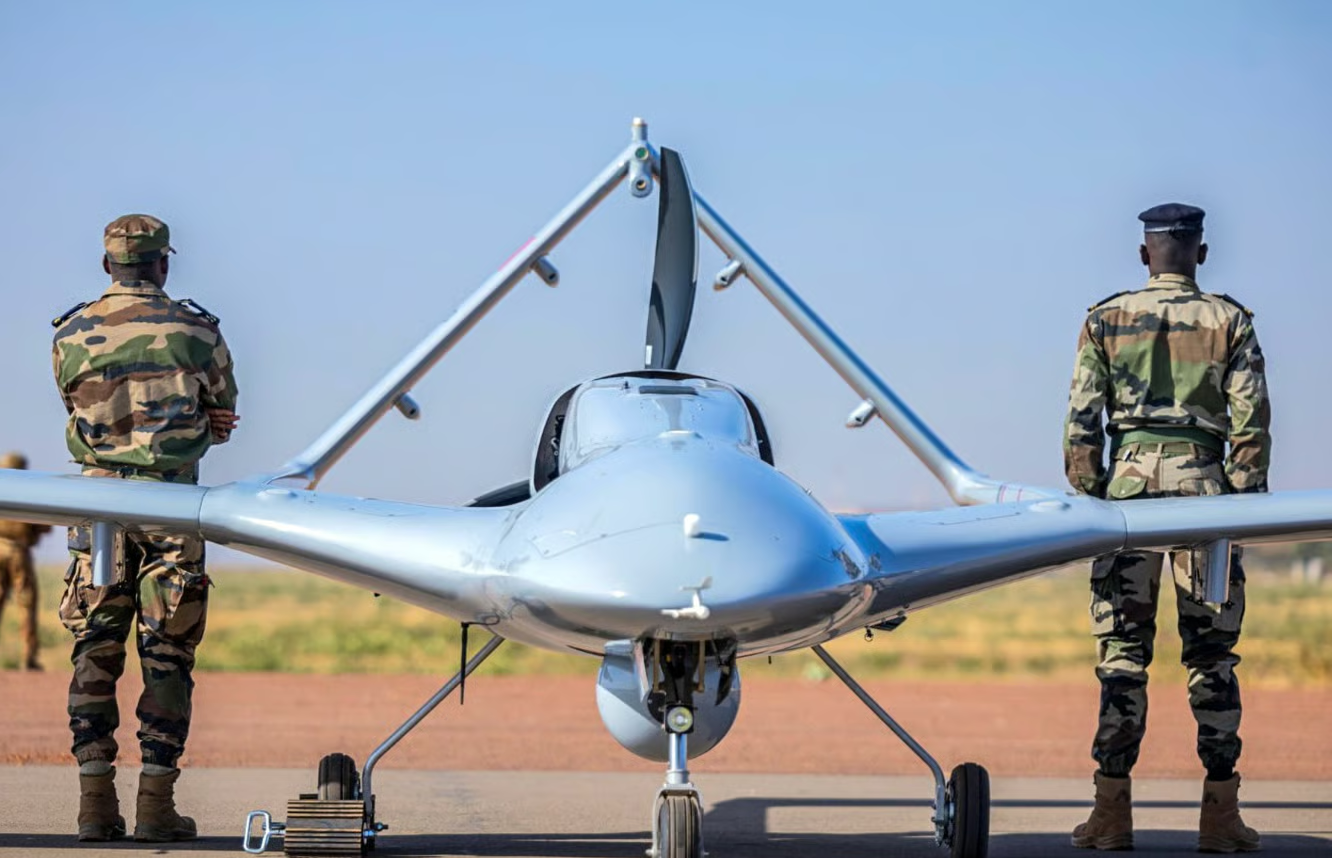
How Turkish and Russian Drones Transformed Sahelian Aerial Warfare
When French counter-terrorism forces left and the United States suspended security assistance, the air war in Mali, Niger and Burkina Faso had to be rebuilt quickly. The military governments in Bamako, Niamey and Ouagadougou, now grouped as the Alliance of Sahel States (AES), turned away from Western security arrangements and signed transactional defence deals with Turkey and Russia instead. The three governments replaced Western surveillance networks with armed drone fleets of their own, and counter-insurgency in the region changed with them.
Turkey: the strike layer
Turkish manufacturers gained most. The Bayraktar TB2, a Class III medium-altitude long-endurance (MALE) drone, quickly became the main strike aircraft at Sahelian air bases. It carries up to 150 kilograms, including Roketsan’s laser-guided MAM-L smart micro munitions, and stays up for 27 hours.
Mali and Burkina Faso went further and bought the larger twin-engine Bayraktar Akinci, with a 1,500-kilogram payload, satellite communications and synthetic aperture radar. Both aircraft give commanders precision strike with no conditions attached and no Western export approval to wait for.
Russia: tactical reconnaissance and advisers
Russia supplies the lower layer, along with advisers. After Wagner Group assets were folded into the Russian Ministry of Defence’s Africa Corps, Russian operators brought in light hand-launched drones such as the Orlan-10 and Supercam S35. They spot targets for artillery and motorised units and watch the ground around forward bases. Turkish aircraft strike from medium altitude, Russian ones watch close in, and between them the Sahelian juntas have a layered aerial network.
The trade-offs
Military Africa’s procurement records, as of July 2026, show Turkish suppliers had delivered 291 drones across the continent, many of them to Sahelian combat zones. Buying from Ankara and Moscow lets Sahelian planners match purchases to immediate needs. It also leaves them running a mix of foreign aircraft, with the maintenance bottlenecks, spare-parts headaches and dependence on foreign contractors in combat that come with it.
