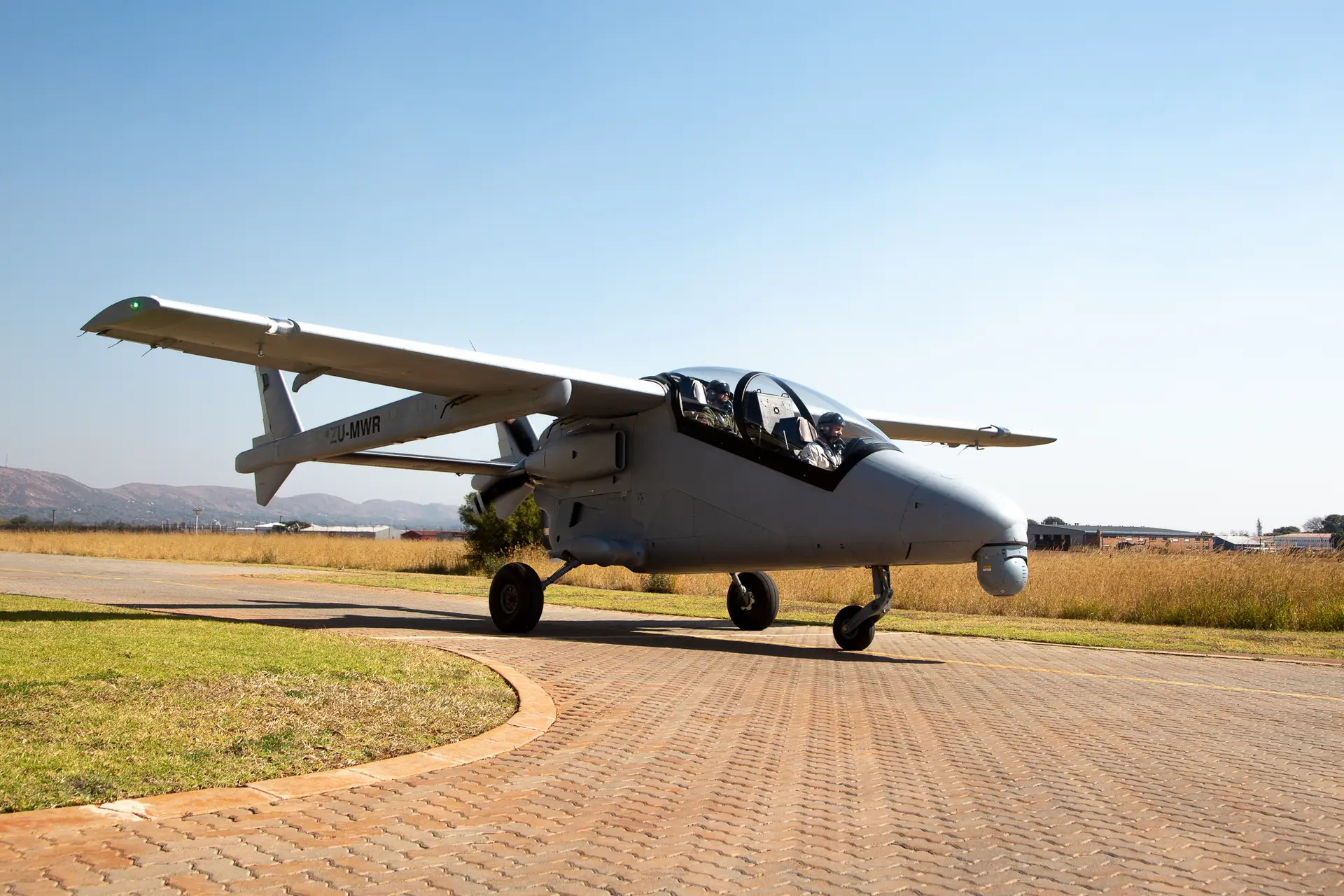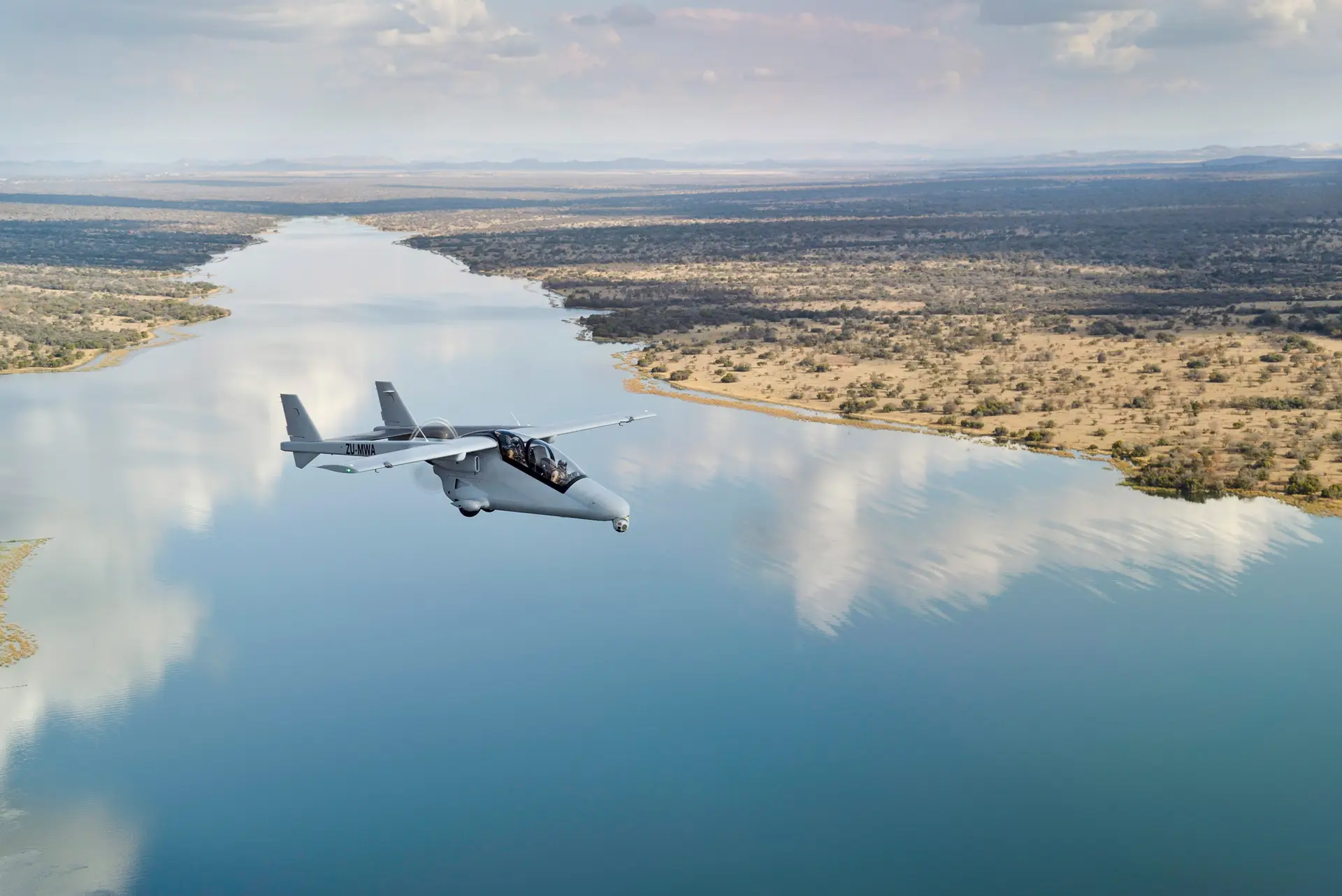
Paramount Aerospace Industries has integrated ASELSAN’s ASELFLIR-500 electro-optical targeting turret onto its Mwari aircraft, adding a purpose-built sensor to the counter-unmanned aerial systems (counter-UAS) configuration the South African manufacturer announced earlier this year. Paramount confirmed the integration on 27 July 2026, with ASELSAN corroborating the partnership a day later. It is worth noting up front that neither company has said the Mwari has actually flown with the turret installed, so what is confirmed right now is an integration, not yet a flight-proven capability.
For readers tracking the airborne counter-drone space specifically, the ASELFLIR-500 is a familiar name. It is a 15-inch electro-optical reconnaissance and targeting turret built around a single 220mm common aperture, packing a high-definition mid-wave infrared camera, an 8-megapixel day television sensor and a high-definition short-wave infrared (SWIR) channel into one gimbal, stabilised across four axes mechanically and two axes optically. That stabilisation matters more here than on a typical intelligence, surveillance and reconnaissance (ISR) mission profile: tracking a small, fast, erratically moving drone against ground clutter is a materially harder sensor-fusion problem than holding steady on a fixed position, and it is precisely the kind of target set that has driven demand for dedicated counter-UAS optics over the past three years. The turret also carries a laser range finder and designator rated out to 35 kilometres, STANAG 3733-coded for compatibility with NATO-standard laser-guided munitions, giving the Mwari precision-engagement reach that pairs naturally with the effector options already built into its counter-UAS configuration.
The integration was mechanically straightforward for one specific reason: the Mwari was never designed around a fixed sensor suite. Its Interchangeable Mission Systems Bay, a reconfigurable payload compartment built into the aircraft from the outset, lets operators swap sensors, weapons and mission equipment in under two hours without redesigning the airframe. Paramount has used that same open-architecture approach before, most notably in a 2022 agreement with S-Plane to integrate an optionally piloted conversion kit, and the ASELFLIR-500 slots into the same modular logic rather than requiring a new aircraft variant.
Paramount’s Chief Executive Officer, Lee Connolly, tied the addition to a distinction that increasingly defines the counter-UAS conversation across Africa: detection is often the harder half of the problem, not engagement. “For many nations, the detection problem can be just as challenging as the defeat problem,” he said, framing Mwari’s role as an adaptable host platform rather than a fixed, one-size-fits-all interceptor. He also pointed to the pace of change in unmanned systems as the reason the aircraft was built to evolve rather than to ship as a finished product. “The pace of innovation in unmanned systems is extraordinary,” he said, adding that airborne platforms need to keep pace with that rate of change to stay relevant across a multi-decade service life.
The partnership is a useful data point for anyone tracking how African airframe manufacturers are approaching the counter-UAS sensor question more broadly. Rather than developing electro-optical and infrared (EO/IR) targeting systems in-house, competing against specialists with decades of dedicated investment, Paramount has chosen to build an open host aircraft and integrate best-of-breed sensors from established suppliers, a strategy that mirrors how many Gulf and Turkish defence manufacturers have approached rapid capability growth over the past decade. Whether that approach outpaces rivals building more vertically integrated systems will likely depend less on any single sensor’s specifications and more on how quickly Paramount can move from a confirmed ground integration to a demonstrated flight capability, and eventually into the hands of African operators actually facing the one-way attack drone threat this configuration was built to counter.
As the rapid acquisition of Class III uncrewed platforms transforms African military offensive capabilities, defense ministries across West and East Africa face an urgent operational challenge: asymmetric air threats. Non-state armed groups in the Sahel, Lake Chad Basin, Horn of Africa, and eastern Democratic Republic of the Congo (DRC) have effectively democratized vertical airpower using Commercial Off-The-Shelf (COTS) quadcopters and First-Person View (FPV) kamikaze loitering munitions.
In response, defense planners are shifting budget allocations from uncrewed strike platforms toward Electronic Warfare (EW) and Counter-Uncrewed Aerial Systems (C-UAS). Market projections indicate that C-UAS acquisitions in the Middle East and Africa region are expanding at a Compound Annual Growth Rate (CAGR) exceeding 27 percent through 2030, making it one of the fastest-growing military defense segments on the continent.
Regional Breakdown: Procurement Trends in West and East Africa
1. West Africa and the Sahel: Point Defense and Decentralized EW
In West Africa—specifically across Nigeria, Mali, Niger, and Burkina Faso—C-UAS acquisitions prioritize mobile, field-deployable units designed to defend remote outposts and counter-insurgency convoys against modified quadcopters dropping light mortar ordnance.
Tactical RF Jammers and Rifle Defectors: Military forces in the Sahel rely heavily on handheld Radio Frequency (RF) directional jammers operating across standard 2.4 GHz and 5.8 GHz control links and Global Navigation Satellite System (GNSS) frequencies. These systems disrupt standard commercial flight controllers, forcing hostile platforms into fail-safe hovering or automatic landing modes.
Supplier Diversification: Facing Western export limits, Sahelian governments have turned to non-Western vendors. Chinese contractors provide directional RF jamming guns alongside broad-spectrum electronic countermeasure trucks, while Russian contractors integrate light tactical signal detection suites with frontline armor.
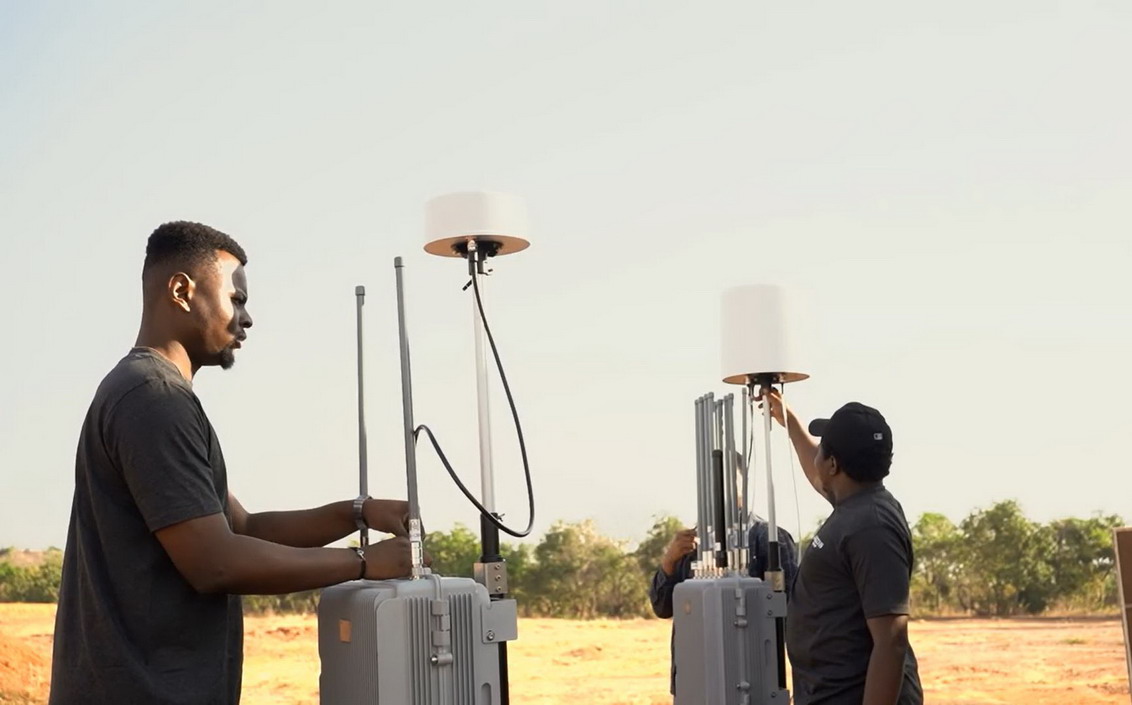
Layered Base Protections: In Nigeria, where the armed forces manage complex operations against insurgents in the northeast and bandit networks in the northwest, procurement has expanded to fixed-site omnidirectional jamming domes. These systems create a 360-degree electronic barrier around high-value facilities, command posts, and airfields.
2. East Africa: Integrated Radars, Kinetic Defeaters, and Regional Alliances
East African procurement dynamics, driven by Somalia, Kenya, Ethiopia, and Uganda, focus on countering tactical reconnaissance and long-range loitering threats used by non-state actors like Al-Shabaab and regional insurgent groups.
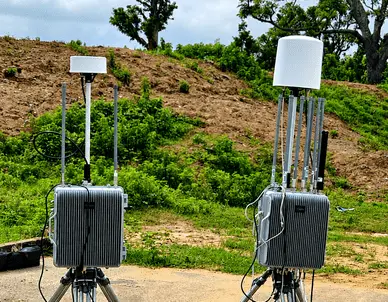
Multi-Sensor Detection Architectures: East African defense ministries emphasize integrated detection architectures over standalone soft-kill jammers. Procurement programs combine 3D pulse-Doppler surveillance radars (such as short-range X-band systems), Radio Frequency (RF) direction finders, and high-definition Electro-Optical/Infrared (EO/IR) tracking cameras.
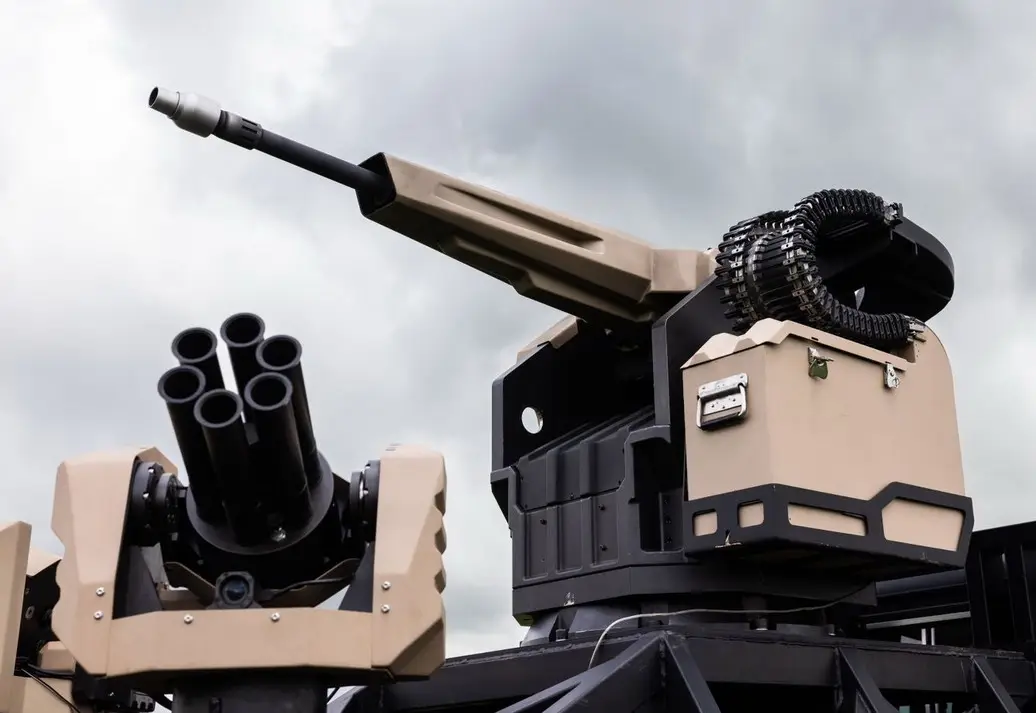
Kinetic and Directed Energy Solutions: Because adversaries increasingly utilize pre-programmed, autonomous FPV drones that bypass RF jamming, East African militaries are acquiring kinetic C-UAS effectors. These include remote-controlled weapon stations (RCWS) linked to smart optical sights and fast-firing heavy machine guns, alongside net-firing interceptor drones.
Western & Middle Eastern Assistance: Unlike the Sahel, East Africa maintains active defense partnerships with Western and Gulf suppliers. Turkish manufacturers have packaged C-UAS jamming equipment alongside Bayraktar TB2 deliveries, while the United States and European partners provide counter-drone radar suites and electronic warfare training to African Union transition missions operating in Somalia.
Key Operational Challenges and Strategic Bottlenecks
The Cost-Exchange Asymmetry: The cost of acquiring high-end C-UAS systems creates a severe financial imbalance. While an adversary can assemble an FPV strike drone for $500 to $2,000, multi-sensor detection radars and high-power EW jamming installations cost hundreds of thousands of dollars.
Frequency Hopping and Fiber-Optic Evolution: Non-state actors continually adapt to electronic countermeasures by flashing custom firmware onto flight controllers. These modifications allow drones to hop frequencies outside standard bands or operate autonomously without active radio links, rendering traditional soft-kill RF jammers ineffective.
Electromagnetic Self-Interference: High-power broad-spectrum jamming creates severe operational trade-offs for frontline commanders. Activating wide-area C-UAS jammers frequently disrupts friendly military radio communications, satellite data links, and tactical GPS navigation systems.
Power and Environmental Demands: Operating advanced sensor stacks and high-wattage directional jammers requires consistent electrical power. At remote Forward Operating Bases (FOBs) in the Sahelian heat or East African scrublands, fuel logistics for generators and environmental dust protection remain persistent operational failure points.
Future Trajectory through 2030
Across both West and East Africa, defense procurement is evolving from reactive, piecemeal purchases of handheld jammer guns toward networked, multi-layered C-UAS architectures. The next phase of African defense spending will center on combining low-cost passive sensors with automated Command-and-Control (C2) software. This approach will allow field commanders to detect incoming aerial threats early, assign the lowest-cost defeat mechanism (whether soft-kill EW or kinetic fire), and preserve high-value air defenses for long-range strategic threats.
While state acquisition of heavy fixed-wing Uncrewed Aerial Vehicles (UAV) dominates headlines, a parallel tactical revolution is taking place at ground level across African conflict zones. Non-state armed groups, irregular insurgent units, and front-line military patrols increasingly deploy low-cost Commercial Off-The-Shelf (COTS) quadcopters and customized First-Person View (FPV) loitering munitions. This democratization of vertical airpower enables non-state actors in the Lake Chad Basin, the Sahel, Cabo Delgado, and eastern Democratic Republic of the Congo to challenge conventional military formations without maintaining expensive airbases or technical supply chains.
Asymmetric Weaponization of Civil Platforms
Commercial quadcopters engineered for agriculture or aerial photography provide irregular forces with immediate, low-cost Intelligence, Surveillance, and Reconnaissance (ISR). Operating at altitudes between 100 and 300 meters, standard civil platforms remain virtually silent and nearly invisible to unassisted ground spotters. Insurgent operators use high-resolution optical cameras to map forward operating base perimeters, monitor patrol movements, and conduct artillery spotter routines. These civilian systems require minimal flight training, operate using intuitive handheld mobile interfaces, and cost a tiny fraction of military-grade tactical drones.
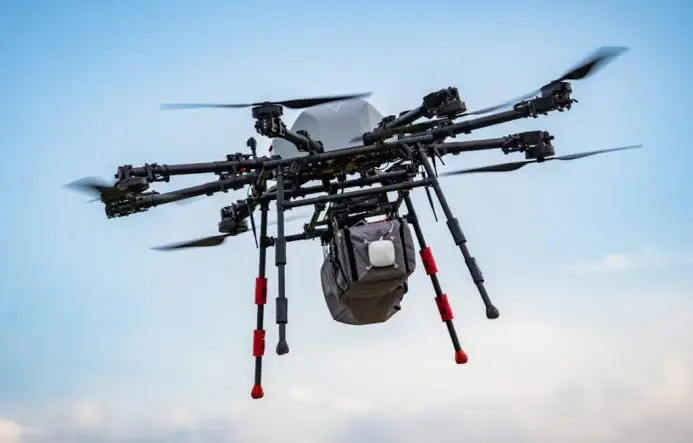
Beyond surveillance, asymmetric actors modify civil airframes to carry kinetic payloads. Operators fabricate lightweight drop mechanisms using 3D-printed latches, electronic servomotors, and photo-sensitive relays wired directly to the drone’s auxiliary navigation lights. When an operator toggles the light switch on the ground controller, the circuit triggers the servo latch, releasing modified 60mm mortar bombs, hand grenades, or improvised explosive devices over defensive positions. In more aggressive tactical configurations, operators assemble high-speed FPV racing quadcopters packed with contact-fused explosives. Moving at speeds exceeding 100 kilometers per hour, these makeshift kamikaze platforms strike light armored vehicles, supply trucks, and troop concentrations with lethal precision.
To defend Forward Operating Bases (FOB) and mobile columns against commercial drone attacks, African field commanders employ a combination of electronic warfare, radio frequency detection, and physical hard-kill countermeasures. Because COTS quadcopters rely heavily on unencrypted 2.4 GHz and 5.8 GHz control links alongside standard Global Positioning System (GPS) signals, electronic countermeasures offer the most effective non-kinetic defense.
Handheld directional Radio Frequency (RF) jammer guns serve as the first line of electronic defense for infantry squads. When a spotter detects an incoming quadcopter, the operator aims the jammer directly at the target, flooding its receiver with high-powered radio noise across control and satellite navigation bands. Deprived of operator inputs and satellite positioning, standard commercial flight controllers automatically trigger fail-safe protocols, causing the airframe to hover in place, slowly land, or return to its launch point. For stationary base protection, military units deploy multi-directional RF jamming domes that establish a continuous electronic bubble around command posts, blocking unauthorized control frequencies within a two-kilometer radius.
When electronic warfare assets are unavailable or when adversaries deploy autonomous, jam-resistant FPV airframes, African forces rely on kinetic countermeasures. Field units frequently adapt legacy twin-barrel 23mm anti-aircraft guns and 12.7mm heavy machine guns to saturate low-altitude approach corridors with high-explosive ammunition. At close ranges, infantry squads deploy 12-gauge tactical shotguns loaded with heavy birdshot, creating a dense pattern of kinetic lead that disables lightweight plastic rotors and electronic circuit boards. Modern field installations also construct overhead physical screening, stretching heavy wire mesh and camouflage netting above vehicle parking areas and troop trenches to catch dropped explosive munitions before detonation.
Operational Constraints
Deploying Counter-Uncrewed Aerial Systems (C-UAS) across rugged African environments presents notable logistical and technical challenges. Handheld jammer rifles require continuous battery recharging, straining power generation systems at remote, off-grid outposts. Continuous broad-spectrum RF jamming also creates severe electromagnetic self-interference, disrupting friendly tactical radio communications, satellite phones, and military data links.
Adversaries continuously adapt to electronic countermeasures by modifying communication protocols. Insurgent technicians increasingly flash custom firmware onto commercial flight boards, enabling dynamic frequency hopping across non-standard radio channels or utilizing analog video links that resist standard digital jammers. As asymmetric operators move toward fiber-optic guided FPV systems that remain immune to all radio jamming, African military planners must invest in integrated C-UAS networks that combine passive acoustic detection, thermal imaging sensors, and automated kinetic weapons to maintain airspace control over forward battlefields. Dataset records verified as of July 2026 show an increasing allocation of continental defense procurement toward tactical electronic warfare, reflecting a clear commitment to protecting ground troops from commercial aerial threats.
Paramount Aerospace Industries has added a dedicated drone-hunting configuration to its South African-built Mwari aircraft, aimed squarely at the low-altitude, one-way attack drones that most ground-based radar networks struggle to catch.
South African manufacturer Paramount Aerospace Industries has rolled out a new counter-drone configuration for its Mwari light attack and surveillance aircraft, giving African defence forces and infrastructure operators another option against a threat that has outpaced most existing air defence systems: the cheap, slow, low-flying one-way attack drone. The company unveiled the configuration on 16 July 2026 in Pretoria, pitching it as a direct answer to the loitering munitions and modified commercial drones increasingly used against military bases, ports, and energy infrastructure across the continent and beyond.
Conventional air defence was not really built with this threat in mind. Ground-based radar tends to be tuned to catch fast, higher-flying aircraft and missiles, which makes it poorly suited to something that flies low and slowly with a radar signature not much bigger than a large bird. And even once such a drone is spotted, shooting it down with a surface-to-air missile system designed for faster, higher threats is a losing financial trade — the interceptor often costs many times more than the drone it destroys. Paramount Aerospace Industries CEO Lee Connolly put the imbalance plainly, describing the wave of low-cost attack drones as having created “an acute vulnerability” for militaries and infrastructure operators alike, adding that for many countries, simply detecting the threat can be as hard as defeating it.
The Mwari Counter-UAS configuration is Paramount’s attempt to close that detection-and-defeat gap with a single airframe. It combines an electro-optical and infrared targeting system with a flexible sensor suite and a choice of weapons, giving a two-person crew the ability to find, identify, and, if authorised, engage a drone without ever taking a human out of the decision loop. One crew member flies the aircraft while the other, working from a dedicated mission station, manages the sensor feed and owns the call on identification and engagement — a human-in-the-loop arrangement that reflects both operational caution and the legal reality that misidentifying a target in this kind of mission carries real consequences.
The system is built to work two different ways, depending on what infrastructure a customer already has. Where a country already runs a ground-based radar and command-and-control network, the Mwari can plug into it, flying out to intercept targets the network has already flagged and visually confirming the identification before engaging. Where that ground infrastructure doesn’t exist — which describes a great many African militaries, and most operators tasked with protecting a single high-value site such as a port or power plant — the aircraft can instead fly its own barrier patrols, using onboard sensors to search for slow, low-altitude targets ahead of the area it’s defending. In effect, Paramount is offering the aircraft as a stand-in for a sensor network the customer hasn’t built yet, not merely an add-on to one that already exists. Weapons options follow the same logic: gun pods for threats that get in close, guided or precision rocket systems for engagements further out, drawn from an open architecture that lets Paramount integrate effectors from multiple international suppliers rather than locking a customer into one ammunition type.
What makes all of this possible is designed into the aircraft rather than bolted on for this particular announcement. The Mwari — better known during its long development as the AHRLAC, or Advanced High-Performance Reconnaissance Light Aircraft — was built around a swappable mission bay in its belly, which Paramount calls the Interchangeable Mission Systems Bay. Sensors, weapons, and other mission equipment can reportedly be swapped in under two hours without any permanent change to the airframe, which is largely why the same aircraft has been marketed for ISR, border patrol, light strike, and now counter-drone work without needing a distinct variant for each role. The airframe itself is a distinctive twin-boom, single-engine design — a single Pratt & Whitney PT6A-66B turboprop driving a rear-mounted pusher propeller — with a cruise speed of roughly 500 km/h, a service ceiling above 30,000 feet, and the ability to operate from rough or unprepared airstrips of around 500 metres. It first flew on 26 July 2014, the product of a joint venture between Paramount Group and South African firm Aerosud, and survived a rocky patch in 2019 when a dispute between the two partners put the programme into business rescue before Paramount took full ownership.
This is not Paramount’s first attempt at drone-hunting with the Mwari, either. Back in 2022, around the time the aircraft reached its first paying customers, the company fitted it with technology aimed at a very different target: Medium Altitude Long Endurance drones such as the Bayraktar TB2 or Wing Loong II, which typically fly at 20,000 to 30,000 feet — an altitude band that otherwise requires expensive ground-based missile systems or a scramble by fighter jets to reach. The 2026 configuration effectively completes that picture, extending the aircraft’s drone-hunting role down to the low, slow end of the threat spectrum that systems built for MALE drones tend to miss entirely.
Unlike many concept-stage defence announcements, the Mwari has an actual flight record behind it. Mozambique became the launch customer, taking delivery of its first aircraft in December 2022 and flying it on reconnaissance and surveillance missions in Cabo Delgado province, where government forces have spent years fighting an Islamic State-linked insurgency — making it one of a relatively small number of African-designed combat aircraft to log real hours in an active African conflict zone. The Democratic Republic of Congo became the second customer, ordering six aircraft in 2023 and bringing the total sold to nine. Production continues at Paramount’s Wonderboom facility outside Pretoria.
The timing of the new configuration tracks a broader shift in how drones are being used in African conflicts. Insurgent groups that flew little more than basic surveillance drones a few years ago are increasingly arming cheap commercial quadcopters with improvised explosives and flying them directly at fixed positions. In Nigeria’s northeast, Islamic State West Africa Province has adopted exactly this pattern against military bases along the Lake Chad basin, a shift security analysts say has accelerated sharply over the past year and pushed Nigeria’s military and its regional partners to treat counter-drone capability as an urgent gap rather than a future problem.
Paramount is not alone in chasing this market. Brazil’s Embraer is pursuing a comparable concept for its A-29 Super Tucano, partnering with US firm Valkyrie Aero to integrate an AI-assisted targeting suite called Gunslinger, with a marketable version expected following further demonstrations later this year — and Embraer has separately forecast Africa as its single largest market for the A-29 over the next two decades. Ground-based systems from established suppliers in Israel and Turkey, among others, remain an option too, though they solve the problem differently and, in much of Africa, require exactly the kind of sensor infrastructure many operators don’t yet have.
What Paramount is ultimately selling with the Mwari, though, is not really a single new capability — it’s the idea that one airframe can keep absorbing new roles as the threat changes, without a customer needing to buy a new aircraft type each time it does. A country that bought the Mwari for border surveillance can add weapons, reconfigure it for MALE drone intercepts, and now fit it for low-altitude counter-drone work, all on the same production airframe. Whether that pitch converts into new export orders remains to be seen; Paramount has not said which customers it expects to take up the configuration first. But as one-way attack drones become a fixture of conflicts across the continent, it’s a pitch aimed squarely at the capability gap African defence budgets are struggling hardest to close.