As the rapid acquisition of Class III uncrewed platforms transforms African military offensive capabilities, defense ministries across West and East Africa face an urgent operational challenge: asymmetric air threats. Non-state armed groups in the Sahel, Lake Chad Basin, Horn of Africa, and eastern Democratic Republic of the Congo (DRC) have effectively democratized vertical airpower using Commercial Off-The-Shelf (COTS) quadcopters and First-Person View (FPV) kamikaze loitering munitions.
In response, defense planners are shifting budget allocations from uncrewed strike platforms toward Electronic Warfare (EW) and Counter-Uncrewed Aerial Systems (C-UAS). Market projections indicate that C-UAS acquisitions in the Middle East and Africa region are expanding at a Compound Annual Growth Rate (CAGR) exceeding 27 percent through 2030, making it one of the fastest-growing military defense segments on the continent.
Regional Breakdown: Procurement Trends in West and East Africa
1. West Africa and the Sahel: Point Defense and Decentralized EW
In West Africa—specifically across Nigeria, Mali, Niger, and Burkina Faso—C-UAS acquisitions prioritize mobile, field-deployable units designed to defend remote outposts and counter-insurgency convoys against modified quadcopters dropping light mortar ordnance.
- Tactical RF Jammers and Rifle Defectors: Military forces in the Sahel rely heavily on handheld Radio Frequency (RF) directional jammers operating across standard 2.4 GHz and 5.8 GHz control links and Global Navigation Satellite System (GNSS) frequencies. These systems disrupt standard commercial flight controllers, forcing hostile platforms into fail-safe hovering or automatic landing modes.
- Supplier Diversification: Facing Western export limits, Sahelian governments have turned to non-Western vendors. Chinese contractors provide directional RF jamming guns alongside broad-spectrum electronic countermeasure trucks, while Russian contractors integrate light tactical signal detection suites with frontline armor.
- Layered Base Protections: In Nigeria, where the armed forces manage complex operations against insurgents in the northeast and bandit networks in the northwest, procurement has expanded to fixed-site omnidirectional jamming domes. These systems create a 360-degree electronic barrier around high-value facilities, command posts, and airfields.
2. East Africa: Integrated Radars, Kinetic Defeaters, and Regional Alliances
East African procurement dynamics, driven by Somalia, Kenya, Ethiopia, and Uganda, focus on countering tactical reconnaissance and long-range loitering threats used by non-state actors like Al-Shabaab and regional insurgent groups.
- Multi-Sensor Detection Architectures: East African defense ministries emphasize integrated detection architectures over standalone soft-kill jammers. Procurement programs combine 3D pulse-Doppler surveillance radars (such as short-range X-band systems), Radio Frequency (RF) direction finders, and high-definition Electro-Optical/Infrared (EO/IR) tracking cameras.
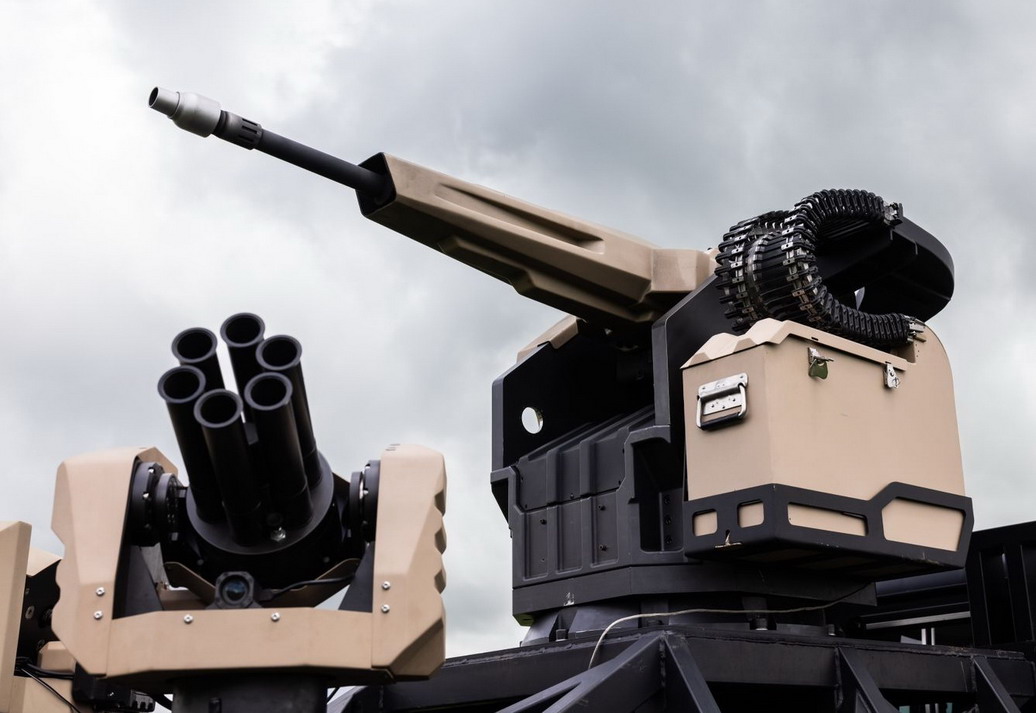
- Kinetic and Directed Energy Solutions: Because adversaries increasingly utilize pre-programmed, autonomous FPV drones that bypass RF jamming, East African militaries are acquiring kinetic C-UAS effectors. These include remote-controlled weapon stations (RCWS) linked to smart optical sights and fast-firing heavy machine guns, alongside net-firing interceptor drones.
- Western & Middle Eastern Assistance: Unlike the Sahel, East Africa maintains active defense partnerships with Western and Gulf suppliers. Turkish manufacturers have packaged C-UAS jamming equipment alongside Bayraktar TB2 deliveries, while the United States and European partners provide counter-drone radar suites and electronic warfare training to African Union transition missions operating in Somalia.
Key Operational Challenges and Strategic Bottlenecks
- The Cost-Exchange Asymmetry: The cost of acquiring high-end C-UAS systems creates a severe financial imbalance. While an adversary can assemble an FPV strike drone for $500 to $2,000, multi-sensor detection radars and high-power EW jamming installations cost hundreds of thousands of dollars.
- Frequency Hopping and Fiber-Optic Evolution: Non-state actors continually adapt to electronic countermeasures by flashing custom firmware onto flight controllers. These modifications allow drones to hop frequencies outside standard bands or operate autonomously without active radio links, rendering traditional soft-kill RF jammers ineffective.
- Electromagnetic Self-Interference: High-power broad-spectrum jamming creates severe operational trade-offs for frontline commanders. Activating wide-area C-UAS jammers frequently disrupts friendly military radio communications, satellite data links, and tactical GPS navigation systems.
- Power and Environmental Demands: Operating advanced sensor stacks and high-wattage directional jammers requires consistent electrical power. At remote Forward Operating Bases (FOBs) in the Sahelian heat or East African scrublands, fuel logistics for generators and environmental dust protection remain persistent operational failure points.
Future Trajectory through 2030
Across both West and East Africa, defense procurement is evolving from reactive, piecemeal purchases of handheld jammer guns toward networked, multi-layered C-UAS architectures. The next phase of African defense spending will center on combining low-cost passive sensors with automated Command-and-Control (C2) software. This approach will allow field commanders to detect incoming aerial threats early, assign the lowest-cost defeat mechanism (whether soft-kill EW or kinetic fire), and preserve high-value air defenses for long-range strategic threats.
Leave a Reply