
How African Militaries Combat Commercial Drone Threats
State purchases of large fixed-wing drones get the headlines. At ground level, African conflicts are being shaped by something much cheaper. Insurgents, irregular units and army patrols alike now fly commercial off-the-shelf (COTS) quadcopters and home-built first-person-view (FPV) kamikaze drones. With them, armed groups in the Lake Chad Basin, the Sahel, Cabo Delgado and eastern Democratic Republic of the Congo can take on conventional forces without airbases or technical supply chains.
Turning civilian drones into weapons
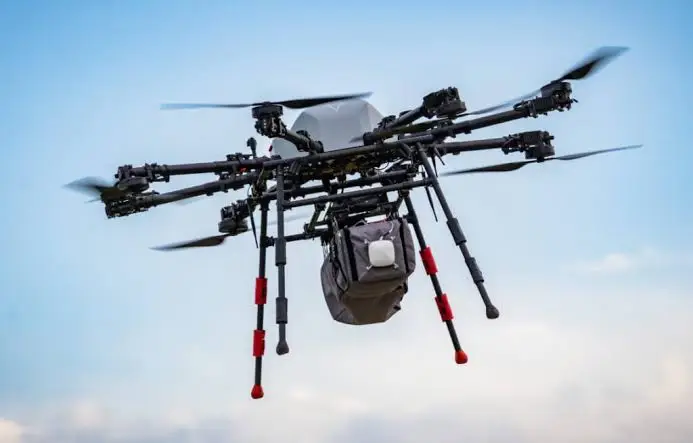
A quadcopter built for crop spraying or aerial photography gives an armed group instant, cheap surveillance. At 100 to 300 metres it is almost silent and hard to spot by eye. Insurgent operators use the camera to map base perimeters, watch patrols and spot for mortars. The drones need little training, fly from a phone-style controller and cost a fraction of a military tactical drone.
Arming them is simple. Operators build drop mechanisms from 3D-printed latches, small servos and light-sensitive relays wired to the drone’s navigation lights. Flick the light switch on the controller and the latch opens, dropping a modified 60mm mortar bomb, a hand grenade or an improvised explosive onto a defensive position. The more aggressive option is an FPV racing quadcopter packed with contact-fused explosive. At over 100 kilometres an hour, these improvised kamikaze drones hit light armoured vehicles, supply trucks and groups of troops with real precision.
Counter-drone tactics in the field
To protect forward operating bases (FOBs) and convoys, African commanders combine electronic warfare, radio-frequency detection and plain hard-kill methods. COTS quadcopters depend on unencrypted 2.4 GHz and 5.8 GHz control links and ordinary GPS, so jamming is the most effective non-kinetic defence.
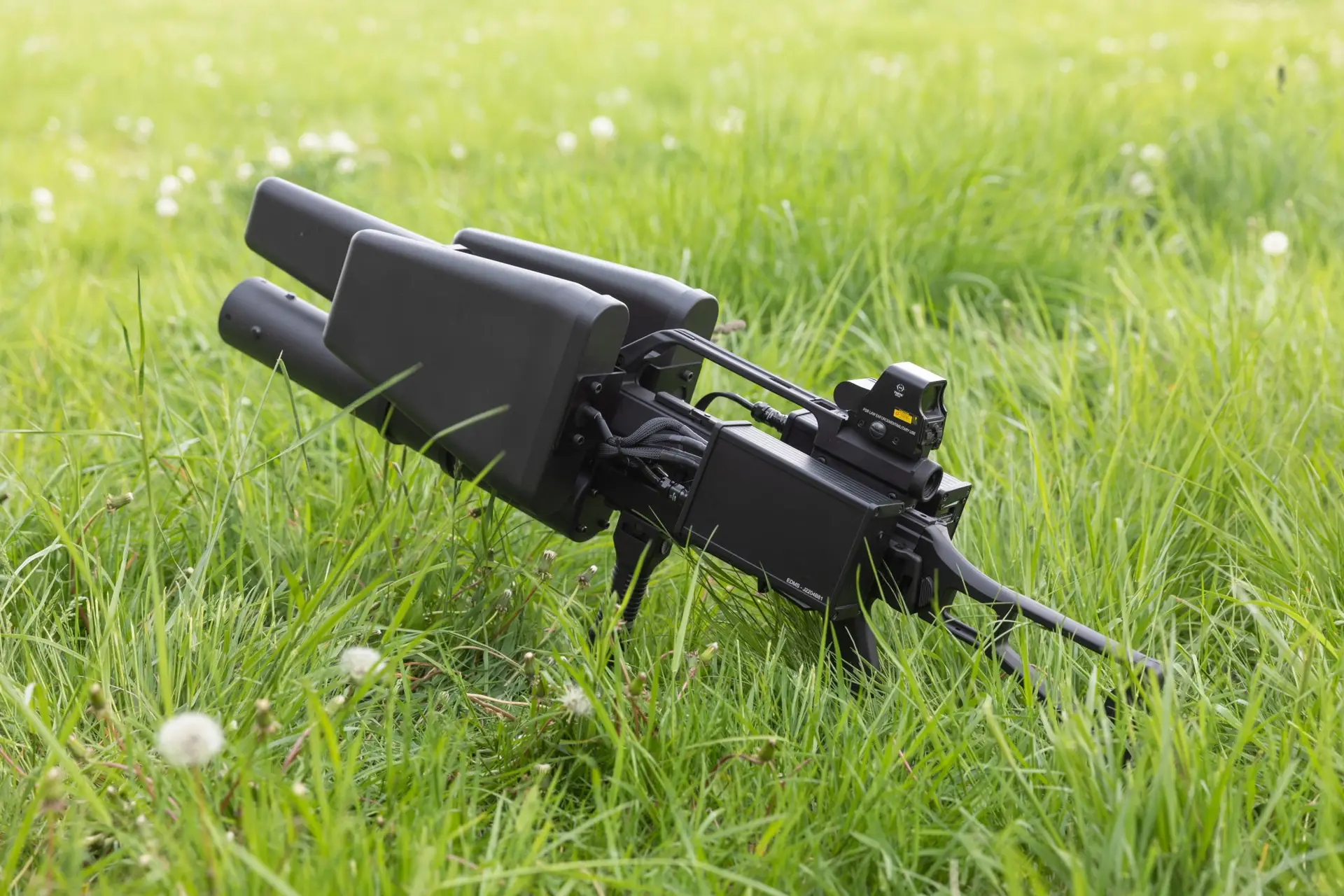
Handheld directional radio-frequency (RF) jamming guns are the infantry’s first line. When a spotter sees an incoming quadcopter, the operator points the jammer and floods its receiver with noise on the control and satellite navigation bands. Cut off from its pilot and its position fix, a commercial flight controller falls back on its fail-safe: it hovers, lands slowly or flies home. Fixed bases use omnidirectional jamming domes that block unauthorised control frequencies within about two kilometres of a command post.
When there is no jammer, or the attacker uses autonomous, jam-resistant FPV airframes, troops fall back on firepower. Units adapt old twin-barrel 23mm anti-aircraft guns and 12.7mm heavy machine guns to fill low approach corridors with high-explosive rounds. At close range, infantry use 12-gauge shotguns with heavy birdshot, which shreds plastic rotors and circuit boards. Bases also string heavy wire mesh and camouflage netting over vehicle parks and trenches to catch dropped munitions before they explode.
The limits
None of this is easy in the field. Handheld jammers need constant recharging, a strain on generators at off-grid outposts. Broad-spectrum jamming also interferes with the defenders’ own radios, satellite phones and data links.
The other side adapts. Insurgent technicians flash custom firmware onto commercial flight boards so their drones hop across non-standard channels, or switch to analogue video links that standard digital jammers miss. Fibre-optic guided FPV drones ignore radio jamming altogether. Against those, African forces will need integrated networks of acoustic sensors, thermal imagers and automated guns. Procurement records as of July 2026 already show a growing share of continental defence spending going to tactical electronic warfare.
