Category: Combat & Strike UAVs

Track combat and strike UAV news across Africa — armed drones, loitering munitions and offensive unmanned systems reshaping the continent’s battlefields.

  • How High Can African-owned Military Drones Fly?

    How High Can African-owned Military Drones Fly?

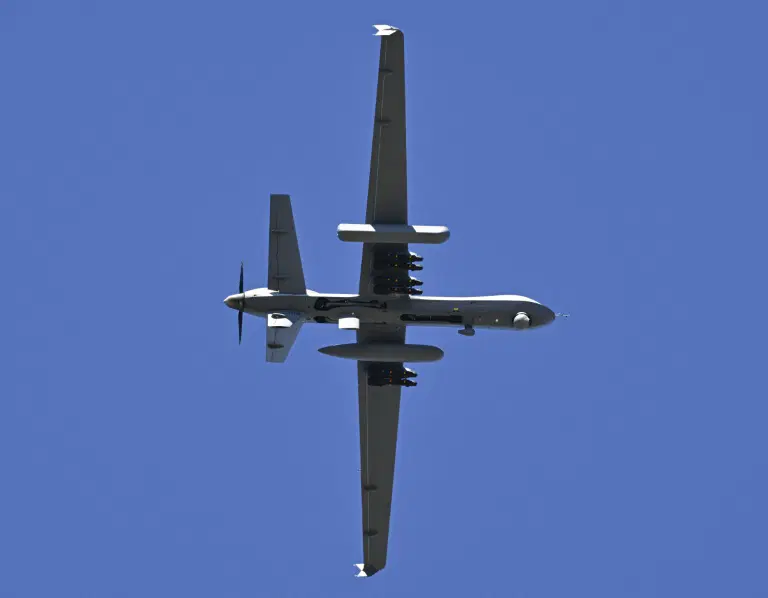
    Military drones fly anywhere from under 400 feet, the altitude a cheap FPV kamikaze drone typically holds on its final attack run, to more than 60,000 feet, the cruising altitude of the largest strategic surveillance platforms in the world. That is roughly a 150-fold spread, and the honest answer to “how high can a military drone fly” depends entirely on which of five very different categories of aircraft you are asking about. A tactical quadcopter used to spot artillery targets in Mali and a Global Hawk-class surveillance aircraft used to watch an entire ocean are both, technically, “military drones.” Nothing else about them is comparable, least of all their altitude.

    For readers of this site specifically, the more useful question isn’t the theoretical ceiling of drone technology in general. It’s where the actual aircraft flying over African skies right now sit on that spectrum, and why that number matters more than it looks like it should.

    The Official Altitude Classes: DoD Groups 1 Through 5

    The most widely used framework for sorting drones by altitude comes from the US Department of Defense, which splits unmanned aircraft into five groups based on weight, operating altitude, and speed. It’s a useful starting point even for non-US militaries, because most of the world’s drone manufacturers, Turkish, Chinese, Iranian, and African alike, effectively design toward the same altitude bands this system describes.

    Group 1 covers the smallest drones, under 20 pounds, normally operating below 1,200 feet above the ground. Hand-launched systems like the RQ-11 Raven live here, and so, functionally, does most of the FPV kamikaze drone fleet this site has covered extensively across Sudan, Mali and the wider Sahel, even though the DoD framework was written with reconnaissance micro-drones in mind rather than improvised strike weapons. Group 2 runs from 21 to 55 pounds and below 3,500 feet, home to systems like the ScanEagle. Group 3 covers aircraft up to 1,320 pounds flying below 18,000 feet, a category that includes tactical ISR platforms like the RQ-7 Shadow. Groups 4 and 5 are where the real power projection lives: both cover aircraft over 1,320 pounds, but Group 4 stays below 18,000 feet while Group 5 operates above it, and it’s Group 5 that includes the aircraft most people picture when they think “military drone,” the MQ-9 Reaper and the RQ-4 Global Hawk.

    One detail that gets lost in most explanations of this system is that the groups describe an aircraft’s normal operating profile, not the absolute maximum altitude it could theoretically reach under ideal conditions. A drone gets classified by the altitude band it’s designed and typically flown in, which is why a platform can occasionally punch well above its assigned group’s ceiling during a specific test flight, as several of the aircraft below have done, without moving into a different category.

    Where Africa’s MALE Fleet Actually Sits

    Sitting just above the DoD’s Group 3/4 boundary is a broader civilian and industry term this site uses constantly: medium-altitude long-endurance, or MALE. Most of the drones actually flying combat and surveillance missions across Africa today fall into this band, and the spread between them is bigger than it first appears.

    The Bayraktar TB2, the aircraft that made this whole category of warfare famous in Libya and has since equipped air forces from Mali to Ethiopia, has a published service ceiling of 8,239 metres, or 27,030 feet. China’s Wing Loong II, currently flying with Nigeria among other operators, climbs slightly higher at 9,000 metres, or 29,527 feet. Sudan’s Iranian-supplied Mohajer-6, the platform at the centre of this site’s extensive shootdown-record coverage of the Sudanese civil war, generally operates in a similar medium-altitude band, low enough that Qaem-series munitions launched from it can still strike ground targets accurately from altitudes of roughly 2,000 to 3,000 metres, a height chosen deliberately because it sits above the effective engagement ceiling of older man-portable air defence systems without climbing so high that targeting accuracy suffers.

    South Africa’s Milkor 380, the largest drone designed and built anywhere on the continent, matches the higher end of that band with a stated ceiling of 30,000 feet. Textron’s Aerosonde Mk. 4.7 VTOL, the aircraft Tantita Security Services now flies over Nigeria’s Niger Delta, operates lower still, rated to a 12,000-foot density altitude ceiling, reflecting its design priority of persistent low-and-slow surveillance over a fixed area rather than high-altitude standoff reach. Sudan’s own indigenous Safaroog loitering munition, built specifically to counter Rapid Support Forces jamming, tops out at roughly 4,570 metres, or 15,000 feet, appropriate for a one-way weapon that needs enough altitude to find its target but has no reason to climb further.

    The clear outlier in Africa’s inventory is the Bayraktar AKINCI, now flying with Somalia and, per this site’s reporting, sought by Libya’s rival factions. Turkish manufacturer Baykar publishes a 30,000-foot operational altitude and a 40,000-foot service ceiling for the AKINCI, and in June 2022 a test flight actually reached 45,118 feet, setting a Turkish aviation altitude record in the process. That figure puts the AKINCI meaningfully closer to the high-altitude long-endurance, or HALE, category than any other drone this site regularly covers, and it’s the main reason military analysts increasingly treat the AKINCI as a different tier of threat entirely from the TB2 it superficially resembles: enough altitude to operate above the reach of most air defence systems currently fielded on the continent, while still carrying up to 1,500 kilograms of munitions and sensors.

    Altitude works differently again for rotary-wing and hybrid VTOL designs, which trade a fixed-wing aircraft’s altitude and speed for the ability to take off and land without a runway. The Aerosonde Mk. 4.7’s Hybrid Quadrotor system, the same runway-independent design Tantita now operates in the Niger Delta’s creeks and mangrove swamps, uses four rotors purely to get airborne and land, then transitions to conventional wing-borne flight for the cruise portion of a mission. That transition costs the aircraft altitude performance a pure fixed-wing design of the same size and weight would achieve, since the airframe has to carry the extra weight of rotors and motors it only needs for a few minutes of each flight, but it buys something a pure fixed-wing MALE drone cannot offer at all: the ability to operate from a patrol boat, a forward outpost, or a stretch of open ground with no prepared strip, which matters more than another few thousand feet of ceiling in terrain where a runway is the scarcer resource.

    Why Altitude Is a Tactical Decision, Not Just a Spec Sheet Number

    None of these numbers exist for their own sake. Altitude on a military drone is chosen the same way a sniper chooses a firing position: high enough to see clearly and stay out of reach, low enough to still hit what you’re aiming at.

    The clearest illustration of that trade-off in this site’s own reporting is the specific altitude band Iranian-made Qaem munitions use when striking from Sudan’s Mohajer-6 fleet. Fly too low, and even a technically unsophisticated adversary with a shoulder-fired missile or heavy machine gun can bring the aircraft down, exactly what happened to at least three Mohajer-6 airframes RSF fighters claimed to shoot down using man-portable air defence systems in the war’s opening weeks in January 2024. Fly too high, and both the sensor resolution needed for precision strikes and the drone’s own radar visibility start working against the operator instead of for them. The 2,000-to-3,000-metre band SAF settled on threads that needle deliberately.

    Altitude also interacts directly with the counter-drone systems this site has covered in Nigeria’s build-out against ISWAP and Boko Haram. Radar systems like the 612A unit the Nigerian Air Force has trained on are generally optimised to detect aircraft-sized, higher-altitude threats, the MALE-class drones and manned aircraft radar has always had to track. A Group 5 aircraft flying at 40,000 feet is, in one sense, an easier target for that kind of radar than a cheap FPV quadcopter skimming a few hundred feet above a treeline, precisely because the low-altitude threat is smaller, slower to appear on a radar screen built for bigger, higher targets, and often masked by ground clutter. That mismatch is a large part of why handheld radio-frequency jammers like the Lithuanian-made EDM4S SkyWiper, rather than large fixed radar installations, have become the front-line response to the FPV threat specifically: the problem those systems are solving is fundamentally a low-altitude one, not a high-altitude one.

    Radar isn’t the only way altitude affects detectability, and it may not even be the most important one for the cheapest drones in this story. A quadcopter or fixed-wing FPV holding a few hundred feet of altitude is well within range of the human ear, and operators across Ukraine, Sudan and the Sahel alike have reported hearing an approaching drone’s motor, or in the case of larger Shahed-style loitering munitions, its distinctive engine note, before any sensor confirmed it. That acoustic signature is a genuine tactical vulnerability low-altitude drones accept in exchange for the radar-evasion benefit their altitude otherwise buys them, and it is one reason ground troops in several of the conflicts this site covers have taken to simply listening for incoming drones as a first line of warning, a defence exactly as old as anti-aircraft warfare itself and, so far, still often the fastest one available.

    Weather and endurance add a second, less dramatic but equally real constraint, and African operating conditions make it a genuinely regional consideration rather than an abstract one. Higher altitude generally means thinner air, which extends fuel efficiency and endurance for a fixed-wing platform but also demands a more capable engine and airframe to reach and hold that altitude in the first place, one reason the smallest and cheapest drones in African conflict zones simply cannot fly as high as an AKINCI or a Milkor 380 even if a designer wanted them to. Seasonal dust and haze across the Sahel and Sudan’s own conflict zones routinely degrade electro-optical sensor performance at the lower and middle end of the MALE altitude band long before it affects an aircraft’s structural ability to fly there, part of why several of the platforms this site covers carry both electro-optical and infrared payloads rather than relying on visible-light cameras alone. Coastal East Africa and Mozambique’s Cabo Delgado present a different problem, low cloud ceilings during the rainy season that can force even a capable MALE-class drone below its normal operating altitude simply to keep a target in view, trading away the safety margin altitude provides for basic mission effectiveness. It’s a large part of why the jump from Group 3 to Group 4 and 5 on the DoD’s own chart tracks so closely with a jump in aircraft weight, price, and sophistication: altitude, endurance, and cost rise together, not independently, and no amount of engineering fully insulates any of them from the specific climate a drone actually has to fly in.

    The High-Altitude Extreme, and Why It Isn’t in Africa Yet

    Above even the AKINCI’s altitude band sits a genuine outlier class: HALE aircraft like the American RQ-4 Global Hawk, which cruises at roughly 60,000 feet, above nearly all commercial air traffic and most surface-to-air missile systems, and can stay there for more than 30 hours at a stretch. Some classification systems set the MALE/HALE boundary as low as 9 kilometres of altitude; others push it to 18 kilometres, a threshold so demanding that only a handful of aircraft in the world, the Global Hawk chief among them, actually clear it.

    No African-operated drone currently approaches that tier, and the gap isn’t really about ambition. HALE-class aircraft demand an engineering and cost base, jet or turboprop propulsion, pressurised systems, satellite-relay communications capable of maintaining a link across an aircraft’s entire operational radius, that sits well beyond what any African air force has so far been willing or able to fund, even as the same air forces have moved quickly to adopt MALE-class systems like the TB2 and Wing Loong II. The AKINCI’s altitude record, impressive as it is on Africa’s regional scale, remains roughly 15,000 feet short of Global Hawk territory.

    Altitude Doesn’t Mean Invulnerable

    It’s worth ending on a caution this site has documented repeatedly in its own shootdown reporting: a high service ceiling is not the same thing as safety. Sudan’s own war has produced a running exchange of drone kills on both sides specifically because modern air defence systems, from Chinese FK-2000 gun-missile batteries to purpose-built interceptor loitering munitions like Turkey’s Roketsan EREN, are increasingly designed to reach exactly the altitude band MALE-class drones operate in. Further afield, a Saudi-operated Wing Loong II was reportedly shot down by Houthi air defences over Yemen’s Al-Bayda Governorate as recently as July 2026, evidence that even a drone flying near the top of its rated ceiling is not automatically out of reach of a sufficiently capable opponent.

    That’s the real lesson underneath all the numbers above. Altitude buys a military drone time, sensor range, and a measure of protection from the crudest air defences, RPGs, small arms, and older MANPADS designs. It does not buy immunity, and the steady arms race between higher-flying drones and better-reaching interceptors, playing out visibly across Sudan, the Sahel, and now the wider Red Sea region, is likely to keep pushing both numbers, the altitude drones fly at and the altitude their opponents can reach, higher for years to come.

  • Somalia: Al-Shabaab, AFRICOM, and a New IS Rival in the Sky

    Somalia: Al-Shabaab, AFRICOM, and a New IS Rival in the Sky

    Somalia is running two parallel drone stories at once, and only one of them gets regular coverage. The familiar one is the steady drumbeat of US Africa Command airstrikes against al-Shabaab, which has continued at a near-monthly pace through 2025 and 2026. The newer, less-covered one is unfolding roughly a thousand kilometres north, where al-Shabaab’s smaller rival, Islamic State Somalia, has started using armed drones in actual combat for the first time, a development that puts Somalia at the centre of a much larger question about whether Yemen’s Houthi movement will end up arming an African insurgency with genuine weaponized drone capability.

    AFRICOM’s campaign against al-Shabaab is, by its own account, routine at this point. The command’s June 19, 2026 strike near Welmaro, roughly 103 kilometres north of Kismayo, followed the same format AFRICOM has used for dozens of similar releases: coordinated with the Federal Government of Somalia, target described only as “al-Shabaab,” no aircraft or munitions disclosed, citing operational security. A second strike hit the same Welmaro area on July 15, and AFRICOM’s own press archive shows a similar tempo running back through the spring, strikes on March 16, 18, 19 and 27, another on May 6, more in June. What AFRICOM’s releases never specify is the platform doing the striking, consistent with a longstanding US policy of not disclosing which of its MALE-class ISR and strike drones are involved in any given operation. Somalia has been a testing ground for that ambiguity for years: independent analysts including FDD’s Long War Journal have noted that a number of strikes widely assumed to be American are, on closer inspection, more likely conducted by the United Arab Emirates, which has quietly supported Puntland’s own counter-terrorism operations with its own aircraft and has occasionally been named directly by Puntland officials when the US declines to take credit.

    In 2018, suspected U.S. drone has crashed in Mubarak, a small agricultural town southwest of the capital.

    The story getting less attention is happening in Puntland, where Islamic State Somalia has been fighting to hold its stronghold in the Cali Miskat mountains against a sustained government offensive that began in late 2024. On 20 and 23 January 2025, ISS fighters used armed drones against Puntland’s Dervish Force and Maritime Police Force at their base in Buuraha Cali Miskat, killing at least two soldiers, the group’s first confirmed use of drones in actual combat rather than surveillance or propaganda. ACLED, which tracks conflict incidents across the continent, confirmed it was the first time the monitor had recorded drone use by ISS in its data. The attacks came about a week after Puntland’s “Operation Lightning” had killed 26 fighters and shot down nine ISS drones, a mix of surveillance quadcopters and explosive-carrying variants, suggesting the group had built up a larger drone inventory than the January strikes alone revealed. The pattern continued through the year: by February, Puntland officials said ISS launched seven drones at security force positions in a single night, of which five were shot down and two detonated, according to reporting carried by AllAfrica, and offensives and counter-offensives in the same mountain range continued at least into September.

    What makes Somalia unusually significant, rather than just another entry in the continent’s growing list of drone-armed insurgencies, is a specific supply-chain thread analysts keep returning to. In September 2024, Puntland security forces intercepted seven men attempting to smuggle commercial drones modified to carry explosives through Bosaso port, drones believed to have originated with Yemen’s Houthi movement and intended for al-Shabaab, according to analysis published by Lawfare. Al-Shabaab and Islamic State Somalia are ideological rivals, one an al-Qaeda affiliate, the other loyal to ISIS, and normally have little reason to cooperate. Yet ISS’s first armed drone attack came only a few months after that seizure, leading some analysts to suggest a pragmatic, transactional relationship around weapons and technical expertise may be developing across that rivalry, one this site has covered from the naval-drone angle separately, where a 2025 UN Panel of Experts report documented direct Houthi cooperation with al-Shabaab, including GPS tracking equipment supplied to Somali pirates and reported drone-technology training. If that pipeline is real and broadens beyond al-Shabaab, Somalia would be the clearest place on the continent to watch for the transition analysts describe as the actual “gamechanger”: not more surveillance drones, but a non-state group receiving genuinely weaponised systems built and battle-tested somewhere else.

    AFRICOM itself is adjusting to the same threat environment its own strikes are meant to suppress. In May 2026, the command graduated its first “African Lion” drone academics class, more than 20 service members from four countries trained on low-cost small unmanned aircraft systems at Southern Zone Headquarters in Agadir, Morocco, and separate reporting has referenced AFRICOM conducting field tests of a drone swarm defence system, evidence that the command sees small, cheap drones as a rising threat to its own forces and partners, not just a tool its adversaries occasionally use.

    Somalia’s two drone stories are really one story told from opposite ends. Al-Shabaab remains the larger, better-resourced group but has, so far, used drones mainly for filming and coordinating attacks rather than weaponising them directly, a caution this site has documented as a pattern elsewhere on the continent among groups wary of losing scarce hardware. Islamic State Somalia, smaller and more desperate, crossed that line first, in the same year that Houthi-linked hardware was intercepted heading toward its rival. Whether that was coincidence, competition, or the beginning of a shared supply chain between two groups that otherwise want nothing to do with each other is the question that will determine how the rest of this story unfolds.

  • Sudan Fields Homegrown Attack Drone to Counter Jamming Threat

    Sudan Fields Homegrown Attack Drone to Counter Jamming Threat

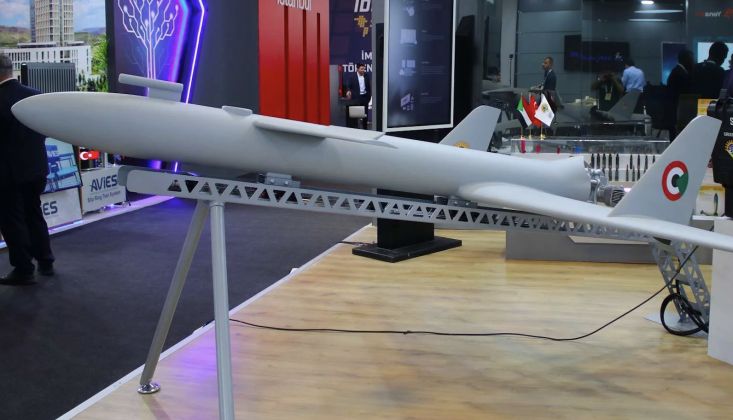
    Sudan’s Military Industry Corporation (MIC), the state defence conglomerate, has fielded a domestically built loitering munition called the Safaroog, according to the corporation’s own disclosures and confirmed by Jane’s, marking the clearest evidence yet that Sudan’s decades-old defence-industrial base is now producing weapons for its own civil war rather than simply importing them.

    MIC unveiled the Safaroog publicly for the first time at the International Defence Industry Fair (IDEF) in Istanbul in July 2025, according to Army Recognition and Military Africa, both of which reported the drone as already in active service with Sudan’s armed forces. A company representative told the outlets the system has also drawn interest from unnamed buyers in the Middle East.

    The Safaroog is a single-engine, delta-wing one-way attack drone measuring 2.88 metres in length with a 3.3-metre wingspan, according to specifications reported by Militarnyi. It is powered by a 342cc gasoline engine driving a twin-blade pusher propeller, giving it a cruising speed of 160 kilometres per hour and a top speed of 200 kilometres per hour. Reported range varies between 300 and 600 kilometres depending on configuration, with flight endurance of two and a half to four and a half hours and a service ceiling of roughly 4,570 metres. Sudan’s Military Industry Corporation says the aircraft’s SNAP-5 autopilot, combined with GNSS and inertial navigation and a dedicated anti-jamming algorithm, gives it a claimed circular error probable of under ten metres, launched from either a catapult or a pneumatic system. Sudanese officials have not disclosed the drone’s warhead weight, though it has previously been reported at around 30 kilograms.

    Sudan’s Armed Forces (SAF) developed the Safaroog specifically to counter Belarusian-made Groza-S electronic warfare systems the Rapid Support Forces (RSF) has used to detect and jam SAF’s existing fleet of Iranian and Turkish-supplied drones, Africa Defense Forum reported, citing evidence SAF commanders recovered mast-mounted jamming antennas matching Belarusian equipment at a captured RSF position north of Khartoum. The drone’s anti-jamming design is a direct response to that threat rather than a general-purpose export product.

    The Safaroog is one of several systems the Military Industry Corporation has developed since Sudan came under an international arms embargo in the 1990s, when it began receiving technical assistance from Chinese, Russian and Iranian firms, according to DefenceWeb. MIC also produces the Kamin-25, a smaller loitering munition first displayed in 2023 that is launched from another aircraft and carries either a 5-kilogram anti-tank or 7-kilogram anti-personnel warhead, alongside the BK-3 precision-guided bomb and the SAFAT series of light aircraft. Iranian assistance to Sudan’s defence-industrial base, including the Yarmouk Military Industrial Complex south of Khartoum, predates the current civil war by decades and has continued to shape Sudanese production even as direct Iranian involvement has fluctuated with the conflict.

    Unmanned Africa has previously reported on the broader long-range drone escalation between SAF and the RSF, and on the running exchange of shootdown claims between the two sides. The Safaroog’s emergence adds a distinct dimension to that pattern: rather than relying solely on Iranian, Turkish or Chinese hardware, Sudan’s state defence industry is now producing a purpose-built countermeasure to a specific enemy capability, developed and fielded while the war that created the need for it is still being fought.

  • Ukraine Extends Drone War Into Africa’s Deserts, CNN Investigation Finds

    Ukraine Extends Drone War Into Africa’s Deserts, CNN Investigation Finds

    Ukrainian military intelligence has deployed drone specialists to at least three African countries to help local forces fight Russian troops and their proxies, according to a CNN investigation published September 12 based on interviews with Ukrainian soldiers and officers involved in the operations.

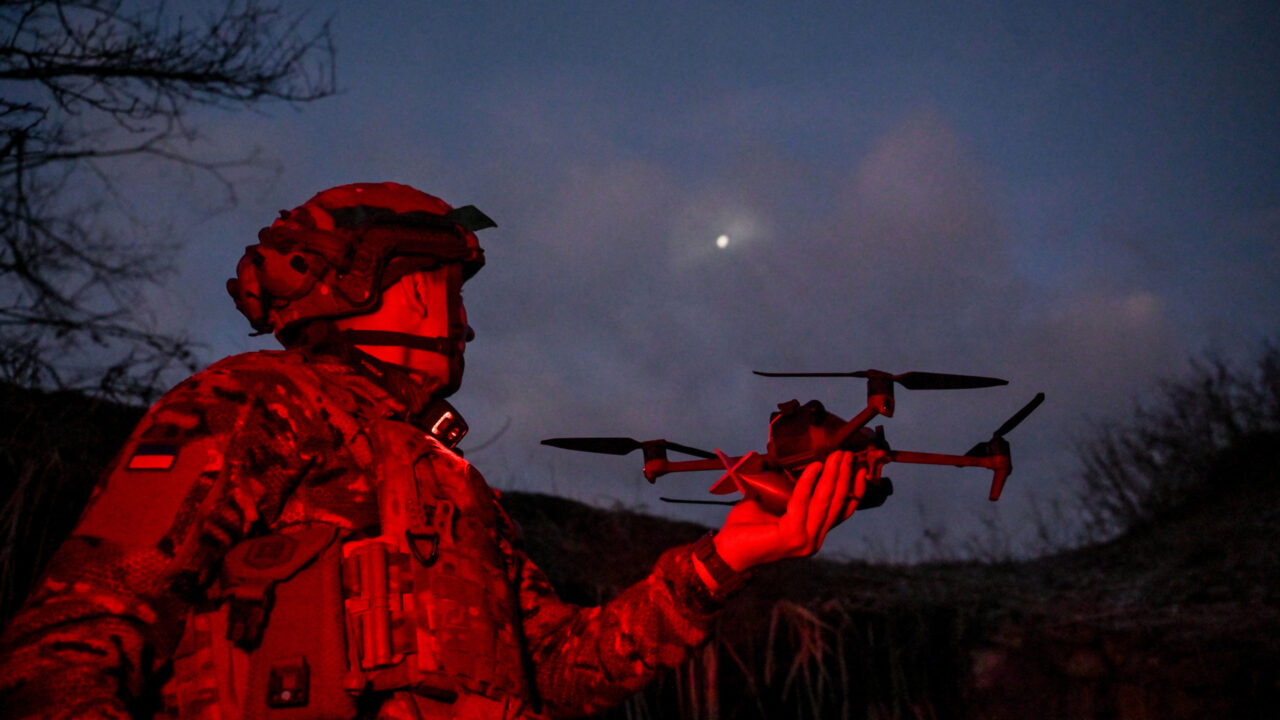
    Around 15 Ukrainian drone operators are working in northern Mali, supporting Tuareg-led separatist forces fighting Russia’s Africa Corps and the Malian junta, CNN reported, citing Ukrainian personnel deployed there. A Ukrainian Defense Intelligence source told the network that additional specialists have been stationed in Sudan, and that fighters from Chad, Niger and Burkina Faso previously travelled to Mali to receive drone training from the Ukrainians. Kyiv has also sent teams to at least five Middle Eastern countries this year to train local forces against Iranian-made Shahed drones, the same weapon Russia uses against Ukrainian cities, according to the report.

    The deployments mark Kyiv’s clearest effort yet to project its wartime drone expertise beyond Ukraine’s own front lines. A Ukrainian intelligence source described the strategy to CNN as turning battlefield experience into “a foreign policy tool,” saying overseas missions also let Ukrainian units test equipment in conditions, extreme heat, dust, and long supply lines, that Ukraine’s own war has not required.

    Mali has become the most visible theatre. The Ukrainian unit there is embedded with the Azawad Liberation Front (FLA), the Tuareg-led coalition that grew out of the earlier CSP-DPA political framework and now controls large parts of Mali’s north. According to CNN’s sourcing, the Ukrainians coordinate FLA drone missions remotely rather than joining front-line operations, relaying flight instructions by radio after receiving video feeds over the internet. One operator quoted by CNN said the arrangement was a matter of Ukrainian and Tuareg forces facing a shared adversary rather than any deeper alignment.

    The clearest test of that support came in April, when the FLA and the al-Qaeda-linked JNIM launched coordinated attacks across Mali, killing then-Defence Minister Sadio Camara in a car-bomb attack on his home in Kati and forcing Malian and Africa Corps troops to abandon Kidal, a strategic northern city, without a sustained fight. Héni Nsaibia, a West Africa analyst at the Armed Conflict Location and Event Data Project, told CNN the loss of Kidal was a major setback for Mali’s junta and its Russian backers, though he said Africa Corps had likely prevented an even larger collapse of the government’s position elsewhere. A Ukrainian drone operator told CNN his unit assisted the rebels during the Kidal operation; Russia’s defence ministry has accused Kyiv of training the fighters who carried it out, an allegation Ukraine has previously denied making any substantial contribution to.

    Ukraine’s presence in Libya follows a similar pattern but adds a maritime dimension. CNN reported that Ukrainian naval drone operators have used the port city of Misrata as a base since late 2025 to strike vessels in Russia’s so-called shadow fleet, the ageing tankers Moscow uses to move sanctioned oil, in exchange for training local forces. That deployment was first reported in March by French public broadcaster RFI, which put the number of Ukrainian officers and technical specialists in western Libya at more than 200 across three locations, a considerably larger footprint than the Mali contingent. The arrangement drew unwanted attention earlier this year when an explosive-laden Ukrainian naval drone escaped its operators’ control and washed up near the Greek island of Lefkada; Greece lodged a formal diplomatic protest, and Kyiv apologised while blaming Russia’s shadow-fleet activity for creating the underlying risk.

    Sudan’s role in the story extends further back than this week’s report suggests. CNN itself first documented Ukrainian-linked drone activity there in 2023, when it geolocated a series of strikes on the Shambat bridge connecting Omdurman and Khartoum and had the control equipment in leaked footage analysed by a researcher at the open-source weapons tracker Calibre Obscura, who found it consistent with hardware Ukrainian forces use to operate modified commercial drones. That reporting tied the strikes to a period when Wagner mercenaries were moving arms convoys through Chad into Sudan. Kyiv has never officially confirmed a role in either the earlier or the current Sudanese operations.

    The human cost of the wider Russia-Mali partnership Ukraine says it is trying to undermine has drawn separate, independent scrutiny. Human Rights Watch reported in July that a Russian-identified Sukhoi Su-24 killed eight civilians, including three children, in an airstrike on Kyrnia village in Mali’s Mopti region, and reported again in August that Africa Corps fighters summarily killed nine civilians, four of them children, during a raid on the village of Bombori. Neither report mentioned Ukraine. Russia’s foreign minister, Sergey Lavrov, said last month that Africa Corps “operates strictly within the bounds of legality” and only at the request of host governments. Separately, Russian officials including deputy UN representative Dmitry Polyansky have accused Ukrainian drone pilots of supporting terrorist-designated groups across a wider set of countries, including Chad, the Central African Republic and Democratic Republic of Congo, claims that have appeared in Russian state media but that CNN’s reporting does not corroborate.

    Kyrylo Budanov, Ukraine’s former military intelligence chief and now head of President Volodymyr Zelensky’s presidential office, has been publicly unambiguous about the strategy’s aims, saying in 2023 that Ukraine intended to keep pressuring Russian forces “anywhere on the face of this world” until Ukraine’s victory. He reiterated the point this week, crediting Ukrainian intelligence with defending the country’s interests “from Russia to Africa.”

  • Libya’s Arms Embargo Frays as Haftar Eyes New Drones

    Libya’s Arms Embargo Frays as Haftar Eyes New Drones

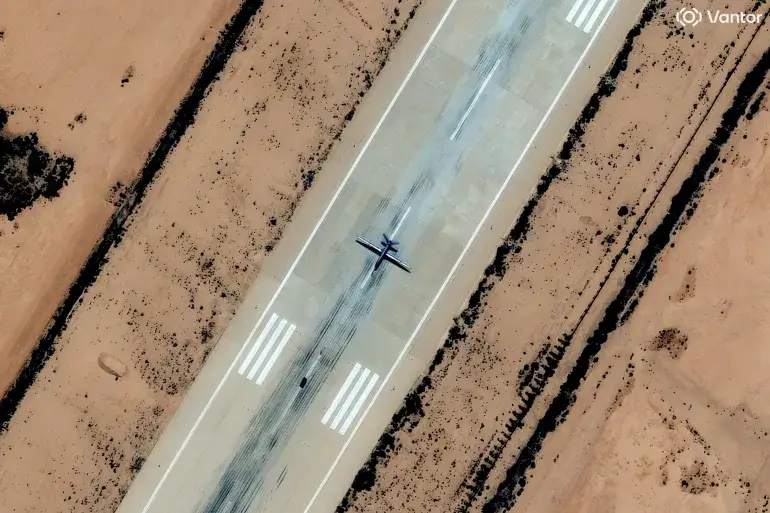
    In April 2026, Reuters reported that satellite imagery showed drones arriving at Al Khadim airbase in eastern Libya, in territory controlled by Khalifa Haftar’s Libyan National Army (LNA). Image analysts who reviewed the pictures for the news agency identified one aircraft as most likely a Chinese Feilong-1 and a second, smaller airframe as resembling a Turkish Bayraktar TB2, deliveries that would breach the arms embargo the United Nations has maintained on Libya since 2011. The find matters less for its novelty, both sides in Libya’s long-running dispute have received prohibited weapons for years, than for its timing. It lands five years into a fragile ceasefire, revives interest in the conflict that first made the TB2 famous, and raises the question of whether the 2020 Tripoli stalemate is as settled as it has looked.

    In April 2026, Reuters reported that satellite imagery showed drones arriving at Al Khadim airbase in eastern Libya, in territory controlled by Khalifa Haftar’s Libyan National Army (LNA)

    Libya has been split between two rival administrations since a UN-facilitated process failed to deliver the elections it promised in 2021. The Government of National Unity (GNU), based in Tripoli and led by Prime Minister Abdul Hamid Dbeibah, controls the west with the backing of an array of militias and, since 2020, direct Turkish military support. In the east, the House of Representatives in Tobruk backs a rival administration, the Government of National Stability (GNS), led by Prime Minister Osama Hamad, whose security is provided by Haftar’s LNA. The current division hardened after the LNA laid siege to Tripoli for fourteen months starting in April 2019, an offensive that Turkish intervention, including the Bayraktar TB2’s combat debut at scale, broke by mid-2020. The ceasefire that followed left the frontline roughly where the fighting stopped, and it has stayed there since, even as both governments’ claims to legitimacy have grown steadily weaker and elections remain unscheduled.

    The Security Council imposed the arms embargo in February 2011 through Resolution 1970, which also gave its name to the committee that still oversees the sanctions regime today, and compliance has been thin almost since the resolution passed. A UN Panel of Experts concluded in 2017, and reaffirmed in later reporting, that the United Arab Emirates (UAE) had “most probably” supplied and helped operate Chinese-made Wing Loong II drones for Haftar’s forces during the Tripoli offensive, aircraft that gave the LNA a marked early edge before Turkey’s TB2s arrived to contest the skies. Enforcement since has stayed weak enough that violations barely register as news anymore: a March 2026 UN report found that a shipment of trucks, delivered to Libya after what investigators described as secret negotiations involving the European Union, Greece, the UAE, and both Libyan governments, was split between Tripoli-aligned Misrata and Haftar-aligned Benghazi, with some vehicles ending up with a militia that runs a notorious migrant detention camp.

    Against that backdrop, the Al Khadim imagery is notable mainly for what it suggests about the LNA’s ambitions rather than for breaking new legal ground. The Feilong-1, built by the Xi’an-based Zhong Tian Guide Control Technology Company (marketed under the Zhongtian Feilong brand), first flew in January 2019 and bears a strong resemblance to China’s larger CH-5 (Rainbow-5) family, with a maximum takeoff weight of around 3,200 kilograms, a payload of up to 1,400 kilograms, and four underwing hardpoints. It had not previously been confirmed in African service. Reuters could not establish who supplied either aircraft at Al Khadim or precisely when they arrived, and neither the Chinese government, Turkish officials, nor the LNA responded substantively to requests for comment. What the imagery does suggest is that Haftar’s forces are working to close a gap that opened in October 2022, when Tripoli’s GNU signed a deal with Turkish manufacturer Baykar for the AKINCI, a larger, longer-range, and more heavily armed uncrewed combat aircraft than anything the LNA has been confirmed to operate.

    Turkey’s position complicates any simple reading of the story. Ankara has spent years cultivating a working relationship with Haftar’s camp even while remaining the GNU’s principal military patron, a balancing act it has practiced elsewhere on the continent by selling rival buyers different tiers of the same product line. Whether that extends to supplying the LNA directly with combat drones remains unconfirmed, but Turkish officials have acknowledged publicly that exported drones carry technical safeguards, described in a December 2021 interview by then head of Turkey’s defence industries authority Ismail Demir as a form of remote lockout, that would let Ankara restrict how a buyer uses the aircraft. If Haftar’s forces are indeed flying Turkish-made drones, they would be doing so without the reassurance the UAE’s Wing Loong IIs offered during the 2019 to 2020 siege: aircraft supplied, and according to the UN panel’s findings partly operated, by a patron with no ambiguity about whose side it was on.

    None of this has translated into renewed large-scale fighting, and there are reasons to think it might not, at least for now. In April 2026, mediation led by US Senior Advisor for Africa Massad Boulos helped the two governments agree on Libya’s first unified state budget in nearly a decade, a rare concrete step that UN officials have cited as evidence the political track still has life in it. But the same month’s satellite imagery is a reminder that Libya’s political and military tracks are not necessarily moving in step with each other. The country that gave the world its first large-scale demonstration of what an inexpensive, expendable drone could do to a conventional army is once again the place both sides are watching most closely to see whether that lesson needs relearning.

  • How Cheap FPV Drones Helped Azawad Rebels Retake Kidal

    How Cheap FPV Drones Helped Azawad Rebels Retake Kidal

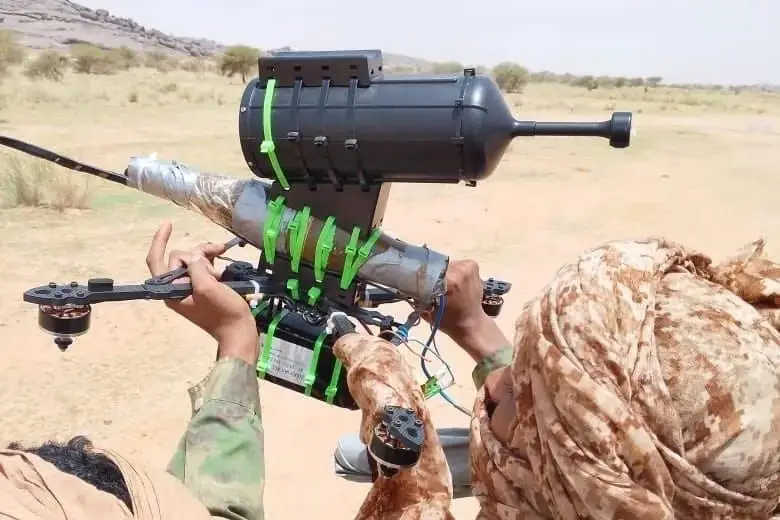
    Since early 2026, Tuareg-led separatist fighters in northern Mali have used cheap, operator-guided drones to do what a decade of conventional rebellion could not: drive the Malian army and its Russian Africa Corps partners out of the region’s symbolic capital. The Azawad Liberation Front (FLA), the armed coalition that grew out of the older CSP-DPA political framework, has built a First-Person View (FPV) drone programme that pairs racing-quadcopter airframes with repurposed Rocket-Propelled Grenade (RPG) warheads, giving lightly armed separatist units a precision anti-armour capability that would have been unthinkable for a non-state force in the Sahel only two or three years ago. Unmanned Africa has covered the broader FPV phenomenon across Sudan and the Sahel separately; this piece looks specifically at how the FLA built its programme and what it has meant for the fight over northern Mali.

    From CSP-DPA to the Azawad Liberation Front

    The FLA’s roots run through nearly a decade and a half of intermittent Tuareg rebellion. The Cadre stratégique permanent pour la paix, la sécurité et le développement (CSP-PSD), an alliance of Tuareg-led factions formed in May 2021 to help implement the 2015 Algiers Accord, which had granted northern Mali’s rebel coalition de facto control of Kidal, lost that peace framework in December 2022, when its constituent groups suspended participation in the agreement’s UN-monitored oversight committee. Mali’s junta, which had seized power in 2020 and brought in Wagner Group mercenaries the following year, moved to end the arrangement by force: Malian and Wagner units captured Kidal in November 2023, ending nine years of de facto rebel control there. The rebel coalition renamed itself the Cadre stratégique pour la défense du peuple de l’Azawad (CSP-DPA) in April 2024, but its fortunes shifted again after a Malian Bayraktar TB2 strike near Tinzaouaten in late 2024 killed several senior commanders. Out of that loss, on 30 November 2024, came the Azawad Liberation Front, a more explicitly military coalition under Tuareg commander Alghabass Ag Intalla. Malian drones killed one of the group’s own top leaders, Fahad Ag Almahmoud, the very next day, an early sign that the drone war in northern Mali would run in both directions. Analysts describe the FLA’s parallel alignment with the al-Qaeda-linked Jama’at Nusrat al-Islam wal-Muslimin (JNIM) as a marriage of convenience rather than an ideological merger: the two share an enemy in the Malian junta but little else, with the FLA seeking an independent Azawad state and JNIM seeking to topple the government in Bamako outright.

    The Fall of Kidal

    That convergence produced the most serious challenge to Bamako’s authority in years. On 25 April 2026, the FLA and JNIM launched coordinated attacks across Mali, hitting military positions in Bamako, Kati, Gao, Sévaré, Mopti and Kidal in what regional analysts called the most audacious rebel operation in over a decade. A suicide car-bomb attack on the Kati home of Defence Minister Sadio Camara, a central figure in Mali’s 2020 and 2021 coups and the architect of its pivot from French to Russian security partnerships, killed him instantly; JNIM claimed responsibility. The following day, FLA fighters entered Kidal and negotiated an escorted withdrawal of Malian and Africa Corps personnel rather than fighting for the city outright, a reversal so complete that footage of Tuareg fighters mocking departing Russian vehicle columns circulated widely online. Casualty figures remain contested: Mali’s military claims over 200 rebels killed, Africa Corps claims over 1,000, and the FLA claims to have killed several dozen opponents in Kidal alone while capturing more than 200 more, along with an Africa Corps Mil Mi-35 helicopter and its crew. What is not in dispute is the outcome. As of the most recent reporting available, Kidal remains under FLA control, and Malian and Russian forces, unable to retake the city on the ground, have instead resorted to air strikes against it, while Moscow has publicly rejected FLA demands for a full Africa Corps withdrawal from the country.

    Fiber-Optic FPVs and the RPG-7 Warhead

    The drone campaign that helped set up that collapse had been building for months before the April offensive. Through March 2026 the FLA said it struck Malian and Africa Corps forces seven separate times, hitting joint bases at Anéfis and Aguelhok and, in one raid on Camp Firhoun ag Alinsar in Gao, launching a swarm of roughly 25 armed kamikaze drones in a single attack. A strike on a Malian and Africa Corps outpost at Adghar-Takalot, south of Kidal, destroyed an armoured vehicle and killed or wounded personnel from both forces, one of several attacks that let the FLA reach targets away from the front line with a weapon light enough for a single fighter to carry and operate. In one of the more pointed strikes of the campaign, FLA fighters flew an FPV drone fitted with a PG-7V warhead, the standard high-explosive anti-tank round for the RPG-7 launcher, directly into a facility supporting the Malian military’s own Bayraktar TB2 ground control operations near Tessalit, damaging equipment the army had relied on for years to fly its own drones against the rebels. By late 2025, imagery circulating from FLA operations showed drones flying on a physical fibre-optic tether rather than a radio link, a control method that leaves the aircraft largely immune to the jamming and electronic warfare that had started to blunt radio-controlled FPVs, mirroring a shift that first appeared at scale in Ukraine. Reports from mid-2024 also indicated Tuareg operators had received outside instruction on drone operations, which French outlet Le Monde attributed to Ukrainian personnel training fighters opposed to the Wagner Group, though neither government has confirmed the arrangement on the record.

    Why FPVs Neutralize an Armour Advantage

    The tactical logic behind the campaign is straightforward. A racing-quadcopter airframe fitted with a repurposed RPG warhead costs a small fraction of the light armoured vehicle it can disable, and northern Mali’s open desert terrain, which normally favours a mechanised force’s speed and firepower over a dispersed insurgency, offers those vehicles little natural concealment from an aircraft that can loiter overhead and pick its moment. The Battle of Anoumalane in June 2025 illustrated the resulting imbalance starkly: FLA fighters attacking a roughly thirty-vehicle Malian and Africa Corps column in rural Kidal region killed around 45 personnel, destroyed or damaged between seven and twenty-one vehicles and captured fifteen more, against three killed and seven wounded on their own side, the heaviest single defeat Malian and Russian forces had suffered since a similar ambush at Tinzaouaten nearly a year earlier. For a force that has never fielded conventional armour of its own, an FPV drone that costs a few hundred dollars and can be flown by a single operator has become the closest thing the FLA has to an equaliser against vehicles that would otherwise dominate open ground.

    None of this has settled the wider war. JNIM has maintained a fuel blockade on Bamako since September 2025, Mali’s junta continues to receive fresh Bayraktar deliveries from Turkey, and Russia shows no public sign of scaling back its commitment despite the loss of Kidal. But the FLA’s drone campaign has already done something that a decade of rifles and pickup trucks could not: it has turned Africa Corps’s armoured columns, once the clearest sign of Bamako’s military edge over the separatists, into a liability rather than an asset on the open ground of the Azawad.

  • How Tehran Built Its African Drone Supply Network

    How Tehran Built Its African Drone Supply Network

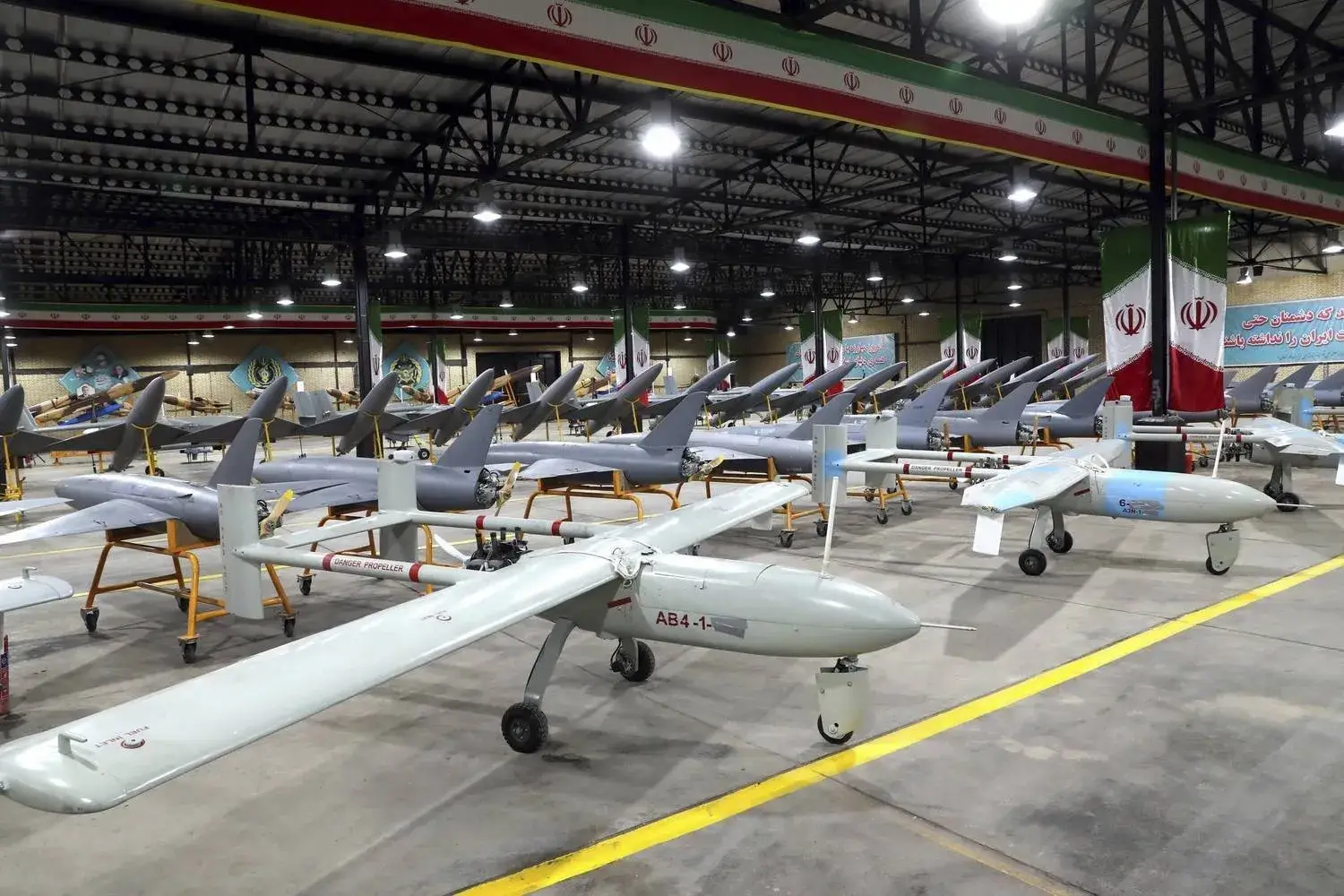
    The spread of military-grade unmanned aerial vehicles (UAVs) across Africa has altered the character of several regional conflicts over the past three years, shifting aerial power away from the handful of states that could once afford conventional air forces. Turkish Bayraktar platforms and Chinese Rainbow-series drones drew most of the early attention in African procurement circles, but Iran’s uncrewed systems have built a quieter, more durable footprint on the continent. Tehran has supplied reconnaissance drones, medium-altitude strike platforms and long-range loitering munitions directly to state militaries and allied factions, pairing low-cost hardware with technology-transfer arrangements, maritime supply routes through the Red Sea and, in at least one documented case, local assembly infrastructure inside the recipient country. As Unmanned Africa’s combat reporting has shown repeatedly, these low-cost platforms let resource-constrained militaries maintain persistent surveillance and strike capability without the cost of a modern air force.

    Iran’s defence exports to Africa fit a deliberate pattern rather than occurring at random. Tehran uses the trade to project influence beyond the Persian Gulf, work around international sanctions, and earn foreign currency, leaning on maritime routes across the Red Sea, diplomatic openings in North Africa, and older security relationships to move hardware directly to frontline actors. The engineering philosophy behind the hardware supports that strategy: Iranian UAVs favour modular construction, commercially available electronics, glass-fibre composite airframes and simple internal combustion engines, keeping unit costs low enough that operators can absorb heavy losses in high-attrition combat zones without the financial strain that flying more expensive Western or Chinese systems would bring.

    Sudan: Where the Strategy Was Tested

    Sudan illustrates the strategy most clearly. When war broke out in April 2023 between the Sudanese Armed Forces (SAF), commanded by General Abdel Fattah al-Burhan, and the paramilitary Rapid Support Forces (RSF), led by Mohamed Hamdan Dagalo and widely known as Hemedti, the army had almost no functioning air support beyond a handful of ageing MiG-29 and Sukhoi Su-25 jets ill-suited to dense urban fighting, and it struggled to slow the RSF’s mechanised advance through Khartoum, Omdurman and Darfur. Facing that shortfall, the SAF renewed security cooperation with Tehran, and cargo flights carrying unassembled airframes began arriving through Port Sudan in late 2023, accompanied by Iranian technical advisers. Flying from Wadi Seidna Air Base near Omdurman, Mohajer-6 crews used thermal imaging to track RSF fuel and ammunition convoys moving from Darfur toward the capital, passing coordinates to artillery units or striking command vehicles directly with Qaem-series guided munitions. That persistent overhead coverage helped SAF infantry retake parts of Omdurman, including the national radio and television headquarters, in early 2024.

    That early intervention proved formative rather than decisive. Sudan’s civil war has continued for more than three years since, and drone warfare on both sides has grown considerably more capable and more evenly matched. The SAF fully recaptured Khartoum in 2025 and now flies Turkish and Chinese platforms alongside its Iranian-supplied aircraft, while the RSF, backed financially by the United Arab Emirates, fields its own Chinese-designed long-range strike drones from bases in Darfur, territory it largely controls after an eighteen-month siege that ended with the fall of El Fasher in October 2025. Unmanned Africa has covered the resulting long-range loitering-munitions build-up in detail separately. Independent monitors recorded more than two dozen drone incidents around the contested city of El Obeid in a single month in mid-2026, the highest tally since the war began, and fighting continued into late August 2026, with RSF advances toward the Ethiopian border in Blue Nile state. A United Nations-mandated inquiry found that RSF conduct around El Fasher bore the hallmarks of genocide, and a Sudanese court sentenced Hemedti to death in absentia in July 2026 over separate atrocities in West Darfur, a verdict the RSF’s political wing has rejected and one that carries little practical weight while the group controls the territory in question.

    Ethiopia’s Tigray War: An Earlier Opening

    A similar dynamic played out earlier and more briefly in Ethiopia. During the 2020 to 2022 Tigray War, as Tigray People’s Liberation Front (TPLF) forces advanced along transport routes toward Addis Ababa, the Ethiopian National Defense Force acquired several foreign drone systems, including Iranian Mohajer platforms, after Western suppliers declined to sell equipment over human rights concerns tied to the campaign. Iran’s willingness to deliver functioning systems without political conditions gave Addis Ababa reconnaissance capability it could not otherwise source quickly, and it showed how Tehran has used diplomatic isolation elsewhere to build market share in African defence procurement. The Tigray War formally ended with the Pretoria peace agreement in November 2022, though the settlement has proven fragile: disarmament stalled, a territorial dispute over western Tigray remains unresolved, and fresh clashes broke out in January 2026 between Ethiopian federal forces and Tigrayan fighters, including a drone strike that Tigrayan officials attributed to the government.

    The Mohajer-6: Iran’s Flagship Export

    The Qods Mohajer-6 sits at the centre of Iran’s medium-altitude, long-endurance export catalogue and is the platform most closely associated with the Sudan campaign. Built by Qods Aviation and manufactured by the Iran Aircraft Manufacturing Industries Corporation, it is a twin-boom, composite-airframe design measuring 5.67 metres in length with a 10-metre wingspan and a maximum takeoff weight of around 600 kilograms, powered by a four-cylinder Rotax 912-derivative engine producing roughly 100 horsepower that gives it a cruising endurance of around 12 hours. A gyro-stabilised electro-optical and infrared payload under the nose transmits real-time video to ground control operators over a line-of-sight data link, and export variants have reached Russia, Venezuela, Ethiopia and Sudan, among other operators. Its offensive load consists of up to four Qaem-series precision-guided munitions carried on underwing hardpoints; the Qaem-5 variant, the type most often cited in African deployments, pairs a television or infrared seeker with a high-explosive fragmentation warhead reported at around 8.5 kilograms. That combination lets operators strike soft-skinned vehicles, mortar positions and troop concentrations from altitudes of roughly 2,000 to 3,000 metres, above the effective engagement ceiling of older man-portable air defence systems and light anti-aircraft guns.

    A Mohajer-6 drone in Sudan

    The Ababil Family: Cheaper and More Numerous

    Where the Mohajer-6 handles multirole strike and reconnaissance work, the HESA Ababil family covers tactical spotting and direct-action duties at a lower cost. The Ababil-3 uses a cylindrical fuselage, twin-tailboom layout and a simple pusher propeller, reaching speeds of up to 200 kilometres per hour with a ceiling of around 5,000 metres. Ground crews can launch it from a pneumatic rail or a truck-mounted rocket booster and recover it by skid landing or parachute, mechanical simplicity suited to the rugged, semi-arid terrain common across the Sahel and Horn of Africa, where paved runways are scarce. African forces have used the type mainly as an airborne spotter for conventional artillery, maintaining continuous coverage over supply routes. The newer Ababil-5 variant carries a larger payload, enough for small guided glide bombs or multispectral sensor turrets capable of detecting heat signatures from concealed positions at night.

    Shahed-Series Loitering Munitions

    Iran’s Shahed-series one-way attack drones, built around the same delta-wing geometry as the widely reported Shahed-136, have given African militaries a long-range precision-strike option they previously lacked. The airframe is a composite delta wing about 3.5 metres long with a 2.5-metre wingspan, launched by a jettisonable rocket booster and driven onward by a four-cylinder, two-stroke piston engine, the MD-550, a reverse-engineered copy of a German Limbach design that produces the type’s distinctive buzzing exhaust note, familiar by now from its extensive use over Ukraine. Unlike the Mohajer-6 or Ababil, the Shahed does not return to base: it flies a pre-programmed course set by satellite navigation and a backup inertial unit directly into a fixed target, typically infrastructure, a command bunker or a supply depot, carrying a warhead of around 50 kilograms in its standard configuration over distances that published estimates place between 1,000 and 2,500 kilometres depending on fuel and payload trade-offs. For militaries on constrained budgets, that combination undercuts the cost of a cruise missile or a manned strike sortie by a wide margin, letting them threaten targets deep behind enemy lines without risking a pilot or exposing an expensive aircraft to air defences.

    Trade-offs and Vulnerabilities

    Fielding these systems in African conditions carries real trade-offs. Iranian telemetry links generally operate on fixed frequency bands, which leaves them exposed to commercial radio-frequency jammers and Global Positioning System (GPS) spoofing equipment; a ground force with even basic counter-drone tools can sever the control link and force a platform into a failsafe return or a crash. Component quality varies for similar reasons: because Iranian manufacturers lean heavily on commercially sourced parts, differences in engine tolerances, servo reliability and wiring insulation have caused mechanical failures during hot-weather operations in the Sahel and the Horn. The smaller munitions carried by platforms like the Mohajer-6 also have real payload limits; a Qaem-5 typically needs a direct hit to destroy an armoured position and often cannot achieve structural destruction of a hardened bunker without repeated strikes. Maintaining the electro-optical turrets that make these systems useful requires steady access to specialised parts, optical components and trained calibration technicians, and when supply lines stall, ground crews struggle to keep sensors aligned, which degrades night-strike accuracy over time.

    Local Assembly and the Proliferation Risk

    A distinctive feature of Iran’s approach in Africa is that Tehran increasingly sells assembly knowledge alongside hardware rather than only complete systems, helping partners build a measure of domestic production capacity while distancing Iran itself from direct exposure under international arms-monitoring frameworks. Sudan’s Yarmouk Military Industrial Complex in southern Khartoum illustrates both the opportunity and the risk that model creates. Built with Iranian technical assistance dating to the early 1990s, the facility had reportedly been used to manufacture rockets and small drones by the late 2000s, prompting a 2012 airstrike, widely attributed to Israel and never officially confirmed, that destroyed part of the site. During the current civil war the RSF seized the complex in June 2023, and the SAF accused the paramilitary group of operating drones sourced from it before striking the facility itself later that month. Open-source reporting since has described smaller shipments of semi-knocked-down components continuing to reach the region by small vessel along remote stretches of the Red Sea coast, with local technicians assembling the kits at dispersed, harder-to-target sites. That diffusion carries risk beyond state militaries. Non-state armed groups across the Sahel still rely mainly on commercial quadcopters fitted with improvised drop mechanisms, but the spread of Iranian-style fixed-wing designs, and the technical know-how to assemble them, raises the prospect of insurgent factions eventually fielding their own long-range loitering munitions against oil infrastructure, remote outposts and border posts, well beyond the reach of conventional point defences.

    Regional Defence Implications

    The wider consequence is a gap between how fast unmanned systems are proliferating and how prepared African states are to govern the airspace they now share with them. Most countries on the continent still lack unified civilian-military systems capable of tracking small, low-radar-cross-section aircraft at low altitude, which complicates commercial aviation safety and target identification alike during counter-insurgency operations. That gap carries real human cost: ground forces often clear strikes on the basis of low-resolution video feeds and incomplete intelligence, and the civilian casualties recorded around Sudanese towns like El Obeid show what happens when that process goes wrong. Neighbouring states, watching rivals acquire long-range strike capability at a fraction of the cost of a conventional air force, are already redirecting defence budgets toward counter-drone systems and mobile electronic warfare units rather than ground modernisation, an arms-race dynamic that Iran’s export model, deliberately or not, has helped set in motion across some of the continent’s most fragile security environments.

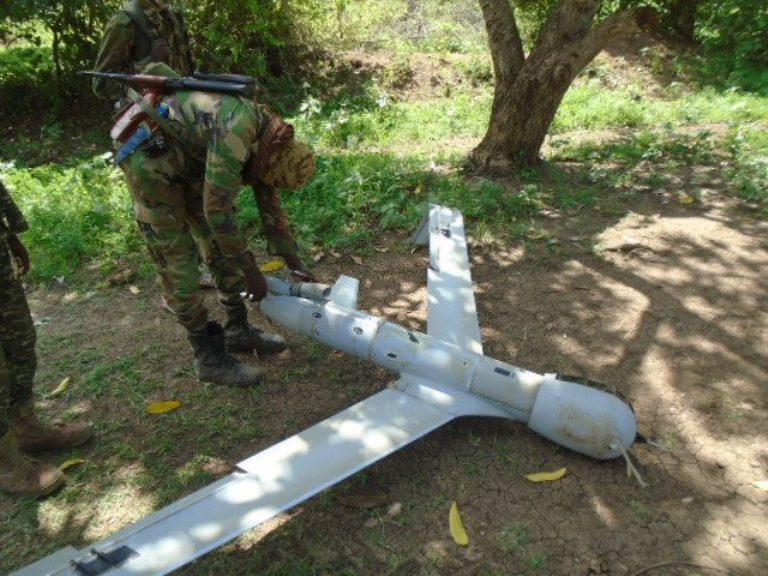
  • Unidentified Delta-Wing Kamikaze Drone Downed in South Kivu

    Unidentified Delta-Wing Kamikaze Drone Downed in South Kivu

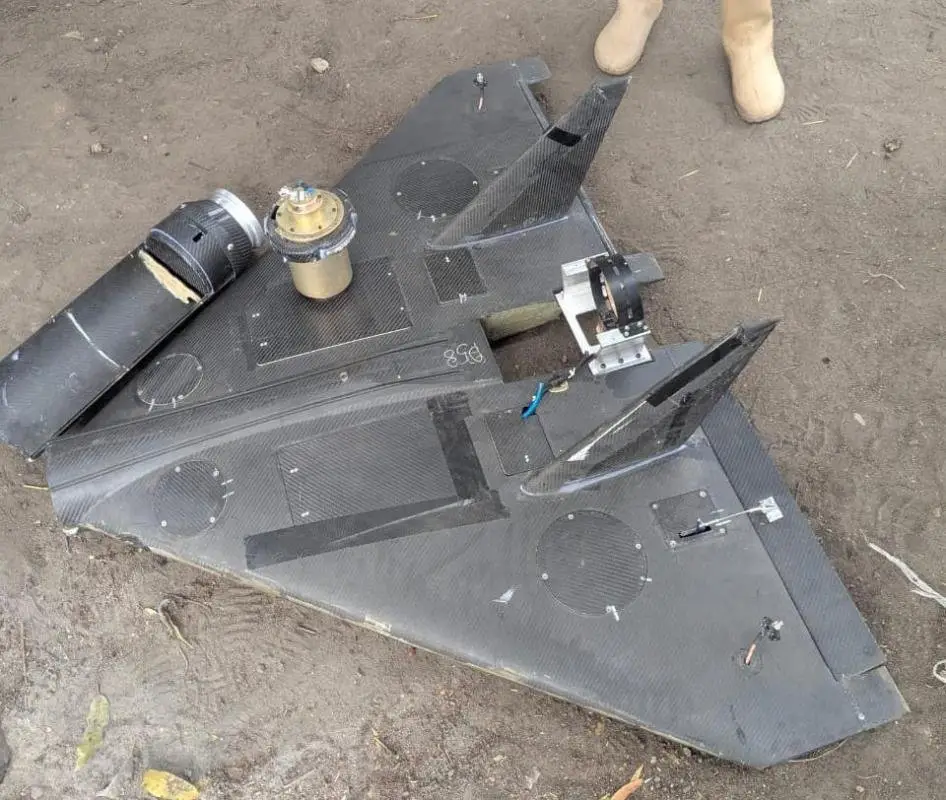
    The Armed Forces of the Democratic Republic of the Congo (FARDC) intercepted a carbon-fiber, one-way attack uncrewed aerial system in the Ruyengo locality of South Kivu’s Fizi territory. Operational command statements from FARDC’s Sukola 2 sector attribute the platform to the Rwanda Defence Force (RDF) and allied proxy formations, including the M23/AFC coalition and Twirwaneho militias, during offensive actions in the region.

    Airframe Architecture and Technical Features

    Visual analysis of the recovered wreckage confirms a compact delta-wing configuration constructed from lightweight carbon-fiber composite materials. While the triangular flying-wing silhouette bears a superficial resemblance to Iranian Shahed-136 loitering munitions, key structural differences distinguish this airframe. The platform lacks the extended cylindrical central fuselage, prominent wingtip vertical stabilizers, and standardized mass-production hallmarks characteristic of factory-built Shahed series aircraft.

    Instead, the airframe represents a specialized, lightweight composite build designed for low-altitude transit and localized kinetic impact. Visible components recovered at the crash site include a detached cylindrical carbon-fiber casing, a brass-capped canister assembly equipped with wiring interfaces, and custom mounting blocks for flight actuators. The handwritten marking “058” stenciled onto the upper composite wing panel indicates tactical inventory labeling or staging codes applied prior to launch.

    Tactical Role in the Fizi Highlands

    The recovery of this explosive loitering munition reflects an escalating reliance on uncrewed strike assets in the high-altitude terrain of the Fizi and Minembwe highlands. Operating as a single-use suicide platform, the drone carries its explosive payload directly onto designated targets. FARDC military officials report that opposing forces deploy these low-observable airframes to execute precision strikes against frontline staging areas, logistics supply paths, and critical communication hubs across South Kivu.

    Implications for Regional Air Defense

    Deploying composite, low-radar-cross-section loitering weapons introduces complex operational hurdles for ground forces in eastern DR Congo. Standard ground radar arrays often struggle to acquire small carbon-fiber airframes navigating at low altitudes through mountainous river valleys. As custom and specialized attack drones proliferate throughout the Great Lakes theater, defending military infrastructure will require expanded deployment of radio-frequency spectrum monitoring, mobile electronic warfare countermeasures, and point-defense systems.

  • Chinese CH-4 Drones spotted in Abéché, Chad

    Chinese CH-4 Drones spotted in Abéché, Chad

    Newly emerged video footage shared on X by Chadian commentator Mahamat M Adam Bechir reveals that the Chadian Air Force has likely acquired Chinese-manufactured Caihong-4 (CH-4) uncrewed combat aerial vehicles into its operational fleet. The visual evidence, filmed at Abéché Airbase in eastern Chad, depicts at least four distinct CH-4 airframes parked on the apron alongside ground support equipment. Although N’Djamena has not formally announced the procurement contract, the presence of multiple fully assembled aircraft confirms that deliveries have taken place and that operational integration is actively underway in a critical sector of the country.

    Engineered by the China Aerospace Science and Technology Corporation, the CH-4 is a medium-altitude, long-endurance platform designed for intelligence, surveillance, target acquisition, and strike missions. Featuring an 18-meter wingspan and a maximum takeoff weight of roughly 1,330 kilograms, the aircraft provides up to 40 hours of endurance in pure reconnaissance configurations, which reduces to approximately 14 hours when fully armed. Its underwing hardpoints can carry up to 345 kilograms of mission payload, including AR-1 laser-guided air-to-ground missiles and FT-9 satellite-guided bombs. This capability allows operators to engage tactical ground targets from altitudes above 5,000 meters, keeping the drone outside the engagement ceiling of light anti-aircraft guns and shoulder-fired missiles.

    Staging these long-range platforms at Abéché Airbase provides Chadian defense planners with an immediate operational advantage across multiple strategic sectors. Abéché serves as the primary military gateway to eastern Chad, positioned within rapid response distance of the border with Sudan’s Darfur region, where spillover from ongoing civil conflict creates continuous security challenges. From this eastern hub, CH-4 units can execute long-duration border monitoring, track armed transnational groups, and conduct rapid precision strikes against hostile incursions without requiring intermediate airfield refueling stops. The drone’s operational radius also enables surveillance coverage extending north toward the Tibesti Mountains, a region historically utilized by rebel formations.

    The acquisition of the CH-4 reflects a ongoing effort by Chadian military leadership to diversify its uncrewed asset inventory. In recent years, N’Djamena has integrated Turkish platforms, including Bayraktar TB2, Aksungur, and Anka drones, alongside legacy intelligence assets to reinforce its counter-insurgency posture against groups like Boko Haram and Islamic State West Africa Province in the Lake Chad Basin. By procuring Chinese medium-altitude platforms, Chad joins a growing list of African operators, such as Nigeria, Egypt, Algeria, and the Democratic Republic of the Congo, that rely on Beijing for cost-effective armed uncrewed aircraft to expand their operational reach.

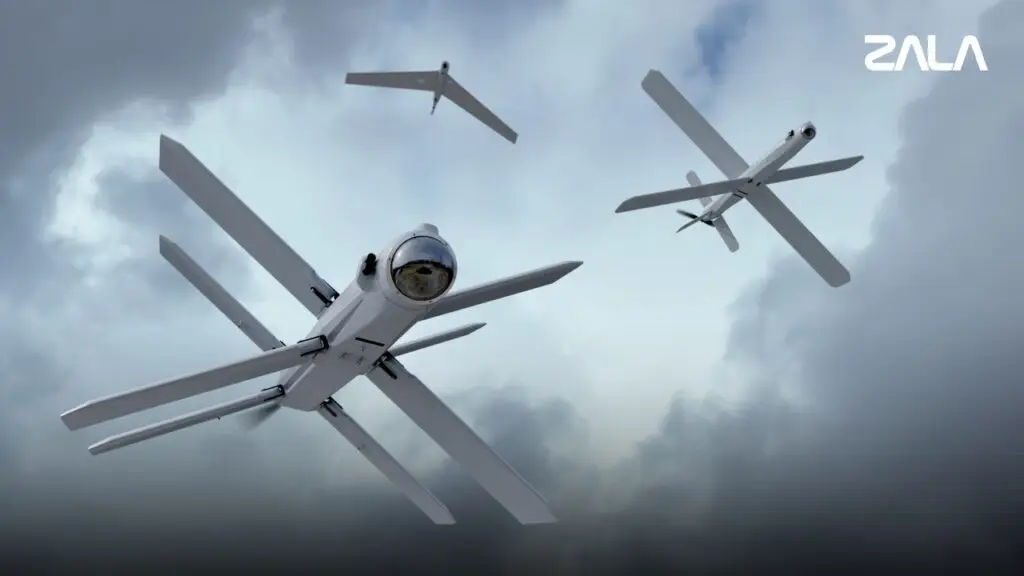
  • Russian ZALA Lancet and Z-16 Drones in Mali’s Counter-Insurgency

    Russian ZALA Lancet and Z-16 Drones in Mali’s Counter-Insurgency

    The arid, sun-baked expanses of northern and central Mali have transformed into an operational proving ground for specialized uncrewed aerial systems originating from Eastern European military inventories.

    Following the reorganization of Russian private security elements into the official Africa Corps under the authority of the Russian Ministry of Defence, military operations alongside the Armed Forces of Mali, known locally as the Forces Armées Maliennes, have taken on a distinctly high-technology character.

    Facing decentralized non-state armed groups, including Jama’at Nasr al-Islam wal-Muslimin and the separatist movement known as the Azawad Liberation Front, pro-government formations have deployed precision loitering munitions, long-range attack drones, and persistent reconnaissance aircraft into an operational environment characterized by severe heat, blowing sand, and immense geography. This technical escalation represents a notable evolution in Sahelian counter-insurgency warfare, where traditional motorized patrols face continuous risks from roadside ambushes and concealed explosive devices.

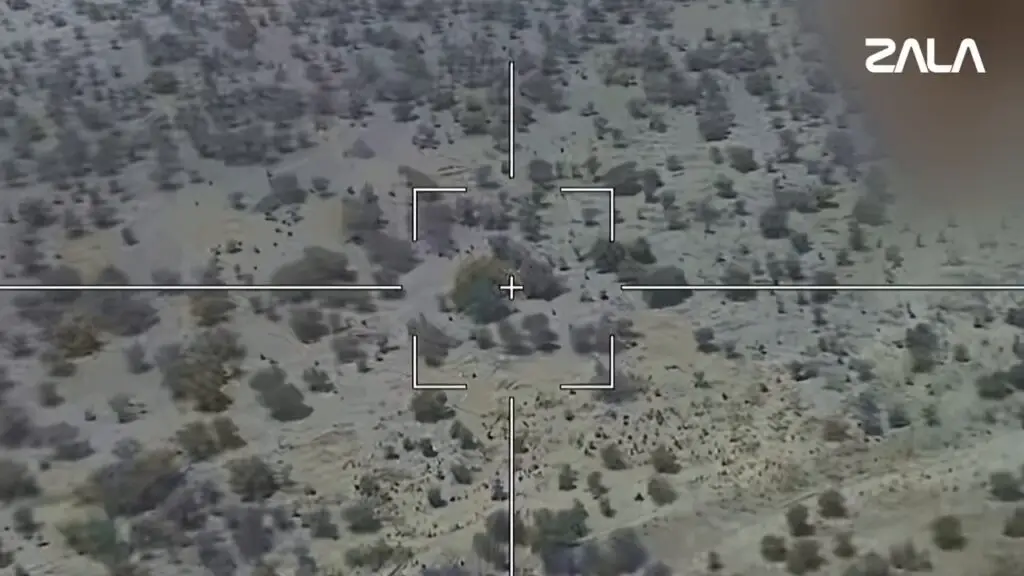
    During an aerial reconnaissance mission using a ZALA Z-16 UAV, units of the ZALA «Lancet» Combat Group of the Russian Ministry of Defence’s African Corps detected a camouflaged fuel and lubricants depot being used by terrorists.

    Examining ZALA Lancet and Reconnaissance Drone Operations in Mali

    The shift toward uncrewed aerial platforms reflects a growing tactical imperative across the Sahelian theater. Ground forces operating in regions such as Mopti, Timbuktu, Kidal, and Sévaré must monitor hundreds of kilometers of unpaved supply corridors and remote desert hideouts. Traditional manned air assets, such as light attack helicopters or transport aircraft, incur substantial operational costs, require intensive maintenance, and expose aircrews to ground-based small arms fire. By deploying an integrated network of surveillance and strike drones, commanders seek to establish continuous overhead observation, compress the kill chain between target detection and engagement, and project kinetic force without risking pilot lives. However, transferring military hardware designed for temperate European battlefields into the hyper-arid climate of West Africa introduces complex engineering and tactical trade-offs that reshape how these systems perform in practice.

                              +-------------------------------+
                              |    ZALA Z-16 Reconnaissance   |
                              |  - EO/IR Sensor & Thermal     |
                              |  - Signal Relay Node          |
                              +---------------+---------------+
                                              |
                                       Target Acquisition
                                              |
                                              v
                              +-------------------------------+
                              |  ZALA Lancet Strike Munition  |
                              |  - Real-time TV Guidance      |
                              |  - IRRA Autonomous Matching   |
                              +-------------------------------+
    

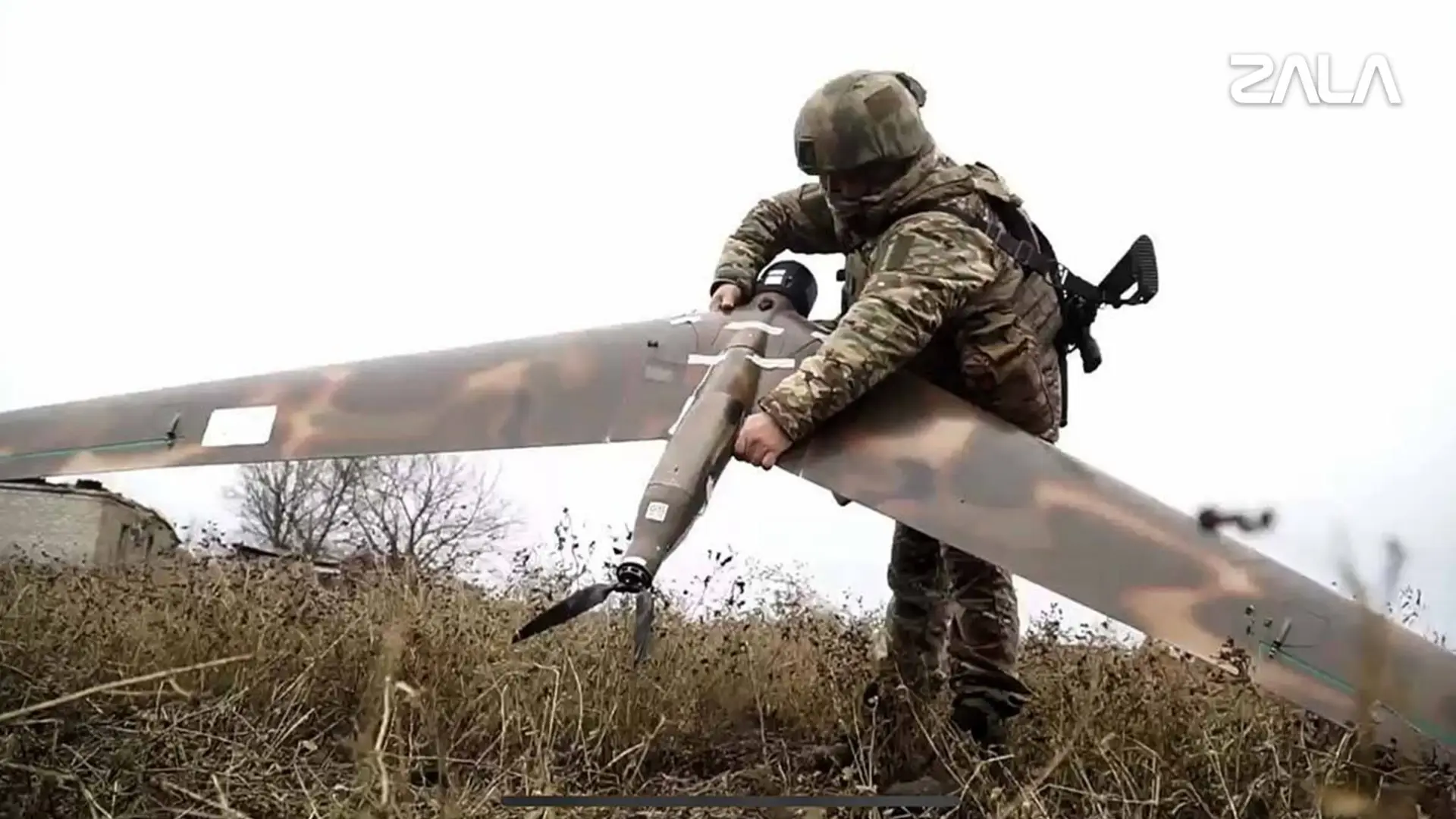
    The core of this new tactical framework rests upon a combined reconnaissance and strike complex built by ZALA Aero Group, an uncrewed systems subsidiary of Russia’s Kalashnikov Concern. The system pairs the ZALA Z-16 reconnaissance Unmanned Aerial Vehicle with the ZALA Lancet loitering munition. Within this operational pairing, the Z-16 acts as the primary sensory node. Featuring a flying-wing design with a wingspan of approximately 3.1 meters and a maximum takeoff weight of 12 kilograms, the electric-powered aircraft provides all-weather aerial monitoring. Launched via a pneumatic catapult and recovered by a belly-landing parachute system, the Z-16 carries an interchangeable gyro-stabilized payload combining high-resolution electro-optical cameras, forward-looking infrared thermal sensors, and laser rangefinders. Operating at altitudes between 1,000 and 3,000 meters above ground level, the platform detects troop movements, concealed vehicle parks, and temporary staging encampments across day and night operational cycles.

    Beyond target detection, the Z-16 fulfills a vital communications role as an airborne signal repeater. In the flat, featureless desert terrain of northern Mali, ground-based radio signals quickly degrade due to line-of-sight obstacles and curvature over long distances. The Z-16 orbits at high altitude to relay control data and real-time video telemetry between ground control stations and strike weapons. This capability allows operators to deploy the ZALA Lancet loitering munition near the maximum boundary of its flight envelope.

    When the Z-16 identifies a tactical target, such as a armed pickup truck or a concealed fuel depot, operators launch the Lancet. The Lancet features a distinctive double-X cruciform wing arrangement that provides high maneuverability during dynamic terminal dive phases. Powered by an electric motor driving a rear pusher propeller, the weapon achieves cruising speeds between 80 and 110 kilometers per hour, with acceleration reaching nearly 300 kilometers per hour when diving toward a target. The platform has a maximum takeoff weight of 12 kilograms, carries a high-explosive fragmentation or shaped-charge warhead weighing between 3 and 5 kilograms, and maintains an operational engagement range up to 40 kilometers.

    ZALA drones

    Operators guide the Lancet using a continuous television communications link, viewing live optical feed from the drone’s nose camera. This human-in-the-loop guidance architecture enables precise target selection right up to the moment of detonation. If non-combatants enter the target area or if a target moves behind impenetrable cover, the operator can abort the strike, re-navigate the munition, or loiter in the target area for up to 40 minutes. Recent combat data verified as of August 2026 confirms that deployed Lancet units in Mali incorporate the Intelligent Targeting and Recognition System, an automated image-matching software suite. This system analyzes real-time video feeds against pre-loaded object libraries, helping operators pick out camouflaged vehicles and structures against the glare of sand and scrubland.

    In July and August 2026, official communications from the Africa Corps and regional field reports confirmed multiple Lancet strikes across northern Mali. In one reported engagement near Timbuktu, a Z-16 reconnaissance drone spotted a pickup truck operated by insurgent fighters monitoring a government military installation. The crew launched a Lancet, which struck the target directly, while the Z-16 remained overhead to record video confirmation of the destroyed vehicle. Subsequent strikes targeted hidden fuel caches, logistics nodes, and isolated command posts. The combination of real-time aerial identification and rapid kinetic response severely restricts the mobility of non-state groups, forcing them to abandon large motorized convoys in favor of smaller, dispersed formations.

    Despite these tactical successes, operating the Lancet and Z-16 complex in the West African desert presents severe environmental challenges. Systems engineered primarily for European climates face extreme mechanical stress when subjected to ambient temperatures exceeding 45 degrees Celsius in the Malian sun. Thermal battery management is an immediate engineering vulnerability. Lithium-polymer batteries power both the Z-16 airframe and the Lancet’s electric propulsion motor. High ambient temperatures accelerate internal chemical degradation, reduce total battery cycle life, and cause thermal inflation. Operating under peak afternoon heat can diminish total loiter endurance by 15 to 25 percent compared to standard factory specifications.

    Fine windborne dust and abrasive silica particles present another operational hazard. During the seasonal Harmattan, fine sand fills the lower atmosphere, entering unsealed electronic bays, clogging cooling channels, and abrading the optical surfaces of electro-optical and thermal cameras. Dust accumulation on optical lenses degrades image clarity, reducing the effectiveness of automated target recognition software like the Intelligent Targeting and Recognition System. To maintain operational capability, ground maintenance crews must implement strict field protocols, including airframe joint sealing, frequent lens cleaning using specialized optical solvents, and climate-controlled storage containers for sensitive guidance components. Furthermore, optical tracking software requires continuous recalibration to handle the intense light reflection generated by desert soil, which differs sharply from the darker, vegetation-heavy backgrounds of Eastern European battlefields.

    Tactical Implications of Russian UAV Deployments in Mali

    The tactical adaptation in Mali extends beyond short-range loitering munitions to include long-range strategic attack platforms. In mid-May 2026, wreckage recovered by local fighters near the central town of Sévaré revealed debris from a Garpiya-A1 long-range strike drone. Technical analysis of the recovered fragments confirmed that the downed airframe belonged to the specialized KK-series variant, which incorporates an air-burst warhead designed to detonate above ground level to maximize antipersonnel and light-vehicle fragmentation effects.

    The Garpiya-A1 is a strategic attack drone manufactured in Russia by IEMZ Kupol, a subsidiary of Almaz-Antey. The design incorporates Chinese-produced Limbach L550E four-cylinder gasoline engines, commercial off-the-shelf microelectronics, and a delta-wing airframe closely resembling the Iranian-designed Shahed-136. With a wingspan of 2.5 meters, a launch weight exceeding 200 kilograms, and an operational range reaching up to 1,500 kilometers, the Garpiya-A1 carries a 50-kilogram explosive warhead. In the Ukrainian theater, Russian forces launch these platforms in multi-drone waves against fixed strategic infrastructure using pre-programmed satellite navigation coordinates.

    The discovery of Garpiya-A1 wreckage near Sévaré marks the first confirmed operational deployment of this platform type in the Sahelian conflict. However, defense analysts from the Royal United Services Institute note that using long-range kamikaze drones in a counter-insurgency environment creates an operational mismatch. Counter-insurgency warfare in West Africa demands flexible real-time targeting against fluid, fast-moving insurgent groups. A long-range drone reliant on static pre-programmed coordinates cannot track or engage mobile tactical targets like motorcycle squads or evasive technical vehicles. Unless directed against fixed insurgent bases, captured military infrastructure, or static fuel storage sites, platforms like the Garpiya-A1 offer limited utility against nimble guerrilla forces. Their presence in Mali indicates a broader strategy by foreign military advisors to deploy available surplus inventory into the African theater, even when the underlying design aligns poorly with tactical counter-insurgency needs.

    To fulfill the requirement for long-endurance overhead surveillance and flexible air-to-ground strike capability, pro-government forces in Mali have deployed the Kronshtadt Orion Medium-Altitude Long-Endurance Unmanned Aerial Vehicle. First observed conducting missions over towns such as Kati and strategic sectors across the Gao region in mid-2026, the Orion provides capabilities distinct from tactical loitering munitions and static attack drones.

    The Orion features a high-aspect-ratio wing design with a wingspan of 16.3 meters, a maximum takeoff weight of 1,000 kilograms, and a payload capacity of up to 200 kilograms. Powered by a turbocharged internal combustion engine driving a rear pusher propeller, the aircraft achieves cruising speeds of 120 to 200 kilometers per hour, operates at service ceilings up to 7,500 meters, and maintains a continuous flight endurance of 24 hours. The drone carries a gyro-stabilized ventral turret equipped with high-resolution electro-optical cameras, thermal imaging channels, a laser rangefinder, and a laser target designator. It can also mount small synthetic aperture radar pods to track ground movement through thick dust cover or cloud layers. For strike operations, the Orion carries up to four guided munitions, including KAB-20 light aerial bombs and Kornet-derived anti-tank guided missiles.

    Sahelian Drone Warfare

    The strategic rationale for deploying Orion platforms to West Africa is rooted in air defense dynamics. In Eastern Europe, dense, layered surface-to-air missile networks severely limit the operational utility of large, slow-moving uncrewed platforms. In contrast, the African airspace represents a permissive operating environment. Non-state insurgent groups in the Sahel lack radar-guided air defense systems, possessing only heavy machine guns and shoulder-fired man-portable air defense systems with restricted altitude ceilings. Operating comfortably above 5,000 meters, the Orion flies well beyond the engagement envelope of insurgent weaponry. This allows the platform to perform persistent Intelligence, Surveillance, and Reconnaissance over vital logistics corridors, international border regions, and population centers without facing air defense threats.

    However, operational friction persists in air-ground coordination. Operational assessments from July 2026 concerning engagements near Tabrişat in the Gao region revealed instances where pro-government ground convoys suffered heavy casualties from rebel ambushes despite the presence of Orion surveillance platforms in the general theater. Effective air-ground integration requires robust communications infrastructure, trained joint terminal attack controllers embedded with forward infantry units, and streamlined command loops. When foreign technical operators manage aerial assets independently from local ground commanders, critical intelligence often fails to reach tactical units in time to prevent ground ambushes.

    The deployment of these uncrewed systems in Mali reflects a broader trend reshaping military capabilities across the African continent. From West Africa to the Horn, sovereign armed forces are acquiring uncrewed aerial platforms to overcome territorial vastness, monitor porous borders, and project airpower against irregular armed threats.

    In Nigeria, the armed forces operate an extensive array of uncrewed platforms within the Lake Chad Basin and the northwestern theater. The Nigerian Air Force employs Chinese-manufactured Wing Loong II and CH-4 Medium-Altitude Long-Endurance drones for persistent surveillance and precision strikes against insurgent factions like Islamic State West Africa Province. To counter the growing threat of insurgent commercial drones used for reconnaissance and improvised weapon drops, Nigerian defense contractors have partnered with local research institutions to develop indigenous Counter-Unmanned Aerial Systems. These local counter-drone platforms combine radio-frequency spectrum monitoring, automated camera tracking, and directional radio-frequency jamming shields to secure critical forward operating bases.

    In East Africa, the Ethiopian National Defence Force deployed a varied fleet of Turkish Bayraktar TB2, Chinese Wing Loong, and Iranian Mohajer-6 drones during recent domestic operations. These medium-altitude strike platforms proved decisive in disrupting heavy artillery positions and armored vehicle columns across open mountain terrain. Similarly, in North Africa, Libyan factions deployed Turkish Bayraktar TB2s and Chinese-built Wing Loong aircraft extensively, creating one of the most drone-dense combat environments in regional military history.

    When compared to these continental developments, the drone framework in Mali presents a unique reliance on foreign private military management through the Africa Corps. While nations like Nigeria, Morocco, and Egypt maintain sovereign control over their drone infrastructure, pilot training programs, and command protocols, defense operations in Mali remain dependent on foreign technical crews for flight control, signal analysis, and field maintenance. This external dependence creates an operational vulnerability. If foreign technical personnel are withdrawn or redeployed due to shifting external priorities, local armed forces risk losing immediate overhead visibility and precision strike support.

    The integration of Lancet loitering munitions, Z-16 surveillance platforms, Garpiya-A1 strike drones, and Orion endurance UAVs demonstrates that modern airpower concepts are reshaping Sahelian counter-insurgency warfare. As state forces rely increasingly on uncrewed systems to secure remote territory, non-state armed groups are modifying their field tactics in response. Insurgent formations like Jama’at Nasr al-Islam wal-Muslimin and the Azawad Liberation Front are adapting by avoiding large vehicle concentrations, utilizing thermal camouflage netting, dispersing personnel into small motorcycle teams, and conducting movements during poor weather or night conditions when optical sensors face performance limits.

    For African defense planners, the lessons emerging from the Malian conflict demonstrate both the clear advantages and operational boundaries of uncrewed aerial technology. While precision loitering munitions and persistent surveillance platforms provide valuable situational awareness and rapid strike options over vast desert corridors, they cannot independently secure territory. Uncrewed systems serve as effective force multipliers, but achieving lasting stability across the Sahel requires pairing aerial sensor networks with disciplined ground forces, clear command integration, and sustained community engagement strategies.