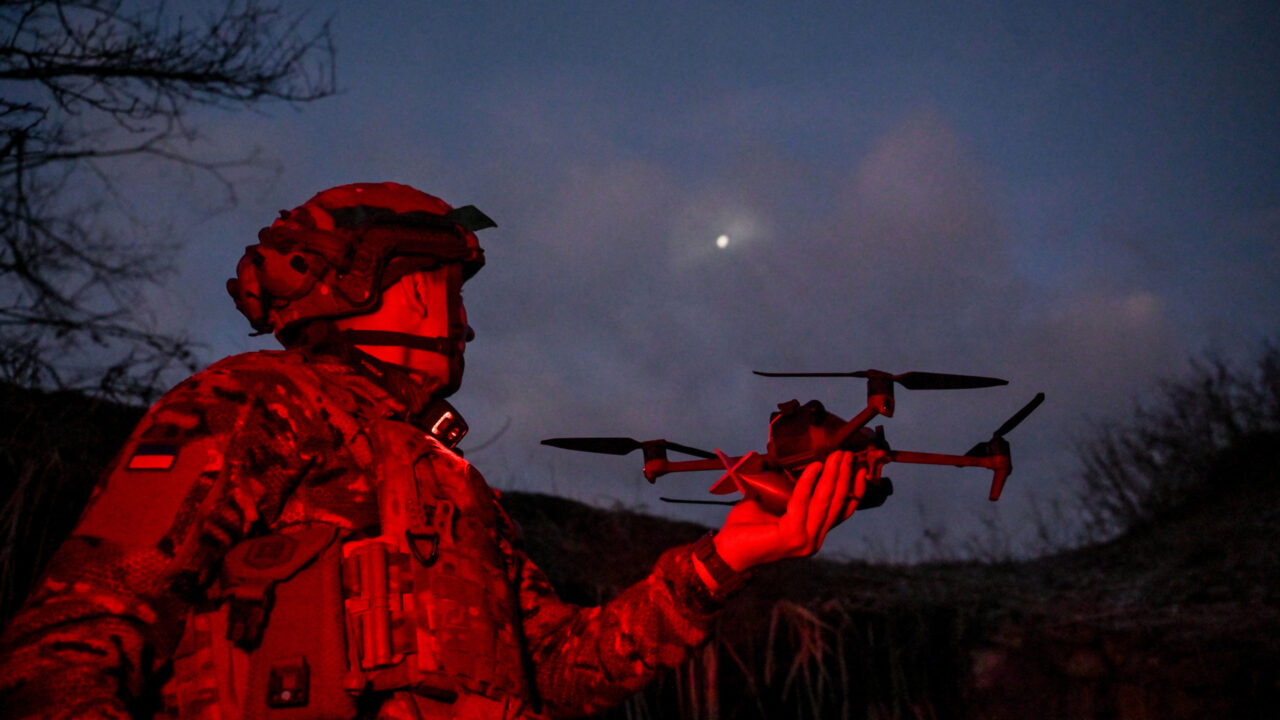
Ukrainian military intelligence has deployed drone specialists to at least three African countries to help local forces fight Russian troops and their proxies, according to a CNN investigation published September 12 based on interviews with Ukrainian soldiers and officers involved in the operations.
Around 15 Ukrainian drone operators are working in northern Mali, supporting Tuareg-led separatist forces fighting Russia’s Africa Corps and the Malian junta, CNN reported, citing Ukrainian personnel deployed there. A Ukrainian Defense Intelligence source told the network that additional specialists have been stationed in Sudan, and that fighters from Chad, Niger and Burkina Faso previously travelled to Mali to receive drone training from the Ukrainians. Kyiv has also sent teams to at least five Middle Eastern countries this year to train local forces against Iranian-made Shahed drones, the same weapon Russia uses against Ukrainian cities, according to the report.
The deployments mark Kyiv’s clearest effort yet to project its wartime drone expertise beyond Ukraine’s own front lines. A Ukrainian intelligence source described the strategy to CNN as turning battlefield experience into “a foreign policy tool,” saying overseas missions also let Ukrainian units test equipment in conditions, extreme heat, dust, and long supply lines, that Ukraine’s own war has not required.
Mali has become the most visible theatre. The Ukrainian unit there is embedded with the Azawad Liberation Front (FLA), the Tuareg-led coalition that grew out of the earlier CSP-DPA political framework and now controls large parts of Mali’s north. According to CNN’s sourcing, the Ukrainians coordinate FLA drone missions remotely rather than joining front-line operations, relaying flight instructions by radio after receiving video feeds over the internet. One operator quoted by CNN said the arrangement was a matter of Ukrainian and Tuareg forces facing a shared adversary rather than any deeper alignment.
The clearest test of that support came in April, when the FLA and the al-Qaeda-linked JNIM launched coordinated attacks across Mali, killing then-Defence Minister Sadio Camara in a car-bomb attack on his home in Kati and forcing Malian and Africa Corps troops to abandon Kidal, a strategic northern city, without a sustained fight. Héni Nsaibia, a West Africa analyst at the Armed Conflict Location and Event Data Project, told CNN the loss of Kidal was a major setback for Mali’s junta and its Russian backers, though he said Africa Corps had likely prevented an even larger collapse of the government’s position elsewhere. A Ukrainian drone operator told CNN his unit assisted the rebels during the Kidal operation; Russia’s defence ministry has accused Kyiv of training the fighters who carried it out, an allegation Ukraine has previously denied making any substantial contribution to.
Ukraine’s presence in Libya follows a similar pattern but adds a maritime dimension. CNN reported that Ukrainian naval drone operators have used the port city of Misrata as a base since late 2025 to strike vessels in Russia’s so-called shadow fleet, the ageing tankers Moscow uses to move sanctioned oil, in exchange for training local forces. That deployment was first reported in March by French public broadcaster RFI, which put the number of Ukrainian officers and technical specialists in western Libya at more than 200 across three locations, a considerably larger footprint than the Mali contingent. The arrangement drew unwanted attention earlier this year when an explosive-laden Ukrainian naval drone escaped its operators’ control and washed up near the Greek island of Lefkada; Greece lodged a formal diplomatic protest, and Kyiv apologised while blaming Russia’s shadow-fleet activity for creating the underlying risk.
Sudan’s role in the story extends further back than this week’s report suggests. CNN itself first documented Ukrainian-linked drone activity there in 2023, when it geolocated a series of strikes on the Shambat bridge connecting Omdurman and Khartoum and had the control equipment in leaked footage analysed by a researcher at the open-source weapons tracker Calibre Obscura, who found it consistent with hardware Ukrainian forces use to operate modified commercial drones. That reporting tied the strikes to a period when Wagner mercenaries were moving arms convoys through Chad into Sudan. Kyiv has never officially confirmed a role in either the earlier or the current Sudanese operations.
The human cost of the wider Russia-Mali partnership Ukraine says it is trying to undermine has drawn separate, independent scrutiny. Human Rights Watch reported in July that a Russian-identified Sukhoi Su-24 killed eight civilians, including three children, in an airstrike on Kyrnia village in Mali’s Mopti region, and reported again in August that Africa Corps fighters summarily killed nine civilians, four of them children, during a raid on the village of Bombori. Neither report mentioned Ukraine. Russia’s foreign minister, Sergey Lavrov, said last month that Africa Corps “operates strictly within the bounds of legality” and only at the request of host governments. Separately, Russian officials including deputy UN representative Dmitry Polyansky have accused Ukrainian drone pilots of supporting terrorist-designated groups across a wider set of countries, including Chad, the Central African Republic and Democratic Republic of Congo, claims that have appeared in Russian state media but that CNN’s reporting does not corroborate.
Kyrylo Budanov, Ukraine’s former military intelligence chief and now head of President Volodymyr Zelensky’s presidential office, has been publicly unambiguous about the strategy’s aims, saying in 2023 that Ukraine intended to keep pressuring Russian forces “anywhere on the face of this world” until Ukraine’s victory. He reiterated the point this week, crediting Ukrainian intelligence with defending the country’s interests “from Russia to Africa.”

Africa’s dedicated and only military drone procurement intelligence.
Unmanned Africa bridges the critical gap between aerospace engineering, defense economics, and geopolitical strategy. As African defense forces rapidly modernize and scale their unmanned capabilities to address asymmetric conflicts, insurgencies, and border security, the platform functions as an essential, independent repository for defense analysts, policymakers, military professionals, and researchers.
Leave a Reply