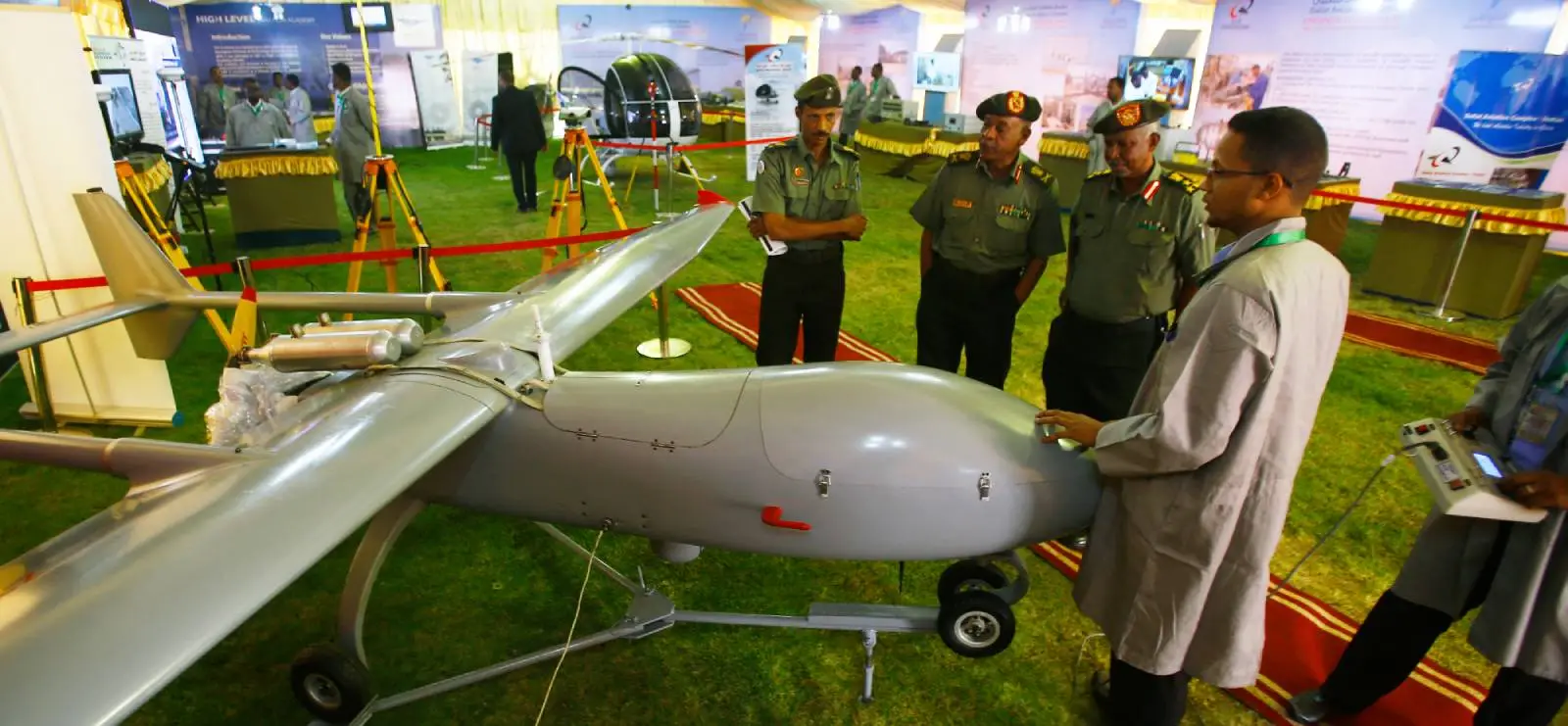
Between 2020 and 2026, African defense ministries acquired 1,054 uncrewed aerial units, marking a major acceleration in continental airpower modernization. High-profile Class III Medium-Altitude Long-Endurance (MALE) platforms, including the Turkish Bayraktar TB2 and the Chinese Wing Loong II, led this expansion. Says a comprehensive data from Military Africa.
These systems promise continuous intelligence gathering and rapid precision strike capabilities over remote conflict zones. Field deployment data across multiple operational theaters reveals a stark contrast between contract announcements and sustained combat effectiveness. Procuring advanced uncrewed aircraft does not automatically guarantee air dominance. Operational bottlenecks, hardware constraints, and environmental factors frequently ground these high-value assets or compromise their mission profiles.
Communication architecture presents the first primary obstacle for deploying military uncrewed aerial vehicles over large geographic sectors. Standard baseline variants of MALE platforms rely on Line-Of-Sight (LOS) radio data links, which restrict the operational radius of the aircraft to approximately 300 kilometers from its ground control station. In expansive theaters such as the Sahel, the Horn of Africa, or the Lake Chad basin, this line-of-sight limit severely restricts mission scope. To cover shifting frontlines, military commanders must frequently relocate heavy ground control terminals, relay antennas, and launch equipment across challenging terrain. Equipping platforms with Satellite Communications (SATCOM) solves the range constraint, but introduces substantial operational costs. Leasing commercial satellite bandwidth requires continuous foreign exchange expenditure, and relying on foreign satellite operators creates potential operational vulnerabilities during active crises.
Human capital shortfalls represent a second critical constraint. Flying a Class III uncrewed platform requires a team of certified pilots, sensor operators, avionics technicians, and weapons specialists. Many regional armed forces acquired hardware faster than their training pipelines could produce qualified indigenous personnel. Consequently, several militaries rely heavily on foreign contractor support teams to handle flight operations, routine maintenance, and mission planning. This dependency limits operational flexibility and creates security risks at forward operating locations. Inexperienced crews and inadequate maintenance procedures also directly cause costly hull losses. A notable example occurred in Burkina Faso, where operational mistakes led to the crash and destruction of a multi-million dollar Bayraktar TB2 platform.
Atmospheric conditions in Africa force operators to accept hazardous tactical trade-offs. Class III MALE platforms typically perform surveillance and target tracking from high altitudes using Electro-Optical/Infrared (EO/IR) sensor gimbals. Severe environmental weather, such as heavy seasonal cloud cover, intense tropical rain belts, and dense Harmattan dust plumes, routinely blinds these optical payloads. When cloud cover or dust haze obstructs sensor view, operators face a difficult choice. They must either abort the mission or descend below the cloud ceiling to regain visual line-of-sight with ground targets.
Descending into lower altitude bands negates the principal survival mechanism of high-altitude platforms. Flying low brings aircraft within engagement envelopes of low-cost ground defenses. Irregular combatants and non-state armed groups across the continent increasingly field light anti-aircraft weapons. Operating below dust or cloud layers exposes multi-million dollar uncrewed platforms to Small Arms Fire (SAF), heavy Anti-Aircraft Artillery (AAA), and shoulder-launched Man-Portable Air Defense Systems (MANPADS). Multiple airframes have taken damage or suffered shootdowns while attempting low-altitude reconnaissance under poor weather conditions.
Data verified as of July 2026 confirms that while uncrewed aircraft acquisitions will continue to rise, long-term success depends entirely on institutional support structures. Air force planners must prioritize logistics networks, secure satellite data links, and long-term operator training programs over raw airframe counts. Without sustained investment in ground infrastructure and technical personnel, uncrewed platforms will remain vulnerable to environmental interference, operational bottlenecks, and low-altitude ground fire.

Africa’s dedicated and only military drone procurement intelligence.
Unmanned Africa bridges the critical gap between aerospace engineering, defense economics, and geopolitical strategy. As African defense forces rapidly modernize and scale their unmanned capabilities to address asymmetric conflicts, insurgencies, and border security, the platform functions as an essential, independent repository for defense analysts, policymakers, military professionals, and researchers.
Leave a Reply