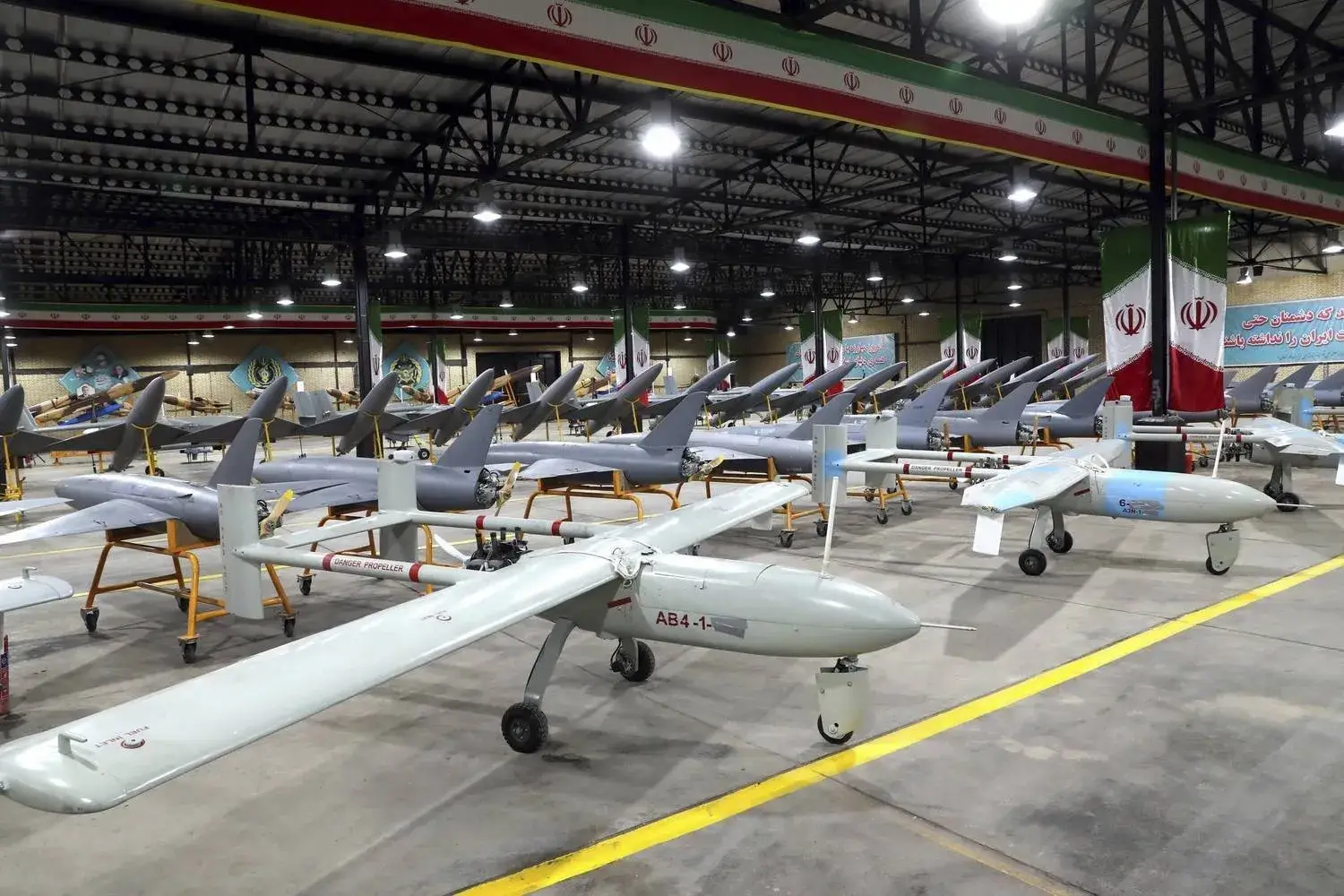
The spread of military-grade unmanned aerial vehicles (UAVs) across Africa has altered the character of several regional conflicts over the past three years, shifting aerial power away from the handful of states that could once afford conventional air forces. Turkish Bayraktar platforms and Chinese Rainbow-series drones drew most of the early attention in African procurement circles, but Iran’s uncrewed systems have built a quieter, more durable footprint on the continent. Tehran has supplied reconnaissance drones, medium-altitude strike platforms and long-range loitering munitions directly to state militaries and allied factions, pairing low-cost hardware with technology-transfer arrangements, maritime supply routes through the Red Sea and, in at least one documented case, local assembly infrastructure inside the recipient country. As Unmanned Africa’s combat reporting has shown repeatedly, these low-cost platforms let resource-constrained militaries maintain persistent surveillance and strike capability without the cost of a modern air force.
Iran’s defence exports to Africa fit a deliberate pattern rather than occurring at random. Tehran uses the trade to project influence beyond the Persian Gulf, work around international sanctions, and earn foreign currency, leaning on maritime routes across the Red Sea, diplomatic openings in North Africa, and older security relationships to move hardware directly to frontline actors. The engineering philosophy behind the hardware supports that strategy: Iranian UAVs favour modular construction, commercially available electronics, glass-fibre composite airframes and simple internal combustion engines, keeping unit costs low enough that operators can absorb heavy losses in high-attrition combat zones without the financial strain that flying more expensive Western or Chinese systems would bring.
Sudan: Where the Strategy Was Tested
Sudan illustrates the strategy most clearly. When war broke out in April 2023 between the Sudanese Armed Forces (SAF), commanded by General Abdel Fattah al-Burhan, and the paramilitary Rapid Support Forces (RSF), led by Mohamed Hamdan Dagalo and widely known as Hemedti, the army had almost no functioning air support beyond a handful of ageing MiG-29 and Sukhoi Su-25 jets ill-suited to dense urban fighting, and it struggled to slow the RSF’s mechanised advance through Khartoum, Omdurman and Darfur. Facing that shortfall, the SAF renewed security cooperation with Tehran, and cargo flights carrying unassembled airframes began arriving through Port Sudan in late 2023, accompanied by Iranian technical advisers. Flying from Wadi Seidna Air Base near Omdurman, Mohajer-6 crews used thermal imaging to track RSF fuel and ammunition convoys moving from Darfur toward the capital, passing coordinates to artillery units or striking command vehicles directly with Qaem-series guided munitions. That persistent overhead coverage helped SAF infantry retake parts of Omdurman, including the national radio and television headquarters, in early 2024.
That early intervention proved formative rather than decisive. Sudan’s civil war has continued for more than three years since, and drone warfare on both sides has grown considerably more capable and more evenly matched. The SAF fully recaptured Khartoum in 2025 and now flies Turkish and Chinese platforms alongside its Iranian-supplied aircraft, while the RSF, backed financially by the United Arab Emirates, fields its own Chinese-designed long-range strike drones from bases in Darfur, territory it largely controls after an eighteen-month siege that ended with the fall of El Fasher in October 2025. Unmanned Africa has covered the resulting long-range loitering-munitions build-up in detail separately. Independent monitors recorded more than two dozen drone incidents around the contested city of El Obeid in a single month in mid-2026, the highest tally since the war began, and fighting continued into late August 2026, with RSF advances toward the Ethiopian border in Blue Nile state. A United Nations-mandated inquiry found that RSF conduct around El Fasher bore the hallmarks of genocide, and a Sudanese court sentenced Hemedti to death in absentia in July 2026 over separate atrocities in West Darfur, a verdict the RSF’s political wing has rejected and one that carries little practical weight while the group controls the territory in question.
Ethiopia’s Tigray War: An Earlier Opening
A similar dynamic played out earlier and more briefly in Ethiopia. During the 2020 to 2022 Tigray War, as Tigray People’s Liberation Front (TPLF) forces advanced along transport routes toward Addis Ababa, the Ethiopian National Defense Force acquired several foreign drone systems, including Iranian Mohajer platforms, after Western suppliers declined to sell equipment over human rights concerns tied to the campaign. Iran’s willingness to deliver functioning systems without political conditions gave Addis Ababa reconnaissance capability it could not otherwise source quickly, and it showed how Tehran has used diplomatic isolation elsewhere to build market share in African defence procurement. The Tigray War formally ended with the Pretoria peace agreement in November 2022, though the settlement has proven fragile: disarmament stalled, a territorial dispute over western Tigray remains unresolved, and fresh clashes broke out in January 2026 between Ethiopian federal forces and Tigrayan fighters, including a drone strike that Tigrayan officials attributed to the government.
The Mohajer-6: Iran’s Flagship Export
The Qods Mohajer-6 sits at the centre of Iran’s medium-altitude, long-endurance export catalogue and is the platform most closely associated with the Sudan campaign. Built by Qods Aviation and manufactured by the Iran Aircraft Manufacturing Industries Corporation, it is a twin-boom, composite-airframe design measuring 5.67 metres in length with a 10-metre wingspan and a maximum takeoff weight of around 600 kilograms, powered by a four-cylinder Rotax 912-derivative engine producing roughly 100 horsepower that gives it a cruising endurance of around 12 hours. A gyro-stabilised electro-optical and infrared payload under the nose transmits real-time video to ground control operators over a line-of-sight data link, and export variants have reached Russia, Venezuela, Ethiopia and Sudan, among other operators. Its offensive load consists of up to four Qaem-series precision-guided munitions carried on underwing hardpoints; the Qaem-5 variant, the type most often cited in African deployments, pairs a television or infrared seeker with a high-explosive fragmentation warhead reported at around 8.5 kilograms. That combination lets operators strike soft-skinned vehicles, mortar positions and troop concentrations from altitudes of roughly 2,000 to 3,000 metres, above the effective engagement ceiling of older man-portable air defence systems and light anti-aircraft guns.

The Ababil Family: Cheaper and More Numerous
Where the Mohajer-6 handles multirole strike and reconnaissance work, the HESA Ababil family covers tactical spotting and direct-action duties at a lower cost. The Ababil-3 uses a cylindrical fuselage, twin-tailboom layout and a simple pusher propeller, reaching speeds of up to 200 kilometres per hour with a ceiling of around 5,000 metres. Ground crews can launch it from a pneumatic rail or a truck-mounted rocket booster and recover it by skid landing or parachute, mechanical simplicity suited to the rugged, semi-arid terrain common across the Sahel and Horn of Africa, where paved runways are scarce. African forces have used the type mainly as an airborne spotter for conventional artillery, maintaining continuous coverage over supply routes. The newer Ababil-5 variant carries a larger payload, enough for small guided glide bombs or multispectral sensor turrets capable of detecting heat signatures from concealed positions at night.
Shahed-Series Loitering Munitions
Iran’s Shahed-series one-way attack drones, built around the same delta-wing geometry as the widely reported Shahed-136, have given African militaries a long-range precision-strike option they previously lacked. The airframe is a composite delta wing about 3.5 metres long with a 2.5-metre wingspan, launched by a jettisonable rocket booster and driven onward by a four-cylinder, two-stroke piston engine, the MD-550, a reverse-engineered copy of a German Limbach design that produces the type’s distinctive buzzing exhaust note, familiar by now from its extensive use over Ukraine. Unlike the Mohajer-6 or Ababil, the Shahed does not return to base: it flies a pre-programmed course set by satellite navigation and a backup inertial unit directly into a fixed target, typically infrastructure, a command bunker or a supply depot, carrying a warhead of around 50 kilograms in its standard configuration over distances that published estimates place between 1,000 and 2,500 kilometres depending on fuel and payload trade-offs. For militaries on constrained budgets, that combination undercuts the cost of a cruise missile or a manned strike sortie by a wide margin, letting them threaten targets deep behind enemy lines without risking a pilot or exposing an expensive aircraft to air defences.
Trade-offs and Vulnerabilities
Fielding these systems in African conditions carries real trade-offs. Iranian telemetry links generally operate on fixed frequency bands, which leaves them exposed to commercial radio-frequency jammers and Global Positioning System (GPS) spoofing equipment; a ground force with even basic counter-drone tools can sever the control link and force a platform into a failsafe return or a crash. Component quality varies for similar reasons: because Iranian manufacturers lean heavily on commercially sourced parts, differences in engine tolerances, servo reliability and wiring insulation have caused mechanical failures during hot-weather operations in the Sahel and the Horn. The smaller munitions carried by platforms like the Mohajer-6 also have real payload limits; a Qaem-5 typically needs a direct hit to destroy an armoured position and often cannot achieve structural destruction of a hardened bunker without repeated strikes. Maintaining the electro-optical turrets that make these systems useful requires steady access to specialised parts, optical components and trained calibration technicians, and when supply lines stall, ground crews struggle to keep sensors aligned, which degrades night-strike accuracy over time.
Local Assembly and the Proliferation Risk
A distinctive feature of Iran’s approach in Africa is that Tehran increasingly sells assembly knowledge alongside hardware rather than only complete systems, helping partners build a measure of domestic production capacity while distancing Iran itself from direct exposure under international arms-monitoring frameworks. Sudan’s Yarmouk Military Industrial Complex in southern Khartoum illustrates both the opportunity and the risk that model creates. Built with Iranian technical assistance dating to the early 1990s, the facility had reportedly been used to manufacture rockets and small drones by the late 2000s, prompting a 2012 airstrike, widely attributed to Israel and never officially confirmed, that destroyed part of the site. During the current civil war the RSF seized the complex in June 2023, and the SAF accused the paramilitary group of operating drones sourced from it before striking the facility itself later that month. Open-source reporting since has described smaller shipments of semi-knocked-down components continuing to reach the region by small vessel along remote stretches of the Red Sea coast, with local technicians assembling the kits at dispersed, harder-to-target sites. That diffusion carries risk beyond state militaries. Non-state armed groups across the Sahel still rely mainly on commercial quadcopters fitted with improvised drop mechanisms, but the spread of Iranian-style fixed-wing designs, and the technical know-how to assemble them, raises the prospect of insurgent factions eventually fielding their own long-range loitering munitions against oil infrastructure, remote outposts and border posts, well beyond the reach of conventional point defences.
Regional Defence Implications
The wider consequence is a gap between how fast unmanned systems are proliferating and how prepared African states are to govern the airspace they now share with them. Most countries on the continent still lack unified civilian-military systems capable of tracking small, low-radar-cross-section aircraft at low altitude, which complicates commercial aviation safety and target identification alike during counter-insurgency operations. That gap carries real human cost: ground forces often clear strikes on the basis of low-resolution video feeds and incomplete intelligence, and the civilian casualties recorded around Sudanese towns like El Obeid show what happens when that process goes wrong. Neighbouring states, watching rivals acquire long-range strike capability at a fraction of the cost of a conventional air force, are already redirecting defence budgets toward counter-drone systems and mobile electronic warfare units rather than ground modernisation, an arms-race dynamic that Iran’s export model, deliberately or not, has helped set in motion across some of the continent’s most fragile security environments.

Africa’s dedicated and only military drone procurement intelligence.
Unmanned Africa bridges the critical gap between aerospace engineering, defense economics, and geopolitical strategy. As African defense forces rapidly modernize and scale their unmanned capabilities to address asymmetric conflicts, insurgencies, and border security, the platform functions as an essential, independent repository for defense analysts, policymakers, military professionals, and researchers.

