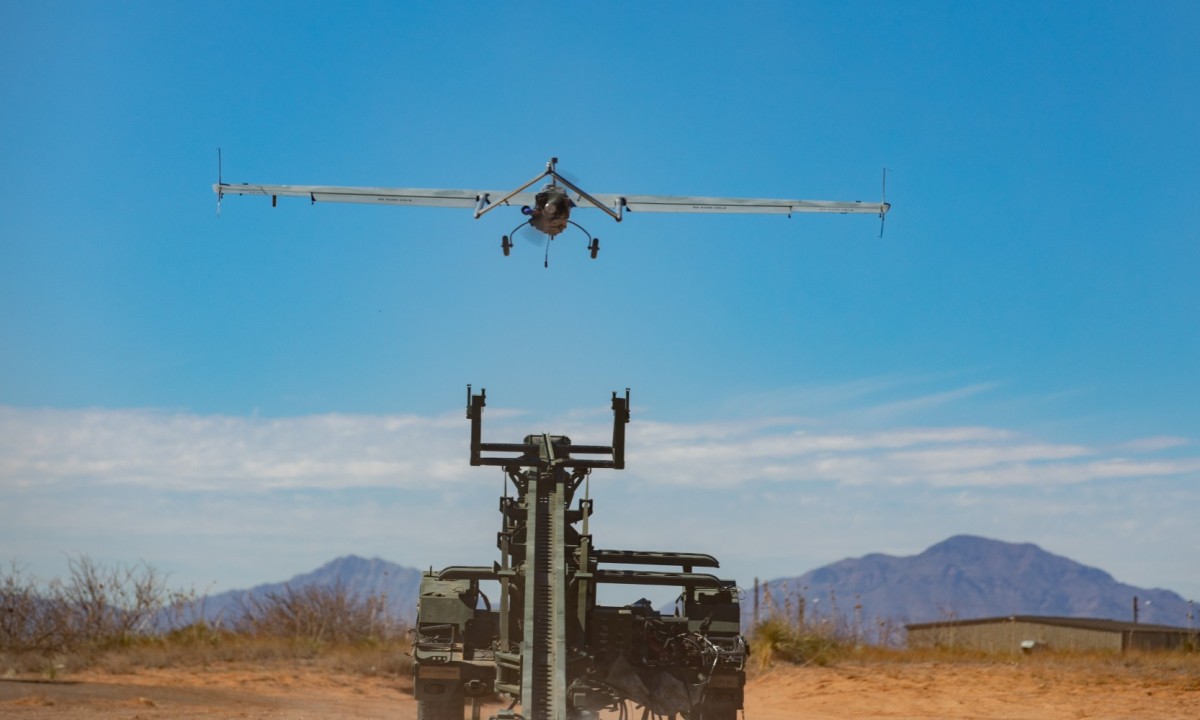
Emerging technologies such as unmanned systems may help African militaries fight non-state armed groups, but militaries across the continent must look beyond the technologies themselves and adopt a force-employment framework that promotes tactical adaptation, ensures weapon systems are interoperable, and invests in domestic production of counter-drone capabilities.
Armed conflicts have persisted across Africa for decades and intensified in recent years as violent non-state actors acquire new military technologies. Since at least 2020, armed groups on the continent have adopted drones and the wars in Ukraine and the Middle East have also accelerated the diffusion of uncrewed aerial systems, which armed groups now use for kinetic attacks, intelligence-surveillance-reconnaissance (ISR), and propaganda. As of 2025, non-state armed actors had acquired and used military drones in at least nine African countries, and the number of militant groups in sub-Saharan Africa confirmed to possess armed-drone capabilities rose from zero in 2023 to at least eight in 2026.
State militaries have, in turn, embraced unmanned aerial systems for counter-insurgency and counter-terrorism operations. Among African militaries, drone procurement increased from just 618 units throughout the 2010s to 1,054 units in the first six years of this decade. This surge reflects the broader so-called drone revolution, but it has also coincided with the spread of armed conflict across the continent. The growing presence of drones in these conflicts is reflected in their operational use by both state and non-state actors, with drone strikes rising from fewer than 20 events between 2013 and 2015 to more than 394 between 2022 and 2024.
Yet the results have been mixed. While unmanned aerial systems have given African militaries greater lethality and stronger ISR support, their employment has not meaningfully changed the trajectory of the continent’s conflict zones. Non-state armed groups continue to pose acute security threats and have themselves become increasingly lethal, particularly across the Sahel, which has remained the continent’s most lethal theatre for four consecutive years.
For African militaries, the problem is therefore not simply the acquisition of new technologies, but the failure to translate them into effective military capabilities and tactical success at the theatre level. African militaries must consequently rethink how unmanned systems are integrated into broader force structures and operations. This requires greater interoperability, tactical adaptation, and the development of domestic counter-drone capabilities.
The Challenges of Unmanned Systems for COIN in Africa
One of the major constraints on the effective employment of unmanned systems in counter-terrorism and counter-insurgency operations is the nature of the adversary. Although not unique to them, violent non-state groups typically rely on Fabian or guerrilla methods of warfare that emphasize mobility, stealth, and the avoidance of static positional defence. Rather than maintaining large force concentrations or defending fixed positions, insurgents groups often operate in small units, mass temporarily to conduct surprise attacks, and disperse rapidly before state forces can identify and engage them. Small arms and other relatively portable weapons further enable this mobility by imposing few logistical or infrastructural requirements on dispersed forces. These characteristics reduce the number and duration of identifiable targets against which the surveillance and strike capabilities of unmanned systems can be effectively employed.
This creates an asymmetry in the utility of unmanned systems. Insurgents can choose when and where to concentrate, avoid holding territory for prolonged periods, and exploit civilian or difficult terrain for concealment. State militaries, by contrast, must often defend territory, maintain bases and checkpoints, operate identifiable supply routes, and sustain logistical infrastructure. They therefore present more persistent and predictable targets to an adversary than insurgent forces present to them. Drone strikes may consequently eliminate individual fighters, vehicles, or temporary concentrations without necessarily producing decisive tactical engagements or disrupting the organizational capacity of the insurgency. The problem, then, is not that unmanned systems lack utility in counter-insurgency operations, but that their increased capacity for surveillance and precision strike does not by itself resolve the fundamental problem decisively engaging a dispersed and highly mobile adversary.
Another challenge to the effective employment of unmanned aerial systems in counter-terrorism and counter-insurgency operations in Africa is the fragmentation of the supply base and its implications for operational integration and interoperability. Between 1980 and 2026, African states acquired 1,959 drone units through 234 procurement records across 34 countries, drawing on suppliers from at least 21 countries. Nigeria, for example, has one of the most diverse drone procurement profiles on the continent, with 34 distinct drone types acquired through 34 separate procurement records involving suppliers from China, Turkey, the United States, the United Kingdom, as well as indigenous developers.
While such diversification can reduce dependence on a single supplier and strengthen supply-chain resilience, it also risks creating arsenals composed of systems built on different architectures and proprietary technologies and interfaces of different suppliers. This can impose significant operational costs, particularly in counter-terrorism and counter-insurgency operations, where the ability to detect, identify, track, and engage highly mobile targets depends on the rapid movement of information between surveillance platforms, command-and-control systems, intelligence units, and strike assets.
The risk, therefore, is that diversification at the point of procurement produces fragmentation at the point of employment. Against insurgent forces whose mobility and dispersion already compress the time available to identify and engage targets, integration and interoperability problems can further increase the sensor-to-shooter chain and reduce the operational advantage that unmanned systems are intended to provide. African militaries may consequently acquire increasingly sophisticated and diverse drone inventories without achieving a corresponding improvement in their ability to conduct integrated counter-terrorism and counter-insurgency operations.
The first two challenges reveal another weakness in Africa’s unmanned-systems strategy for counter-terrorism and counter-insurgency operations: insufficient attention to counter-drone capabilities. The asymmetry in the utility of unmanned systems means that their employment by violent non-state actors can impose disproportionate costs on state militaries. Insurgent groups can exploit relatively inexpensive and improvised drones against military and civilian assets, while their own mobility and dispersion make them considerably harder to target in return. Yet the procurement record of African militaries suggests that unmanned-system acquisition remains weighted towards offensive platforms, with less emphasis on capabilities for detecting, tracking, jamming, and intercepting small, low-flying armed commercial-off-the-shelf (COTS) systems.
This imbalance risks becoming increasingly consequential as violent armed groups develop the technical and operational means to degrade state’ capabilities. The Azawad Liberation Front, for example, recently employed fibre-optic-controlled drones to defeat military jamming during operations against Malian forces. The group also reportedly downed a Russian-operated Mil Mi-24P attack helicopter supporting the Malian Armed Forces (FAMA) during a joint FLA–Jama’at Nusrat al-Islam wal-Muslimin (JNIM) siege on Anefis in northern Mali. These developments illustrate the dual unmanned-systems challenge facing African militaries: they must improve their ability to employ drones against dispersed insurgent forces while simultaneously denying those forces the ability to use drones against costly conventional platforms, military infrastructure, and civilian targets.
CT and COIN Operations in Africa in the Drone Age
The “drone revolution” will not transform counter-terrorism and counter-insurgency operations in Africa. Indeed, drones and other unmanned systems can provide important operational advantages, but their contribution to decisive theatre outcomes depends on how effectively they are integrated into the wider force. African militaries must therefore move beyond a procurement-centred approach towards a force-employment framework that prioritizes the processes, organizational structures, and coordination necessary to translate technological platforms into military capability.
The effectiveness of this force-employment framework begins with system integration and interoperability. System integration and interoperability must become baseline requirements for unmanned-system procurement and force design, whether platforms are sourced from foreign or domestic suppliers. Diversifying suppliers may strengthen supply-chain resilience, but procurement decisions should account for whether these platforms can communicate and exchange data with existing ISR, command-and-control, fires, and other operational systems. Where complete technical interoperability is impossible, militaries should invest in integration layers and combat digital ecosystems that allow information generated by different systems to feed into a common operational picture. This would shift the objective from accumulating increasingly diverse drone inventories towards building integrated unmanned capabilities in which sensors, decision-makers, and effectors can operate as part of the same system.
But achieving system integration and interoperability must be complemented by tactical adaptation capable of countering the warfighting tactics used by violent non-state actors. Emphasis must therefore also be placed on non-technological innovation that prepares armed forces to be as responsive and flexible as the adversaries they confront. This may include training forces to move across the “Fabian–Napoleonic spectrum”, adopting tactics that reduce their own vulnerability through dispersion and mobility while retaining the ability to concentrate forces and effects for decisive engagement. Such adaptation may also place a premium on a favourable tooth-to-tail ratio, ensuring that combat forces and unmanned-system operations are supported by sufficient tail, including operators, maintainers and intelligence specialists, as well as the communications infrastructure, logistics, and other enabling capabilities needed to translate unmanned systems into tactical and operational effects.
Finally, the ability to generate combat advantage from unmanned systems increasingly depends on a military’s ability to exploit their utility and denying that utility to the adversary. African militaries must therefore account for both kinetic and non-kinetic counter-drone capabilities as part of their broader unmanned-systems strategy. This is particularly important as Africa’s defence sector expands its capacity to design and produce sovereign platforms for defence and security. Greater emphasis on domestically developed, low-cost counter-drone capabilities could help address the drone asymmetry, while allowing countermeasures to evolve alongside the changing tactics and technologies employed by violent non-state actors.

Africa’s dedicated and only military drone procurement intelligence.
Unmanned Africa bridges the critical gap between aerospace engineering, defense economics, and geopolitical strategy. As African defense forces rapidly modernize and scale their unmanned capabilities to address asymmetric conflicts, insurgencies, and border security, the platform functions as an essential, independent repository for defense analysts, policymakers, military professionals, and researchers.
Leave a Reply