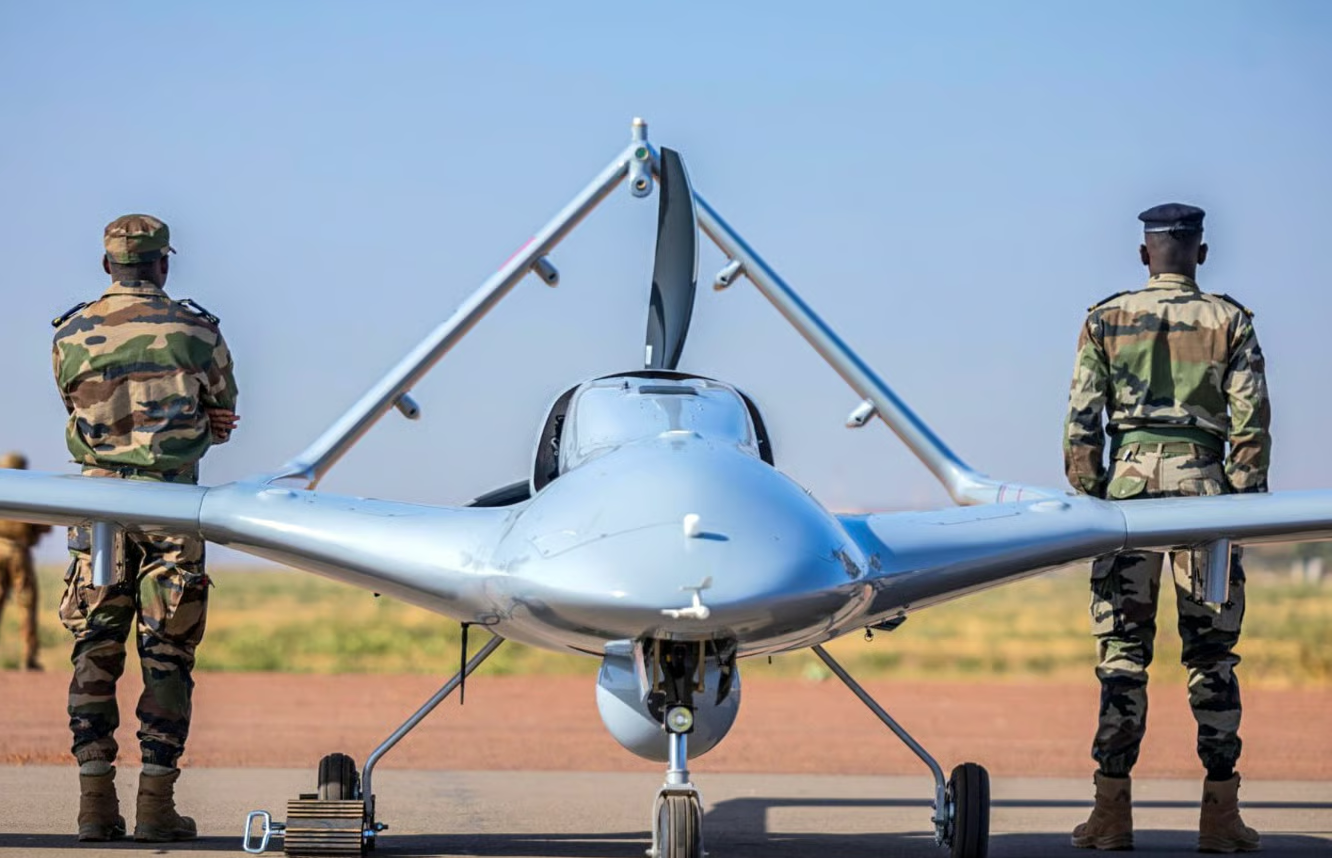
The exit of French counter-terrorism forces and the suspension of security assistance from the United States (US) across Mali, Niger, and Burkina Faso triggered a rapid restructuring of airpower in the Sahel. Military leaders in Bamako, Niamey, and Ouagadougou, now organized under the Alliance of Sahel States (AES), systematically turned away from Western security arrangements. In place of conditional Western military aid, these governments embraced transactional defense agreements with Turkey and Russia. This strategic pivot replaced legacy Western surveillance networks with sovereign ownership of armed uncrewed aerial vehicle fleets, fundamentally altering counter-insurgency operations across the region.
Turkish aerospace manufacturers emerged as the principal beneficiaries of this shift. The Bayraktar TB2, a Class III Medium-Altitude Long-Endurance (MALE) platform, quickly became the primary strike asset at Sahelian air bases. Carrying up to 150 kilograms of payload, including laser-guided Smart Micro Munitions (MAM-L) manufactured by Roketsan, the platform offers 27 hours of operational endurance. Armed forces in Mali and Burkina Faso expanded their operational reach by acquiring the larger, twin-engine Bayraktar Akinci. The Akinci features a 1,500-kilogram payload capacity, satellite communication capability, and advanced synthetic aperture radar suites. These platforms provide immediate, unconditioned precision strike options, enabling military commanders to engage targets without navigating lengthy Western export approval procedures.
Russian defense contributions complement Turkish strike capabilities through tactical reconnaissance hardware and military advisory personnel. Following the reorganization of former Wagner Group assets into the Russian Ministry of Defense’s Africa Corps, Russian operators introduced light tactical Uncrewed Aerial Vehicle (UAV) platforms such as the Orlan-10 and Supercam S35. These hand-launched systems provide real-time target acquisition for frontline artillery batteries and motorized units, filling short-range surveillance gaps. While Turkish platforms execute medium-altitude strikes, Russian tactical airframes conduct localized perimeter surveillance around forward bases, establishing a layered aerial network.
This tactical realignment reflects a broader transformation in African defense diplomacy. Open-source procurement dataset records verified as of July 2026 show that Turkish suppliers have delivered 291 units across the continent, with heavy concentrations across Sahelian combat zones. Sourcing hardware from Ankara and Moscow allows Sahelian defense planners to align procurement choices directly with immediate operational needs. However, this model introduces notable operational trade-offs. Operating diverse foreign platforms creates maintenance bottlenecks, complicates spare parts inventory, and increases reliance on foreign technical contractors during active combat operations.
Leave a Reply